

Media feeding and width sensing methods and apparatus for printing systems
a technology of media feeding and width sensing, which is applied in the direction of transportation and packaging, thin material processing, article separation, etc., can solve the problems of limited resolution of these automated width measurement systems and difficulty in discriminating between standard media sizes, and achieve the effect of increasing the resolution capability of the media width sensing apparatus
- Summary
- Abstract
- Description
- Claims
- Application Information
AI Technical Summary
Benefits of technology
Problems solved by technology
Method used
Image

Examples
Embodiment Construction
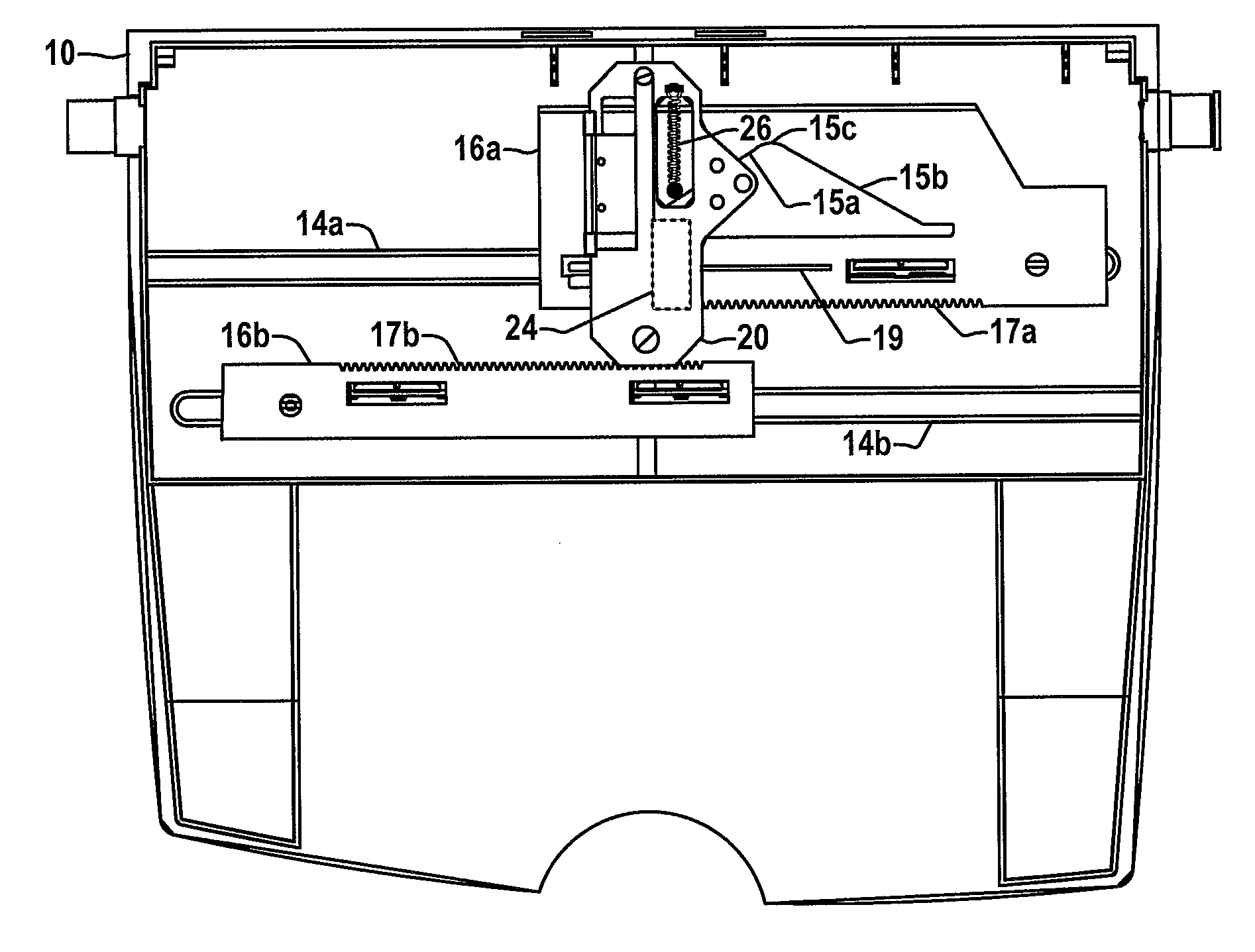
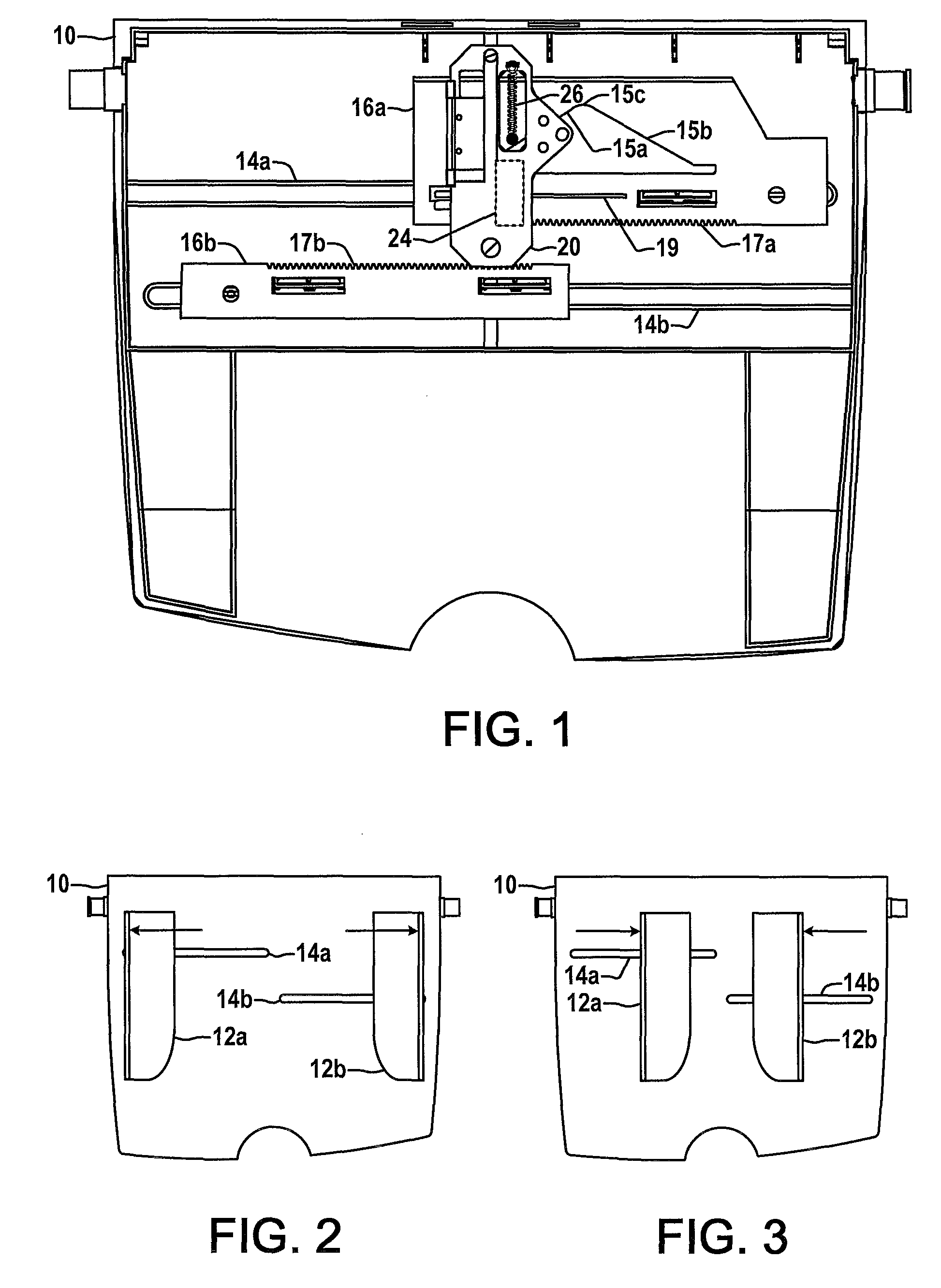
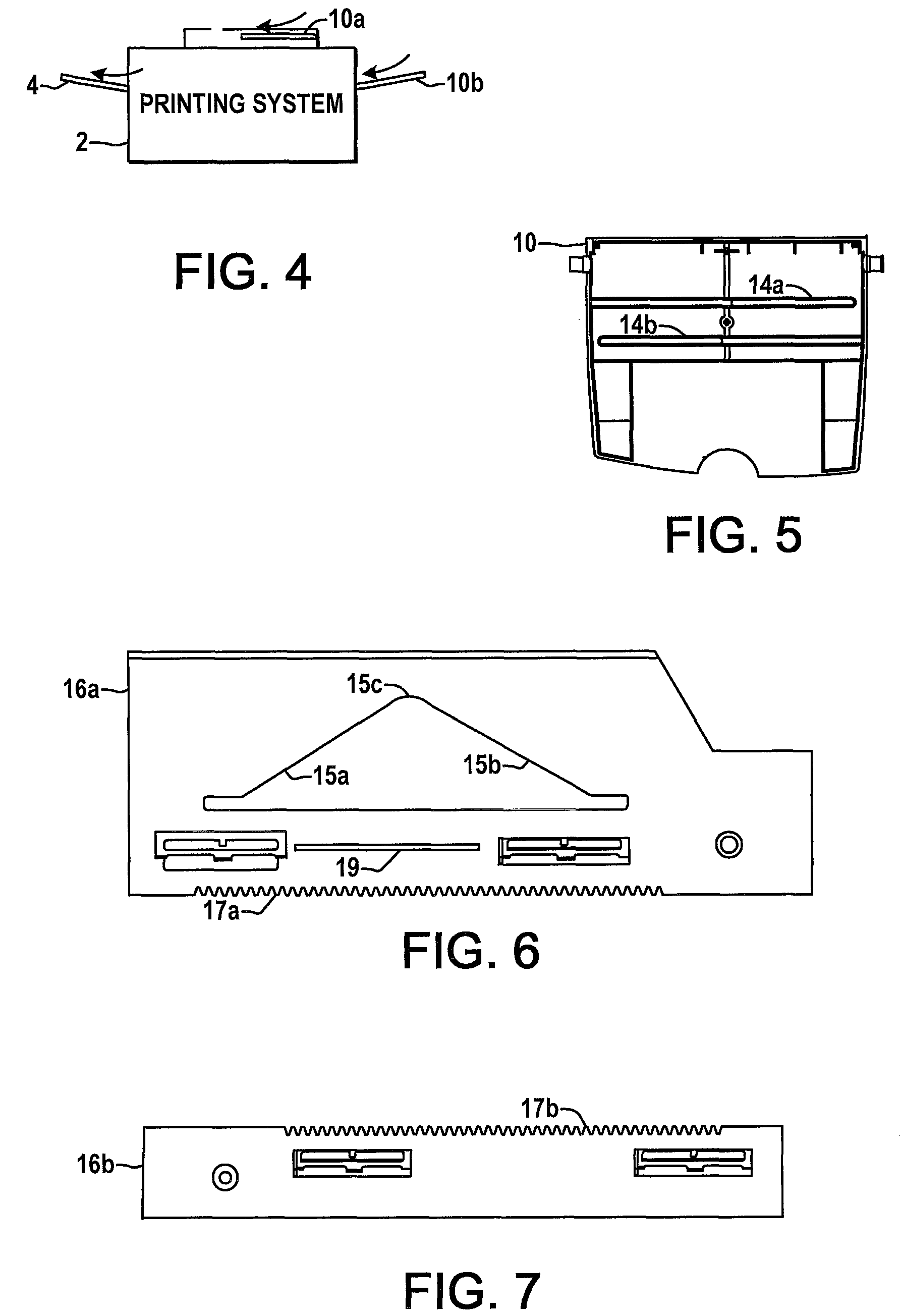
[0024]Referring now to the drawings, wherein the various structures and features are not necessarily drawn to scale, FIG. 4 depicts a printing machine or printing system 2 with an output tray 4 which receives printed media, as well as media feeding apparatus 10 for introducing media into the system 2. One feeding apparatus 10a operates to feed original media into the printing system 2 and a second apparatus 10b is a bypass tray for introducing printable media into the system 2. The printing system 2 can be any form of copier, printer, facsimile machine, or other system having one or more print engines or components by which visual images, graphics, text, etc., are printed on a page or other printable media, including xerographic, electro photographic, and other types of printing technology, wherein such components are not specifically illustrated to avoid obscuring the various media feeding and width determination features of the present disclosure. In general, the media feeders and...
PUM
 Login to View More
 Abstract
Description
Claims
Application Information
 Login to View More