
Methods and systems for handling currency
a currency and system technology, applied in the field of bulk cash, can solve the problems of difficult to know your customer's activity, and difficult to know your customer's customers, so as to facilitate the identification of its remitter
- Summary
- Abstract
- Description
- Claims
- Application Information
AI Technical Summary
Benefits of technology
Problems solved by technology
Method used
Image

Examples
Embodiment Construction
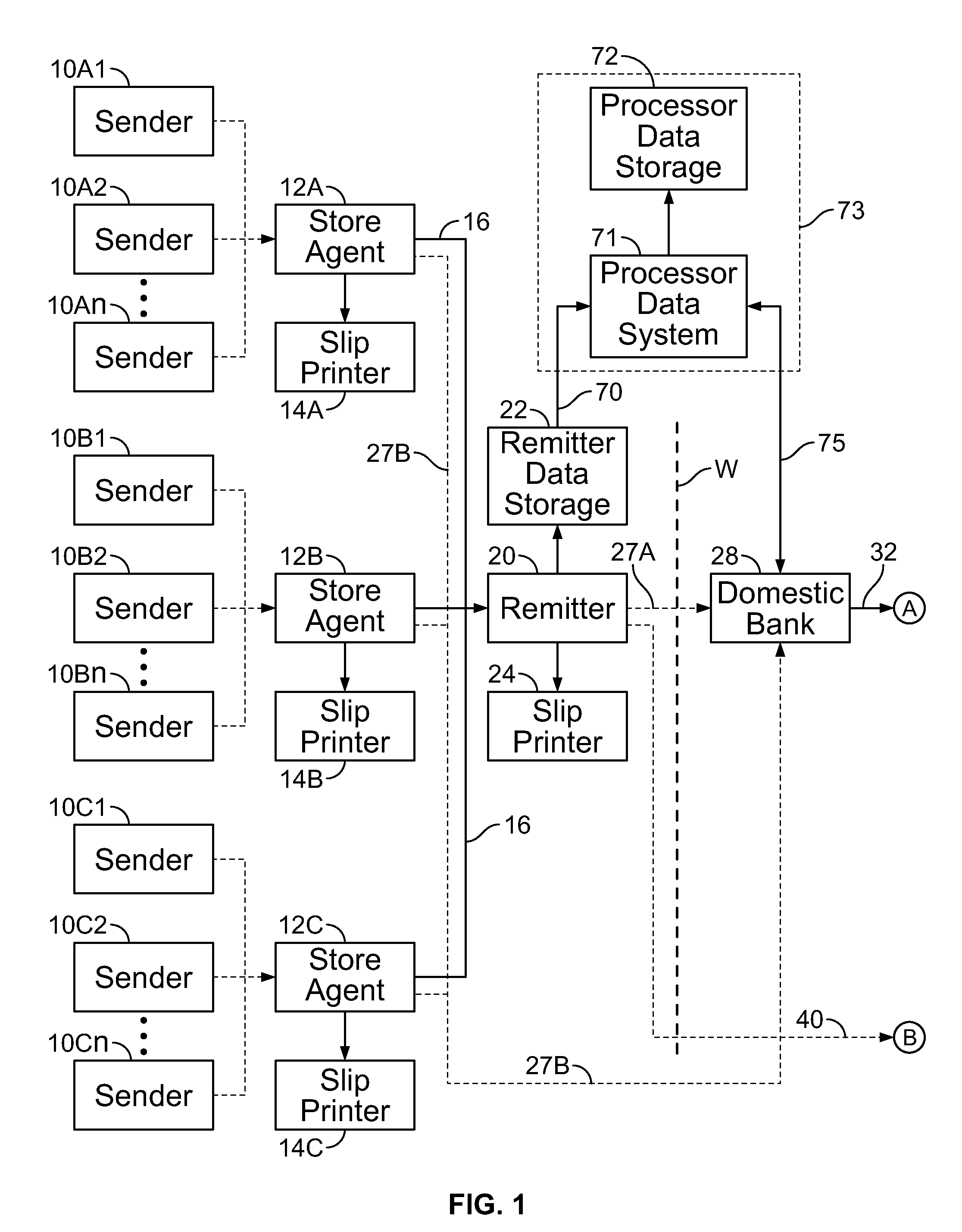
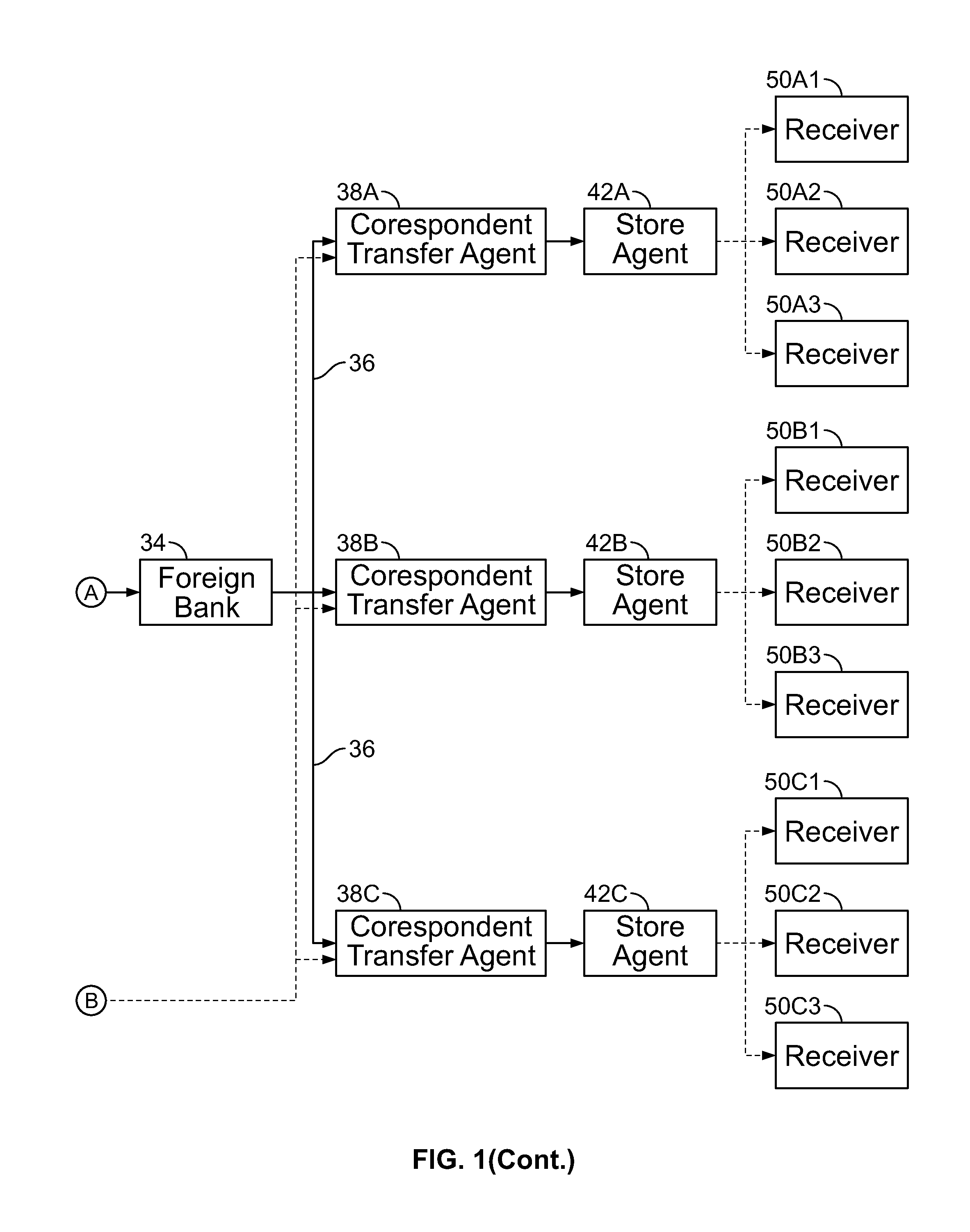
[0063]Referring to FIG. 1, this system diagram shows the overall arrangement for transferring money or other monetary benefit from (a) senders 10A1, 10A2, . . . 10An, (these agents can be of any number and are referred to as senders 10A); (b) any number of senders 1081, 10B2, . . . 10Bn, (referred to as senders 10B); and (c) any number of senders 10C1, 10C2, . . . 10Cn (referred to as senders 10C). Senders 10A, 10B and 10C are referred to collectively as customers 10. Receivers 50A1, 50A2, 50A3, 50B1, 50B2, 50B3, 50C1, 50C2, and 50C3 are referred to collectively as receivers or beneficiaries 50.
[0064]Customers 10A, 10B, and 10C, visit agents 12A, 12B, and 12C, respectively, to initiate a transaction. Agents 12A, 12B, and 12C (collectively referred to as agents 12) may comprise local consumer goods stores offering a money transfer service, and local outlets dedicated to facilitating money transfers. The number of customers10 and agents 12 can, in general, vary from that illustrated i...
PUM
 Login to View More
 Abstract
Description
Claims
Application Information
 Login to View More