
Braze alloy for high-temperature brazing and methods for repairing or producing components using a braze alloy
a technology of brazing alloy and high-temperature brazing, which is applied in the field of material science, can solve the problems of undesirable cracks in materials, increased plant efficiency, and high mechanical load on turbine rotor blades in particular
- Summary
- Abstract
- Description
- Claims
- Application Information
AI Technical Summary
Benefits of technology
Problems solved by technology
Method used
Image

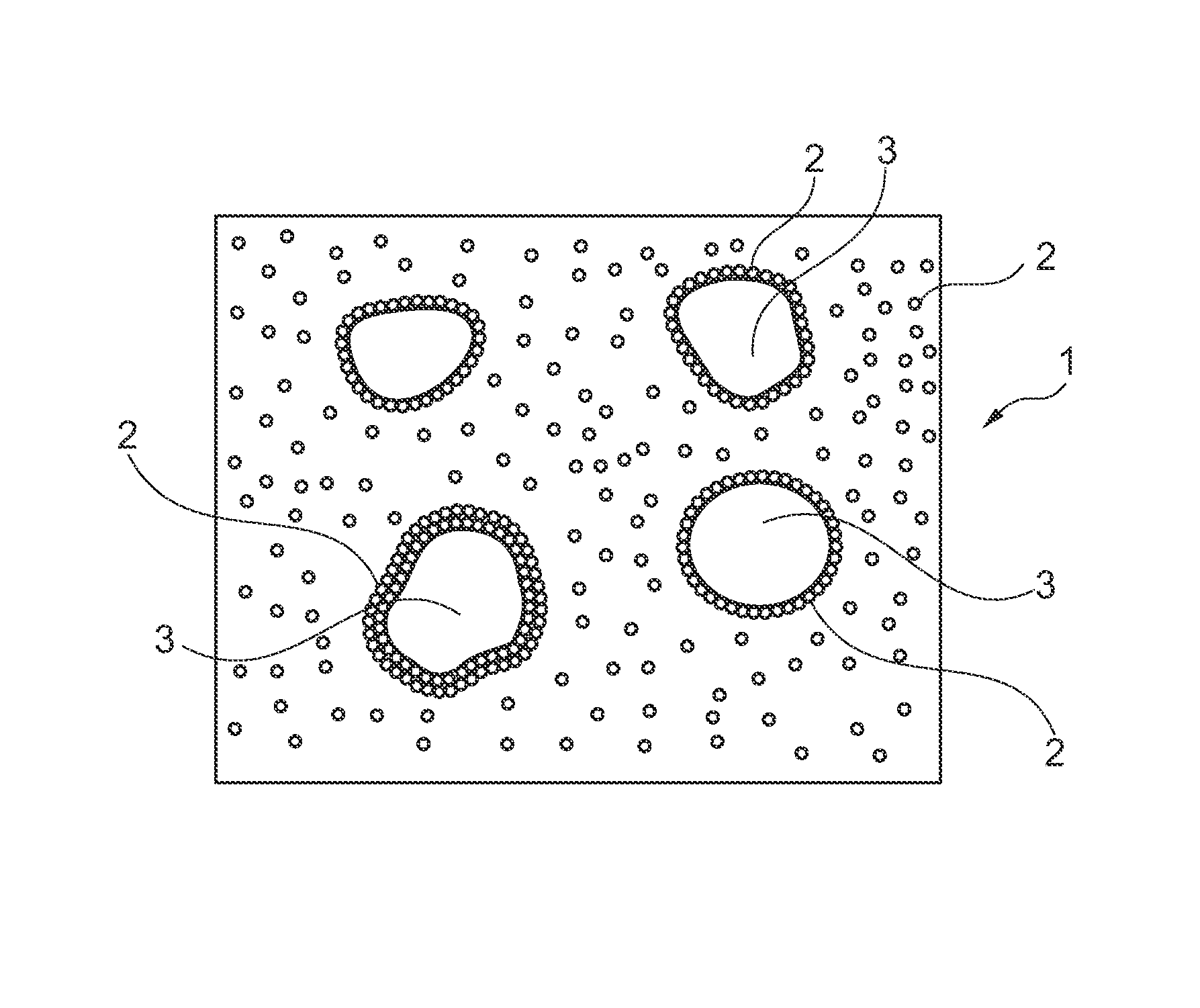
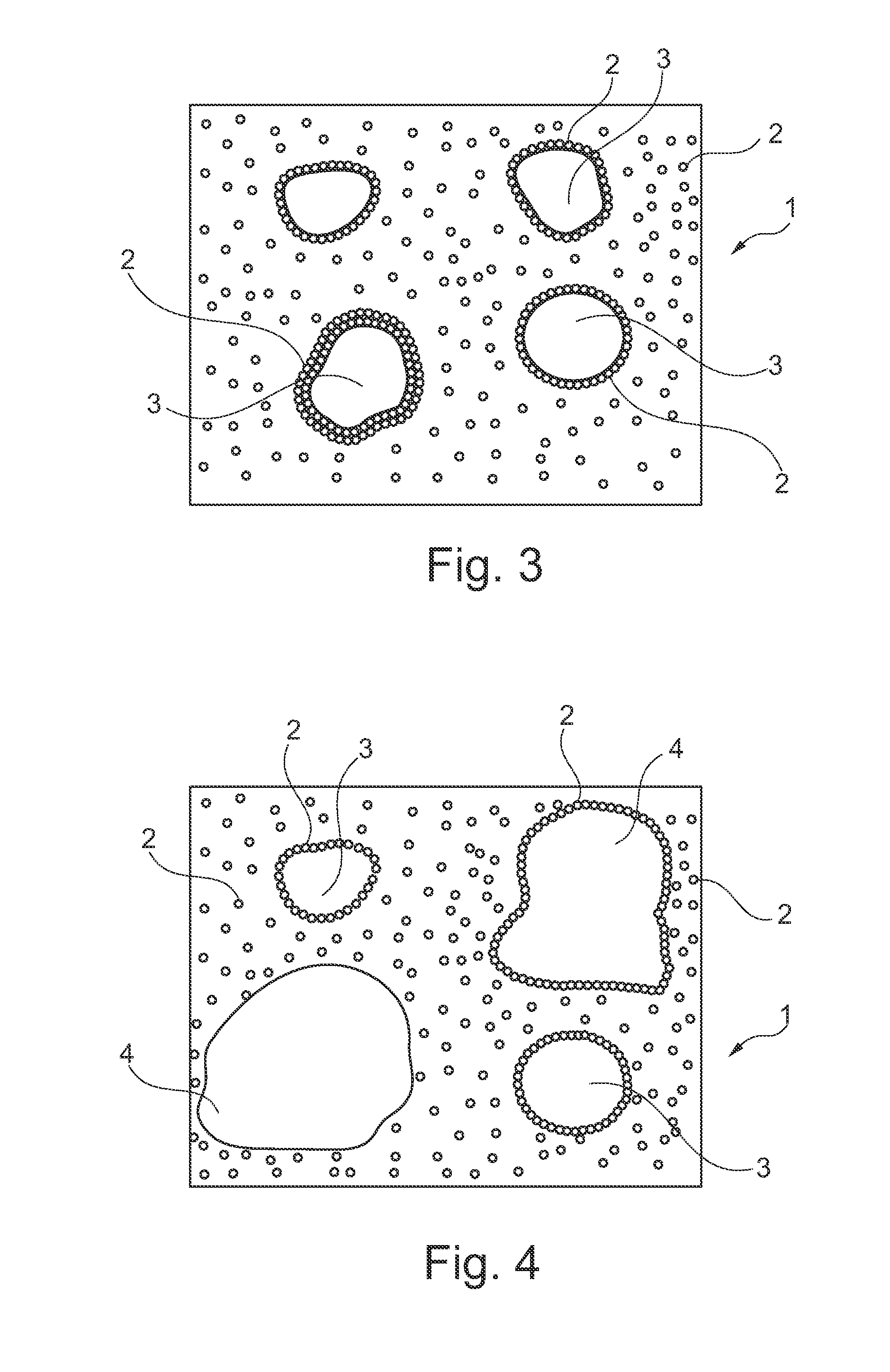
Examples
Embodiment Construction
[0042]In the text which follows, the invention is explained in more detail on the basis of exemplary embodiments and the drawings.
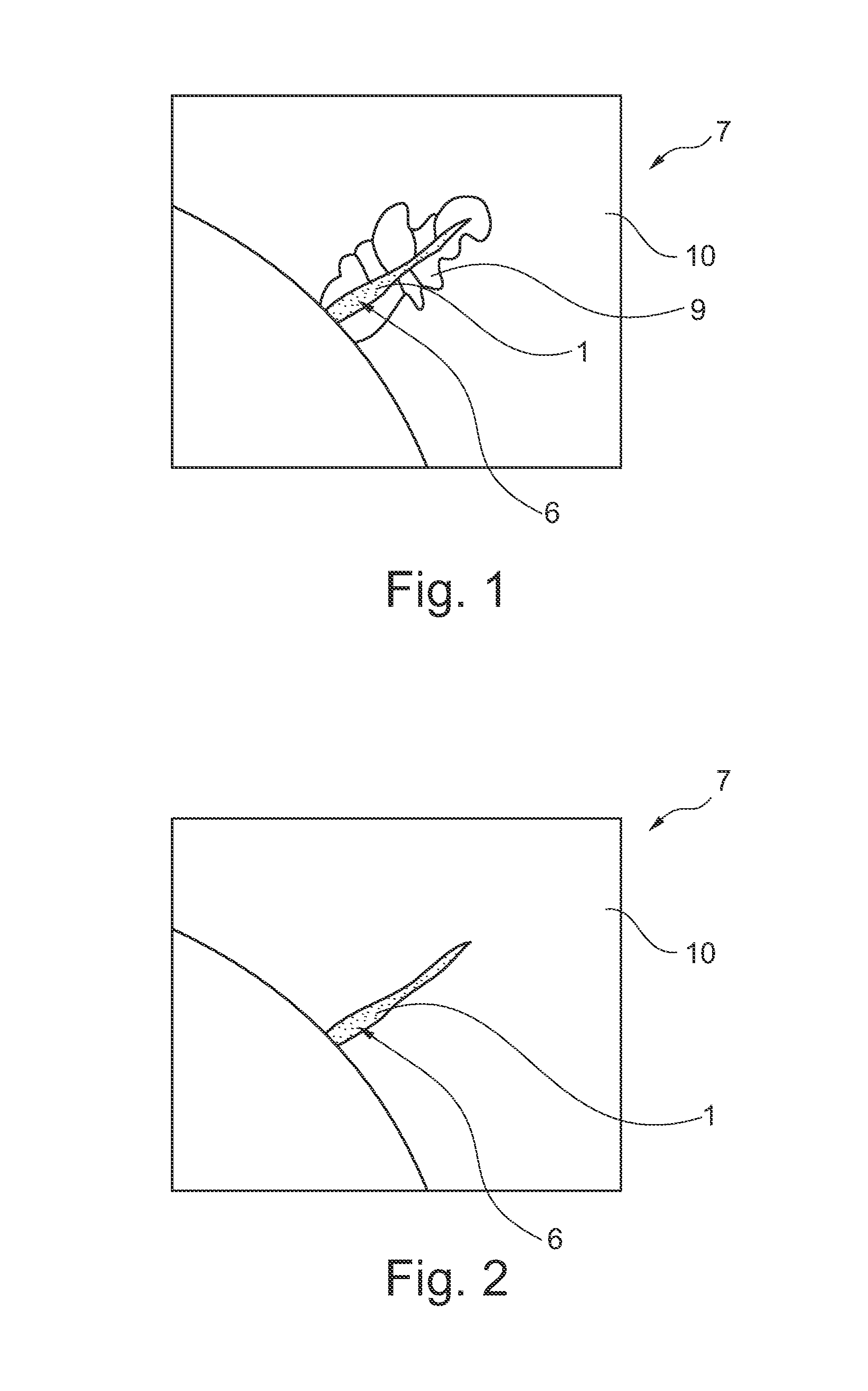
[0043]FIG. 1 schematically shows a damaged region 6, here a crack, of a component 7 after a conventional brazing repair method. In the present case, the component 7 is a gas turbine blade or vane made of a single crystal base material 10, to be precise, for example, CMSX4 (10% by weight Co, 6.5% by weight Cr, 6.5% by weight Ta, 6% by weight W, 5.6% by weight Al, 2.9% by weight Re, 1% by weight Ti, 0.6% by weight Mo, 0.1% by weight Hf, remainder Ni). The crack 6 was repaired using a conventional braze alloy 1 (18.5% by weight Cr, 18% by weight Fe, 5% by weight (Nb+Ta), 3% by weight Mo, 2.5% by weight B, 1% by weight Ti, remainder Ni; particle size between 44 and 125 μm). FIG. 1 clearly shows the recrystallization region 9 around the crack 6, where there is no longer a single crystal microstructure in the base material 10, i.e., here the properties of the b...
PUM
| Property | Measurement | Unit |
|---|---|---|
| particle size | aaaaa | aaaaa |
| particle size | aaaaa | aaaaa |
| temperatures | aaaaa | aaaaa |
Abstract
Description
Claims
Application Information
 Login to View More