
Device and method for prevention and treatment of deep venous thrombosis
a technology of deep vein thrombosis and treatment method, which is applied in the direction of vibration massage, physical therapy, surgery, etc., can solve the problems of venous thromboembolism with definite potential for life-threatening pulmonary embolism, and achieve the effect of preventing clotting, preventing or, deep vein thrombosis
- Summary
- Abstract
- Description
- Claims
- Application Information
AI Technical Summary
Benefits of technology
Problems solved by technology
Method used
Image

Examples
example
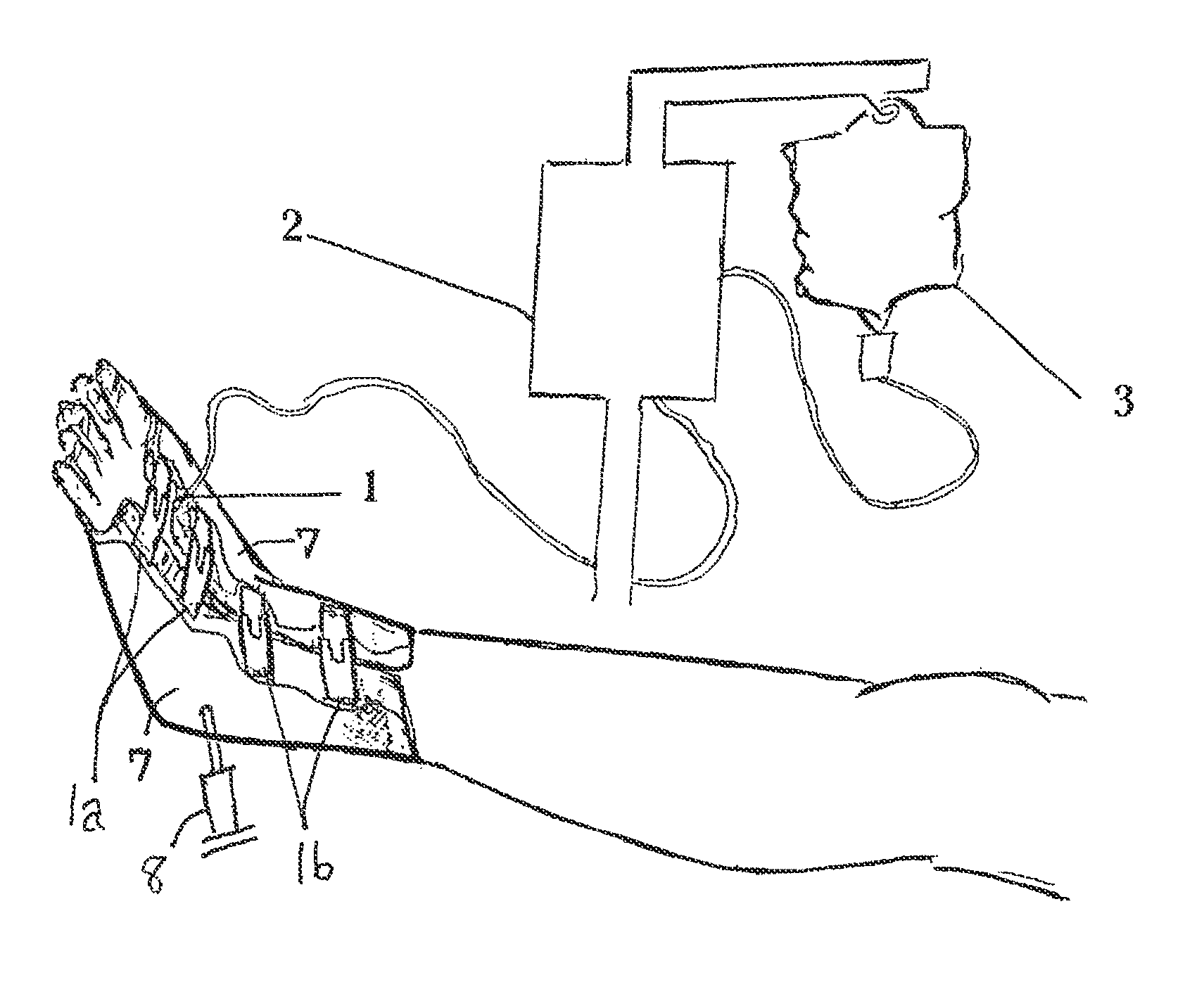
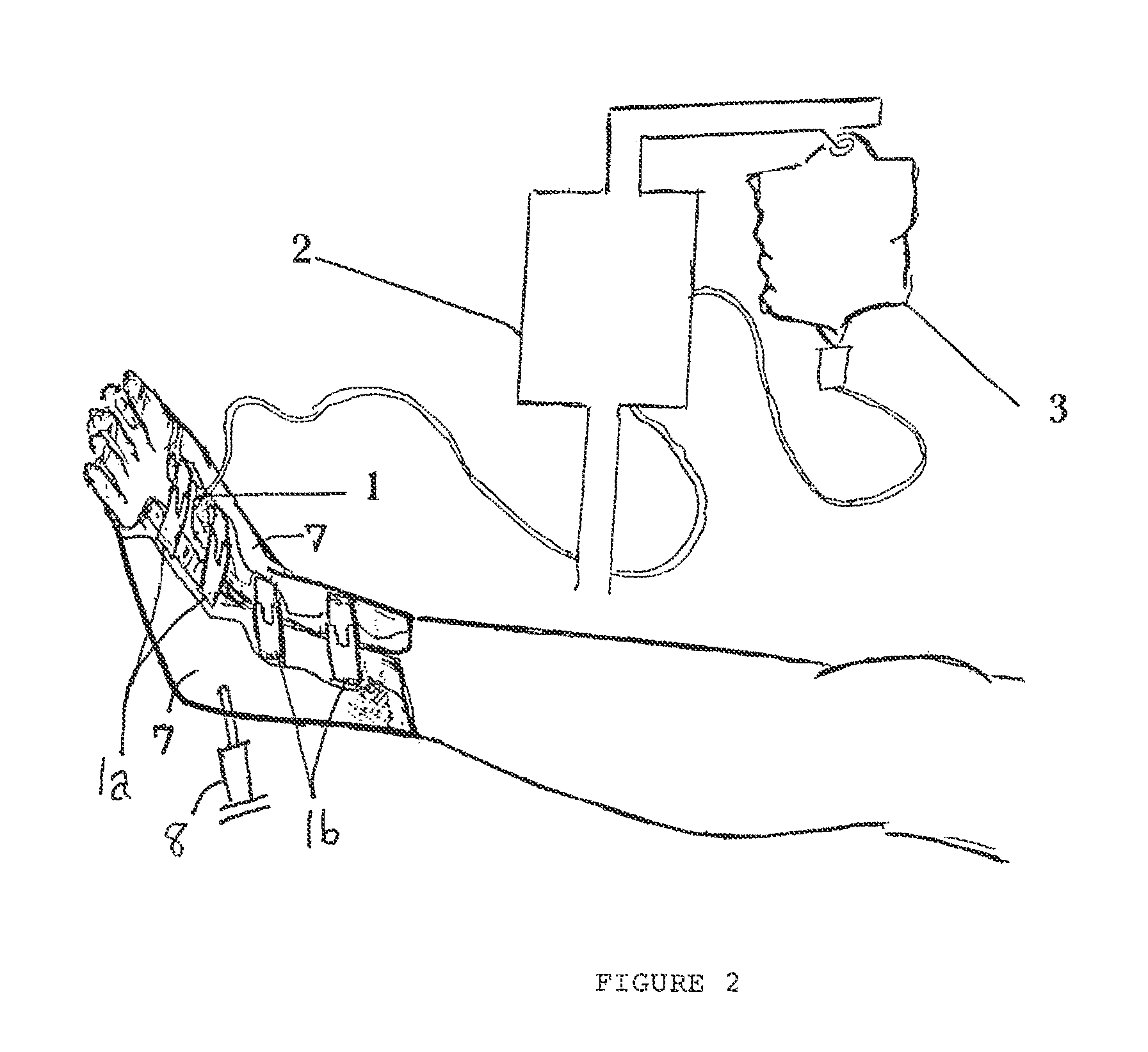
[0114]Two bags each containing an intravenous solution of 5% dextrose in water and approximately 10,000 international units of heparin are prepared. A small bore (20-22 gauge) polyethylene catheter is inserted into the vein plexus on the dorsum of each foot of the host. A local anesthetic, for example, ½% xylocaine may be administered prior to inserting the catheter. The catheter is then secured and the intravenous solution administered at a volume rate of approximately 19-31 cc / hr, preferably about 20 cc / hr into each lower extremity via an infusion pump. Infusion of heparin or other antithrombotic drug will be continued substantially continuously for as long as clinically indicated. For surgical patients, infusion may be initiated just prior to or after surgery and continued for at least 24-72 hours post-operatively. Infusion may be continued beyond 72 hours if clinically indicated.
[0115]While standard heparin was used in the above detailed description of administering antithrombot...
PUM
| Property | Measurement | Unit |
|---|---|---|
| time | aaaaa | aaaaa |
| pressure | aaaaa | aaaaa |
| pressure | aaaaa | aaaaa |
Abstract
Description
Claims
Application Information
 Login to View More