
Seamless authentication mechanism for user processes and web services residing on common host
a user process and web service technology, applied in the field of user processes and web services present on a common host, can solve problems such as the inability of local processes to have an interface for clients
- Summary
- Abstract
- Description
- Claims
- Application Information
AI Technical Summary
Benefits of technology
Problems solved by technology
Method used
Image

Examples
Embodiment Construction
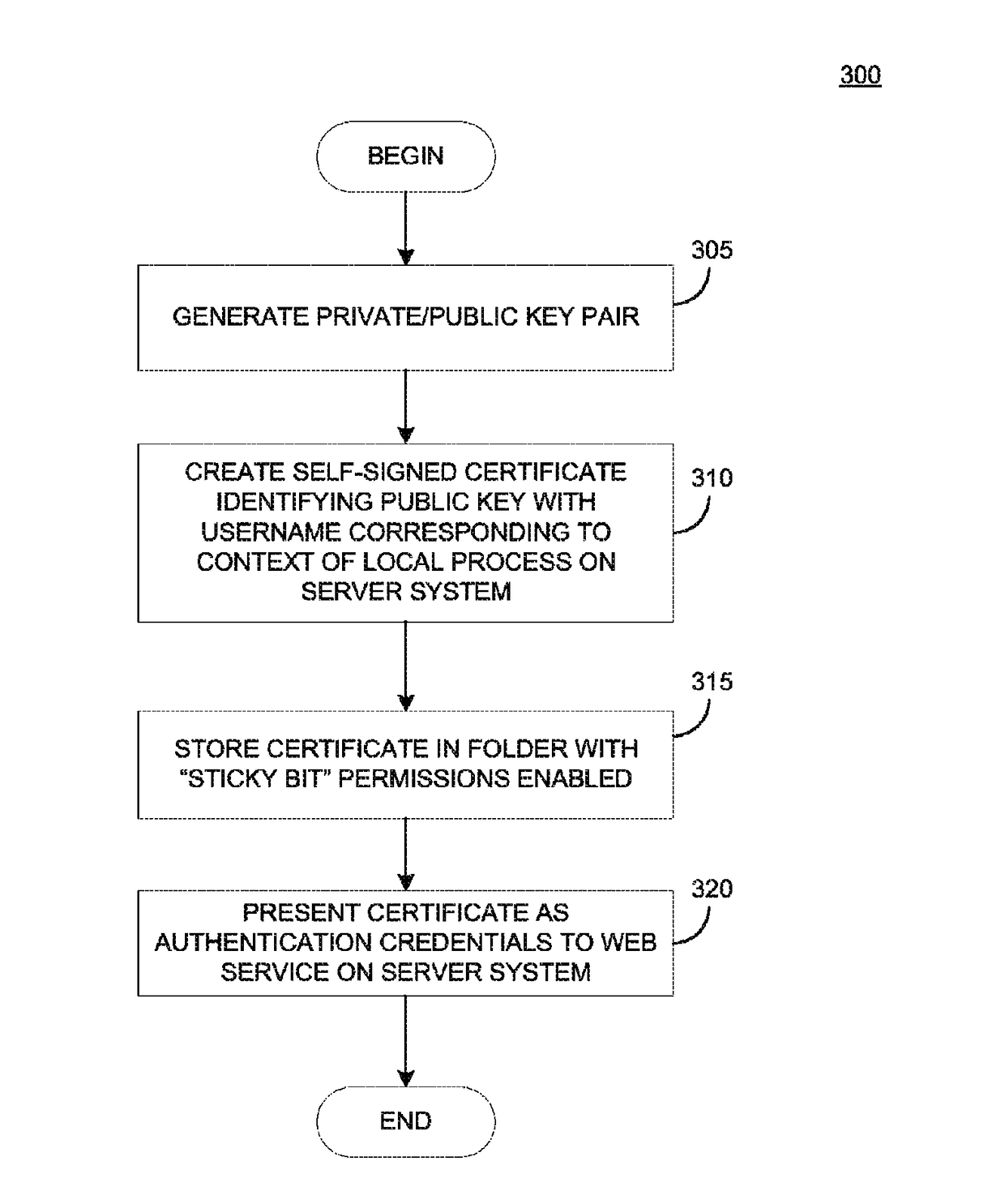
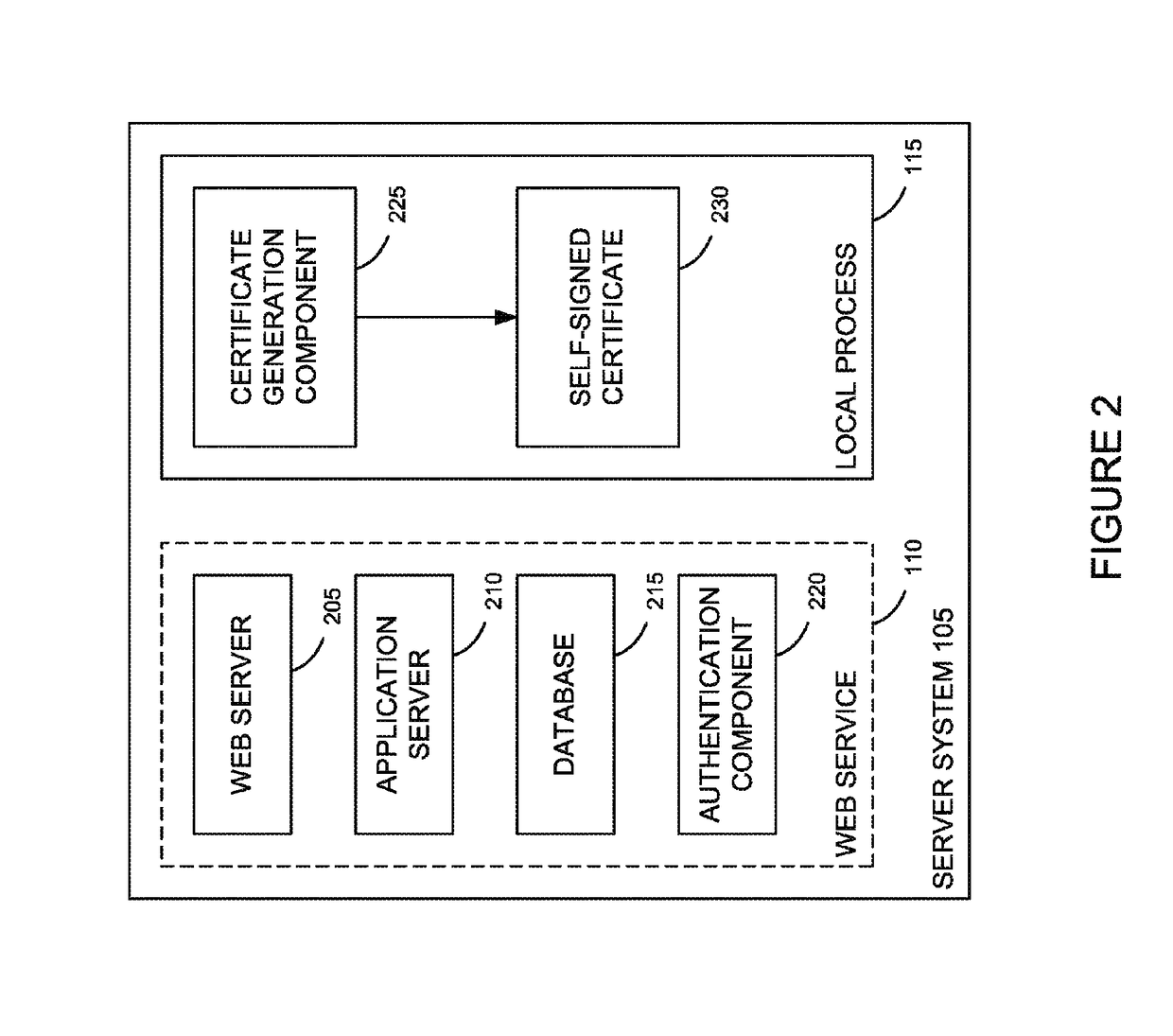
[0019]Embodiments presented herein provide techniques for a web service to authenticate a local process based on a self-signed certificate and a logged-in context of the user executing the process. In one embodiment, the local process generates a self-signed digital certificate. The subject information in the self-signed certificate may identify the user which owns the local process and the hostname of the server. For example, a common name, organizational unit, and organization name may be set in the certificate as follows:
[0020]CN=
[0021]OU=
[0022]O=
[0023]Once generated, the local process may store the certificate in a world-writeable directory which has directory permissions set to allow only the owner of a file to modify or remove files stored in the directory. That is, the certificate is stored in a directory to which any user can write, but one where each user can modify or delete only files in the directory owned by that user. In UNIX systems, this is commonly referred to as se...
PUM
 Login to View More
 Abstract
Description
Claims
Application Information
 Login to View More