Method for modifying structural model by cross modal of cross model

A structural model and cross-modal technology, applied in special data processing applications, instruments, electrical digital data processing, etc., can solve problems such as spending too much computer time, having no actual physical meaning, and low work efficiency

CN101013449AInactive Publication Date: 2007-08-08OCEAN UNIV OF CHINA
0 Cites 29 Cited by

Patent Information

Authority / Receiving Office
CN · China
Patent Type
Applications(China)
Current Assignee / Owner
Publication Date
2007-08-08
Estimated Expiration
Not applicable · inactive patent

Smart Images

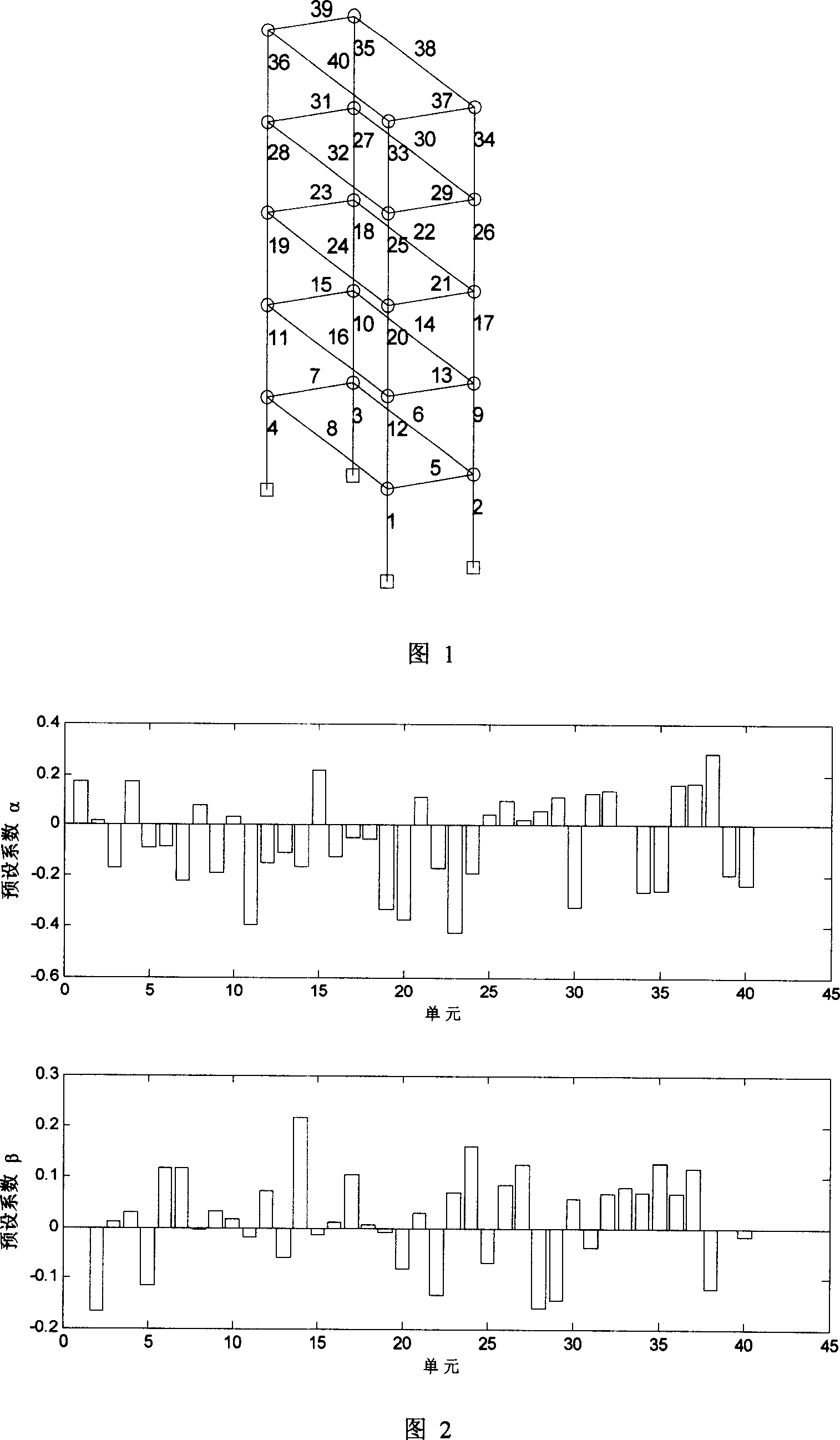
  • Figure 1
    Figure 1
  • Figure 2
    Figure 2
Patent Text Reader

Abstract

It is a structure module amendment method using a cross-modal cross-model, by adjusting the stiffness matrix and the quality matrix of finite element model to make the modal frequencies and mode through calculation match with the actual structure. Therefore for each unit of the finite element model, the stiffness matrix and the quality matrix coefficients have two amendments. Through the comparison of the structural finite element numerical model and experimental actual model, get the correction coefficient of each module, and thus amend the stiffness matrix and quality matrix to achieve the model amendment purpose. The invention has both advantages of adjustment direct and indirect physical matrix without iteration, improving work efficiency. It also can maintain the physical contact between structural models. In addition, the measurement mode required in the method does not require a return of the quality. Combined with the modal parameter identification technologies based on the output response, it can amend the offshore structure model in environment incentives. So the method has more practical value.
Need to check novelty before this filing date? Find Prior Art

Description

technical field

[0001] The invention relates to a structure model correction method using a cross model cross mode, in particular to a finite element model correction method for marine engineering structures. Background technique

[0002] The finite element method, also called the finite element method, is a numerical method that discretizes an object into finite units, analyzes each unit in detail, and then conducts a comprehensive analysis on this basis. Its basic idea is to discretize the continuous solution area into a group of finite units that are connected to each other in a certain way. The finite element method is the most commonly used method to establish numerical models of various structural systems.

[0003] Model correction is the process of using data obtained from related experimental models to modify the values ​​of some parameters in the numerical model, so that the corrected model can more accurately reflect the dynamic characteristics of the actual struc...

Examples

Embodiment Construction

[0025] The present invention will be further described in detail below in conjunction with the accompanying drawings and specific embodiments.

[0026] 1. The specific algorithm is derived as follows:

[0027] For K and M and the associated i-th order eigenvalue λ i and the eigenvector Φ i ,have:

[0028] KΦ i =λ i MΦ i(1)

[0029] Assume the stiffness matrix K of the experimental model * It can be expressed as:

[0030] K * = K + Σ n = 1 N e α n K n - - - ( 2 )

[0031] In the formula, K n represents the element stiffness matrix of the nth element, N e is the number of units, α n is the correction factor to be determined. Here...