
Macroreticular polyvinyl alcohol bead carrier and preparation thereof
A polyvinyl alcohol, spherical technology, applied in the field of bioengineering, can solve the problems of carrier toxicity and instability, mass transfer and loading limitations, small voids of embedding carriers, etc., so as to facilitate metabolism and proliferation , increase the contact specific surface area, good hydrophilic effect
- Summary
- Abstract
- Description
- Claims
- Application Information
AI Technical Summary
Problems solved by technology
Method used
Image

Examples
Embodiment Construction
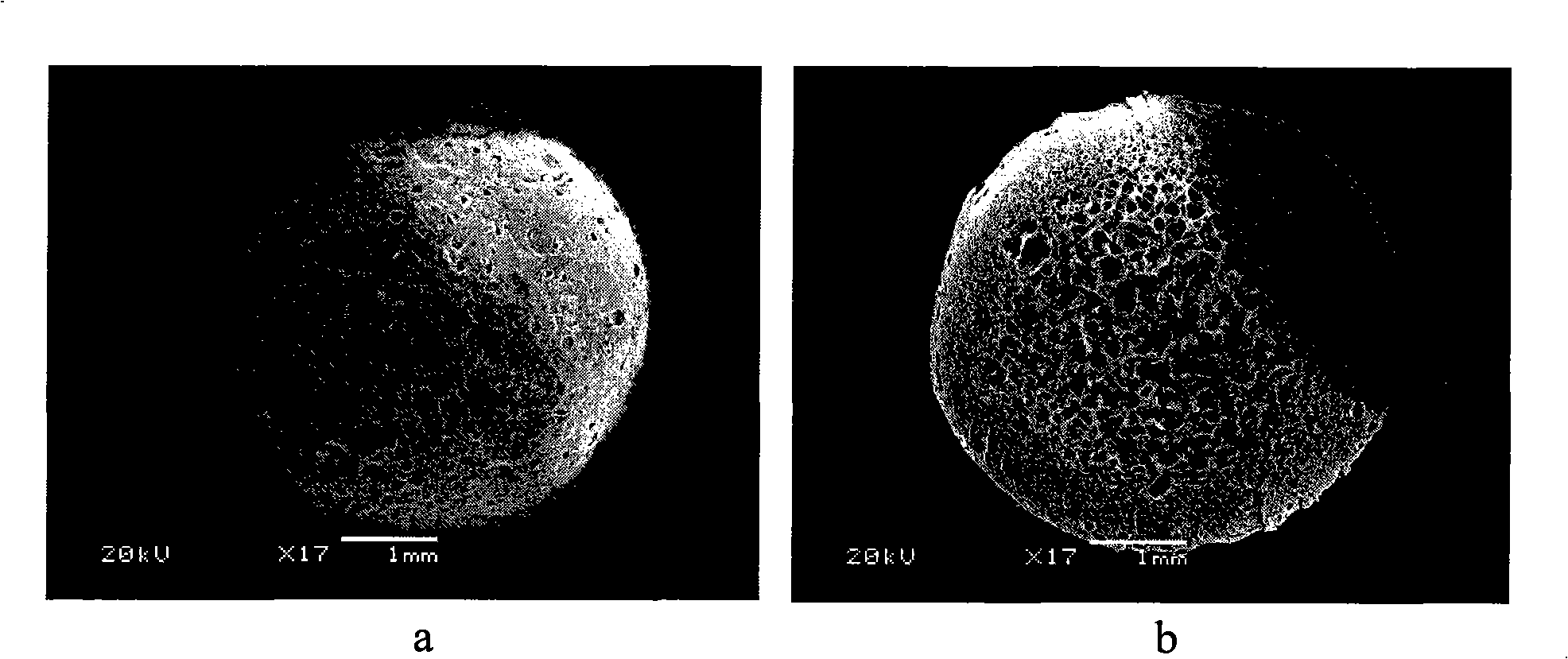
[0019] The preparation, structure and performance of the macroporous network polyvinyl alcohol spherical carrier of the present invention will be further described through specific examples below.
[0020] 1. Preparation of macroporous network PVA spherical carrier
[0021] PVA, calcium carbonate, sodium alginate, and water are weighed (measured) in a mass ratio of 8:10:1.3:100.
[0022] First add sodium alginate into water, heat it under stirring to make it fully dissolved in the boiling water bath; then add PVA and calcium carbonate into it, continue stirring to fully dissolve PVA and evenly distribute calcium carbonate to obtain white PVA sol. After the obtained sol was cooled at room temperature, it was dropped into a saturated boric acid solution containing 3% calcium chloride with a peristaltic pump, stirred to make PVA gel spheres with uniform particle size, and left for 24 hours. After taking it out and washing it with water, soak it in a dilute hydrochloric acid solu...
PUM
| Property | Measurement | Unit |
|---|---|---|
| radius | aaaaa | aaaaa |
Abstract
Description
Claims
Application Information
 Login to View More