
Method for oil gas water recognition by employing longitudinal wave seismic exploration post-stack data
A technology for seismic exploration and seismic data, applied in seismology for logging records, seismic signal processing, etc., can solve problems such as insignificant effects, and does not involve P/S wave information or Poisson's ratio information, so as to facilitate popularization and application , quickly provide results, and collect fast effects
Patent Information
- Authority / Receiving Office
- CN · China
- Current Assignee / Owner
- Publication Date
- 2009-07-22
- Estimated Expiration
- Not applicable · inactive patent
Smart Images
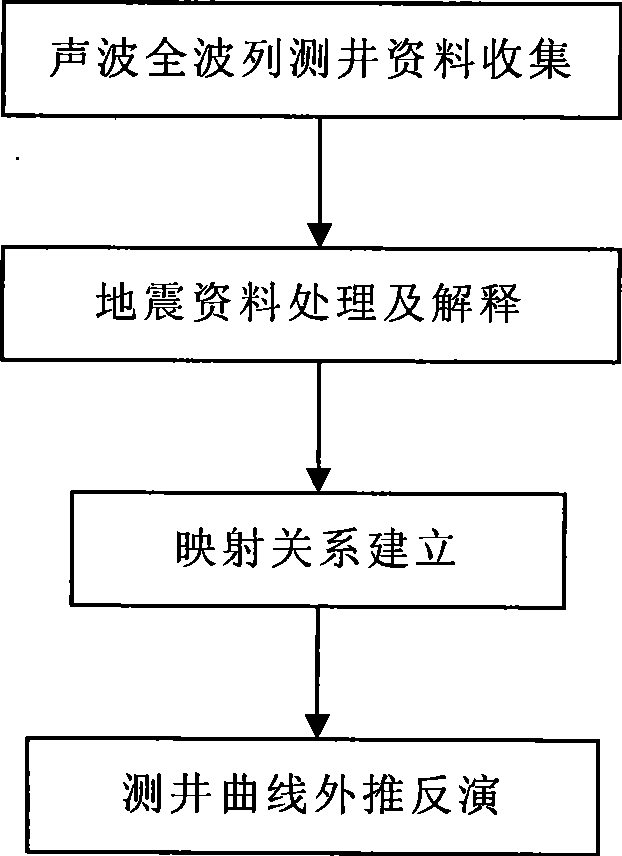
Figure 1 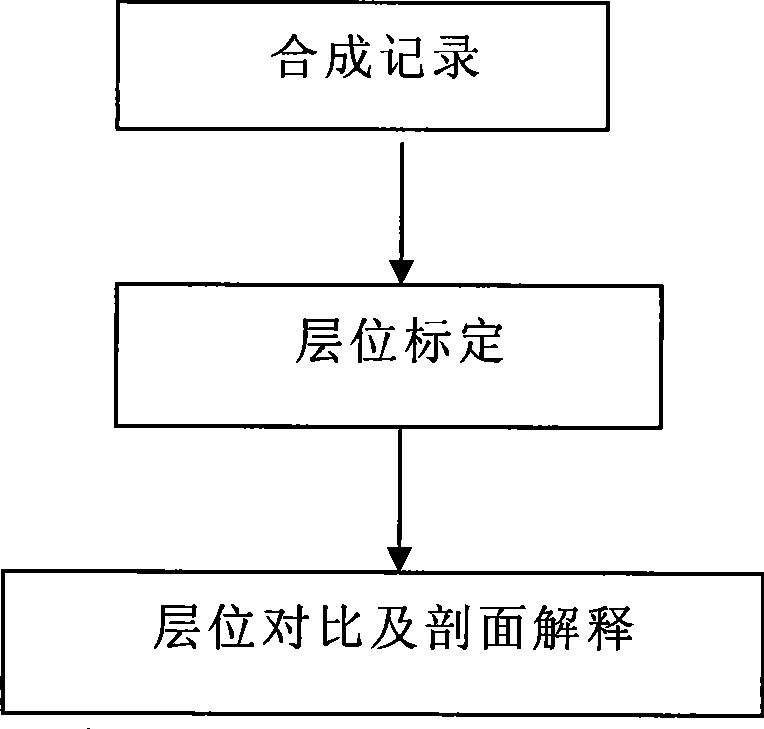
Figure 2 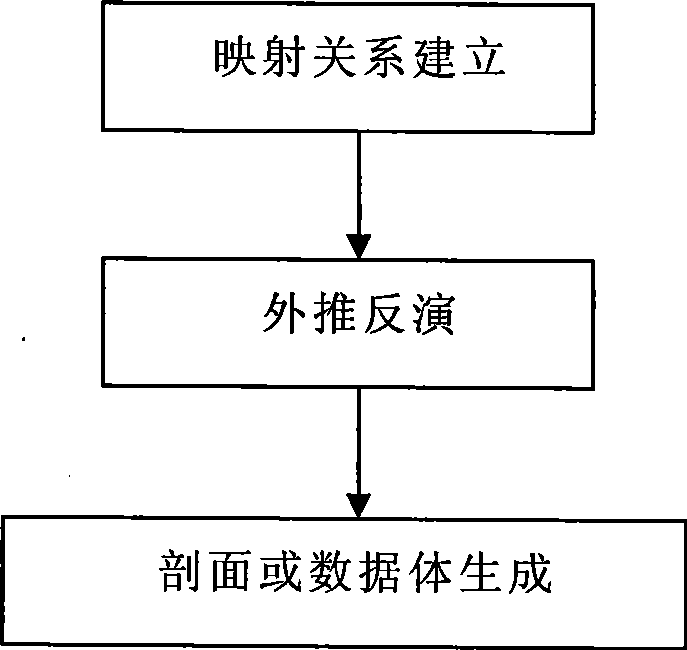
Figure 3
Abstract
Description
technical field
[0001] The invention relates to the technical field of seismic exploration in petroleum and natural gas exploration and development, in particular to a method for identifying oil, gas and water using longitudinal and transverse wave information or Poisson's ratio information in post-stack data of longitudinal wave seismic exploration. Background technique
[0002] The identification of oil, gas and water is an important content in oil and gas exploration and development, especially in areas where gas and water are distributed, how to separate gas and water is an important research and application topic. Using seismic data to identify oil, gas and water distribution is a long-term exploration topic in seismic exploration.
[0003] P-wave seismic prospecting is a mature technology in seismic prospecting, while the corresponding multi-wave prospecting technology is in the exploration stage. In the identification of oil, gas and water using seismic data, the pre...
Examples
Embodiment approach
[0039] Step 1: Acoustic full-wave train logging data collection: Collect the P- and S-wave logging curves of all wells in the seismic work area and convert them into Poisson’s ratio curves. The conversion formula is: σ = 2 - γ 2 2 ( 1 - γ 2 ) , where γ represents the ratio of P-to-S waves velocity, and σ represents Poisson’s ratio;
[0040] In modern logging technology, it includes acoustic full-wave train logging, which is to record the waveforms of sliding longitudinal wave, sliding shear wave, see Rayleigh wave and tube wave successively arriving at the receiver after the acoustic pulse is emitted, among which the longitudinal and transverse wave information and the P...