
Adventitious bud transformation method for sweet potatoes mediated by agrobacterium
An Agrobacterium-mediated, genetic transformation technology, which is applied in horticultural methods, botany equipment and methods, and plant regeneration, can solve the problems of slow progress in sweet potato genetic transformation, lack of genetic transformation and regeneration systems, and few transgenic plants. Achieve the effects of overcoming the limitation of sweet potato genetic transformation, good repeatability and short transformation cycle
- Summary
- Abstract
- Description
- Claims
- Application Information
AI Technical Summary
Problems solved by technology
Method used
Image

Examples
Embodiment 1
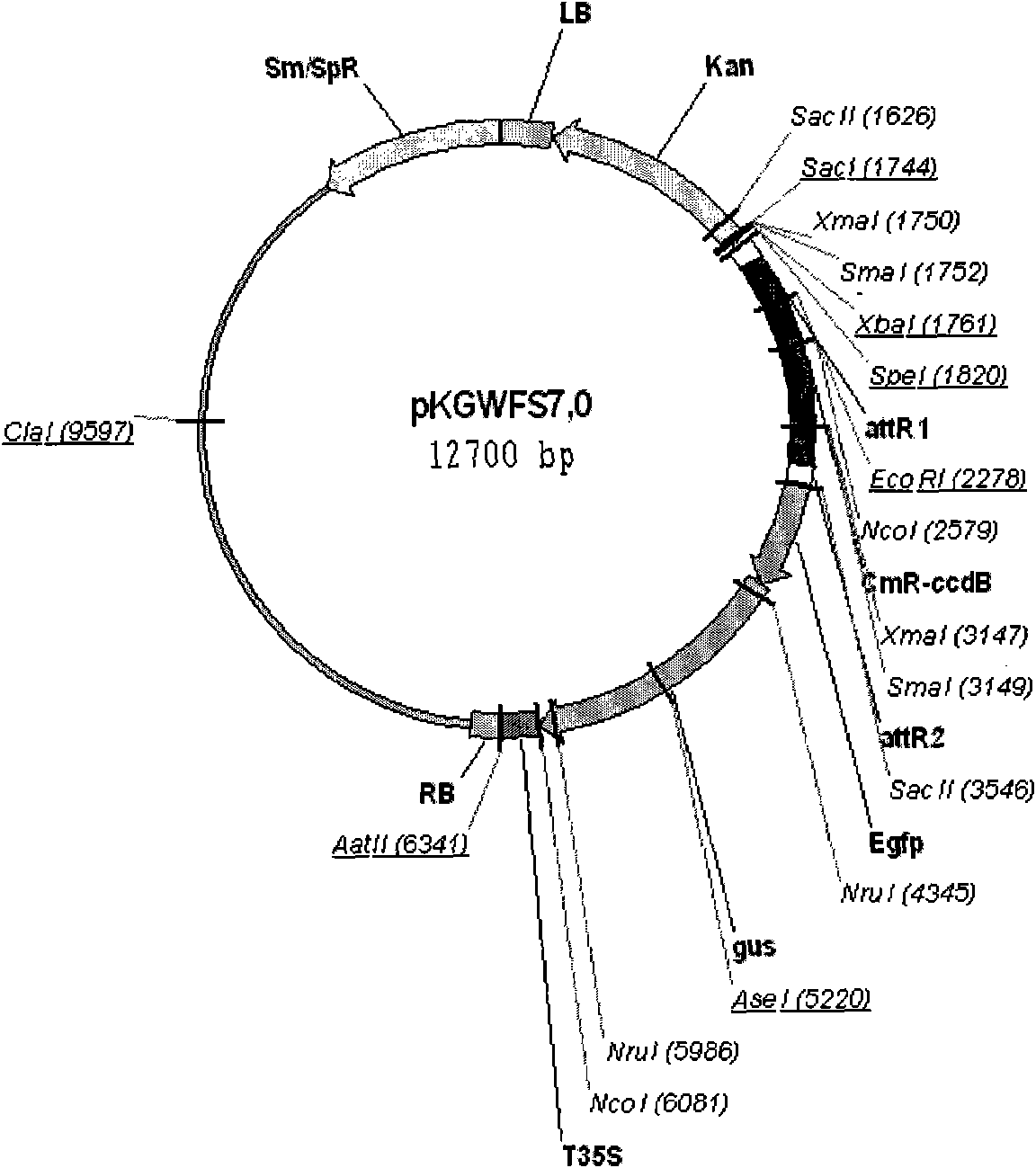
[0039] Using Jishu 22 as the recipient material, the transformed strain was Agrobacterium strain AGL104 carrying the pKGWFS7 vector (the vector was purchased from Invitrogen).
[0040] (1) Acquisition and cultivation of sterile vaccines
[0041] Cut off the part of the sweet potato plant above 10 cm from the ground, wash it with tap water for 30 minutes, cut off the leaves, cut the stem into small pieces of about 2 cm, disinfect with 70% ethanol for 1 minute, and wash with 0.1% HgCl after removing the ethanol. 2Disinfect for 10 minutes, rinse with sterile water 4 times, absorb the water with sterile filter paper, put the stems on the solid medium, and cultivate under light at 25°C. Wherein the formula of the solid medium is: MS+1.0 mg / L NAA (naphthalene acetic acid)+20 g / L sucrose+7 g / L agar, pH 5.8.
[0042] (2) Pre-cultivation of sweet potato stem section
[0043] Cut off the leaves and roots of the aseptic sweet potato seedlings grown for 30 days, cut the stems into 0.5-1...
Embodiment 2
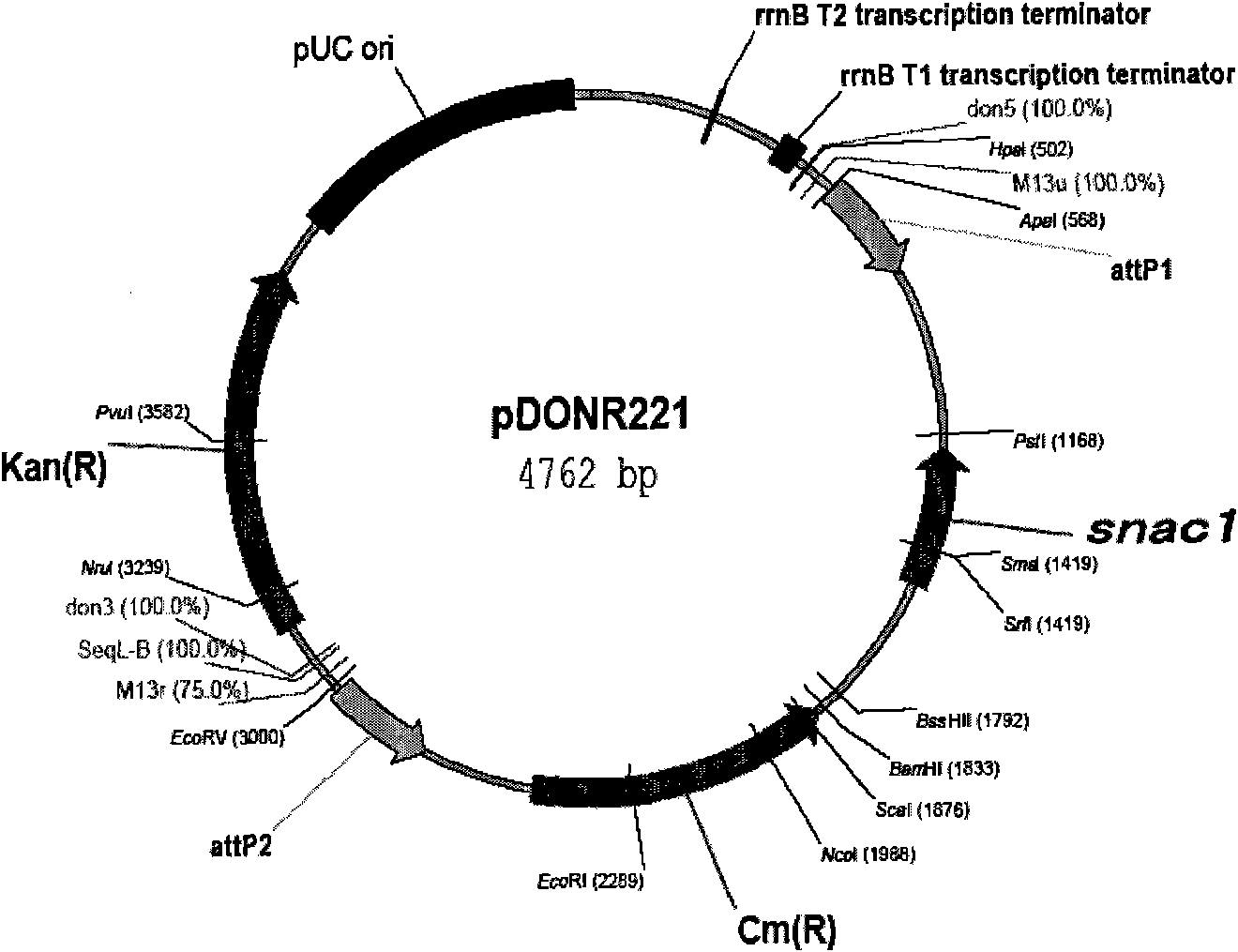
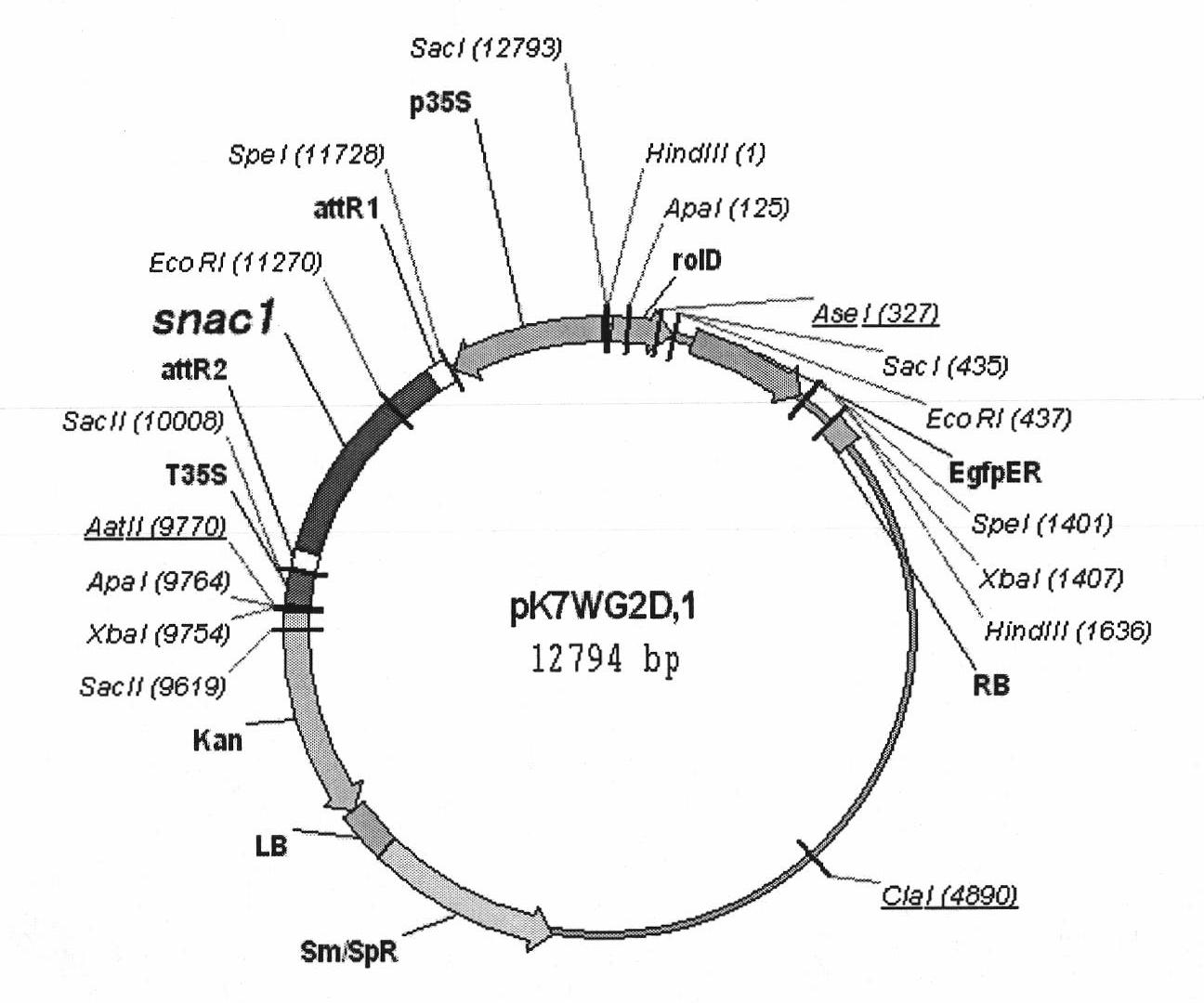
[0059] Jishu 21 was used as the recipient material, and the transformed strain was Agrobacterium AGL104 carrying the snac1 gene (p2K7GW7 vector). The pDONR and p2K7GW7 vectors were purchased from Invitrogen.
[0060] (1) Acquisition and cultivation of sterile vaccines
[0061] Cut off the part of the sweet potato plant above 10 cm from the ground, wash it with tap water for 30 minutes, cut off the leaves, cut the stem into small pieces of about 2 cm, disinfect with 70% ethanol for 1 minute, and wash with 0.1% HgCl after removing the ethanol. 2 Disinfect for 10 minutes, rinse with sterile water 4 times, absorb the water with sterile filter paper, put the stems on the solid medium, and cultivate under light at 25°C. Wherein the formula of the solid medium is: MS+0.5mg / L NAA (naphthalene acetic acid)+20g / L sucrose+7g / L agar, pH5.8.
[0062] (2) Pre-cultivation of sweet potato stem section
[0063] Cut off the leaves and roots of the aseptic sweet potato seedlings grown for 30 ...
PUM
 Login to View More
 Abstract
Description
Claims
Application Information
 Login to View More