
Task scheduling method for wireless sensor network node
A wireless sensor and network node technology, applied in wireless communication, network topology, electrical components, etc., can solve problems affecting execution performance, and achieve the effect of improving execution efficiency, reducing time and space overhead, and preventing erroneous modification.
- Summary
- Abstract
- Description
- Claims
- Application Information
AI Technical Summary
Problems solved by technology
Method used
Image

Examples
Embodiment Construction
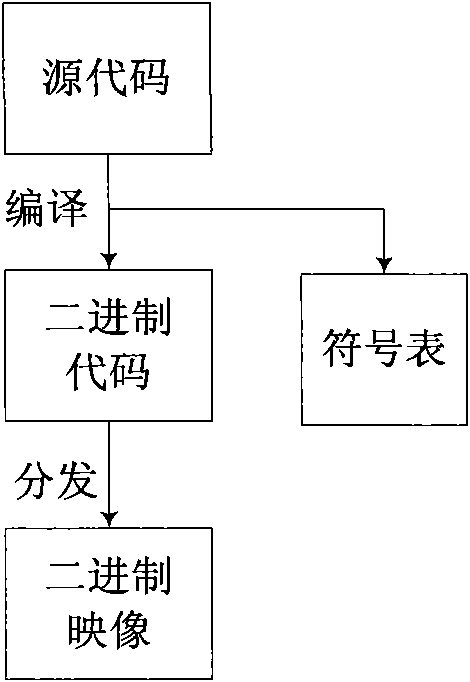
[0046] For the convenience of description, the following uses the commonly used MICA2 sensor node as an example for illustration. This node adopts 8-bit ATMega128L single-chip microcomputer, the simplicity of its hardware structure makes the general-purpose operating system unsuitable. Therefore, TinyOS, an open source operating system and development platform, has become the de facto standard. Most of the current wireless sensor network applications are developed for TinyOS, and the process is roughly as follows (such as figure 1 shown):
[0047] (1) Using the programming environment provided by TinyOS, write the source code of the application program on a traditional computer, and compile it to form a binary execution code.
[0048] (2) By means of wireless transmission, the binary execution code is distributed to each sensor node through the base station node. If the sensor node has not been deployed or is easy to recover after deployment, a hardware programmer can also ...
PUM
 Login to View More
 Abstract
Description
Claims
Application Information
 Login to View More