
Assembly device, set of two parts assembled by such a device and warp frame of a machine for forming the shed including such a set
A technology of fastening device and forming machine, applied in the direction of threaded fasteners, locking fasteners, connecting components, etc., can solve problems such as incompatibility, and achieve the effect of compact device and suitable for disassembly
Patent Information
- Authority / Receiving Office
- CN · China
- Patent Type
- Applications(China)
- Current Assignee / Owner
- Publication Date
- 2010-11-17
Smart Images
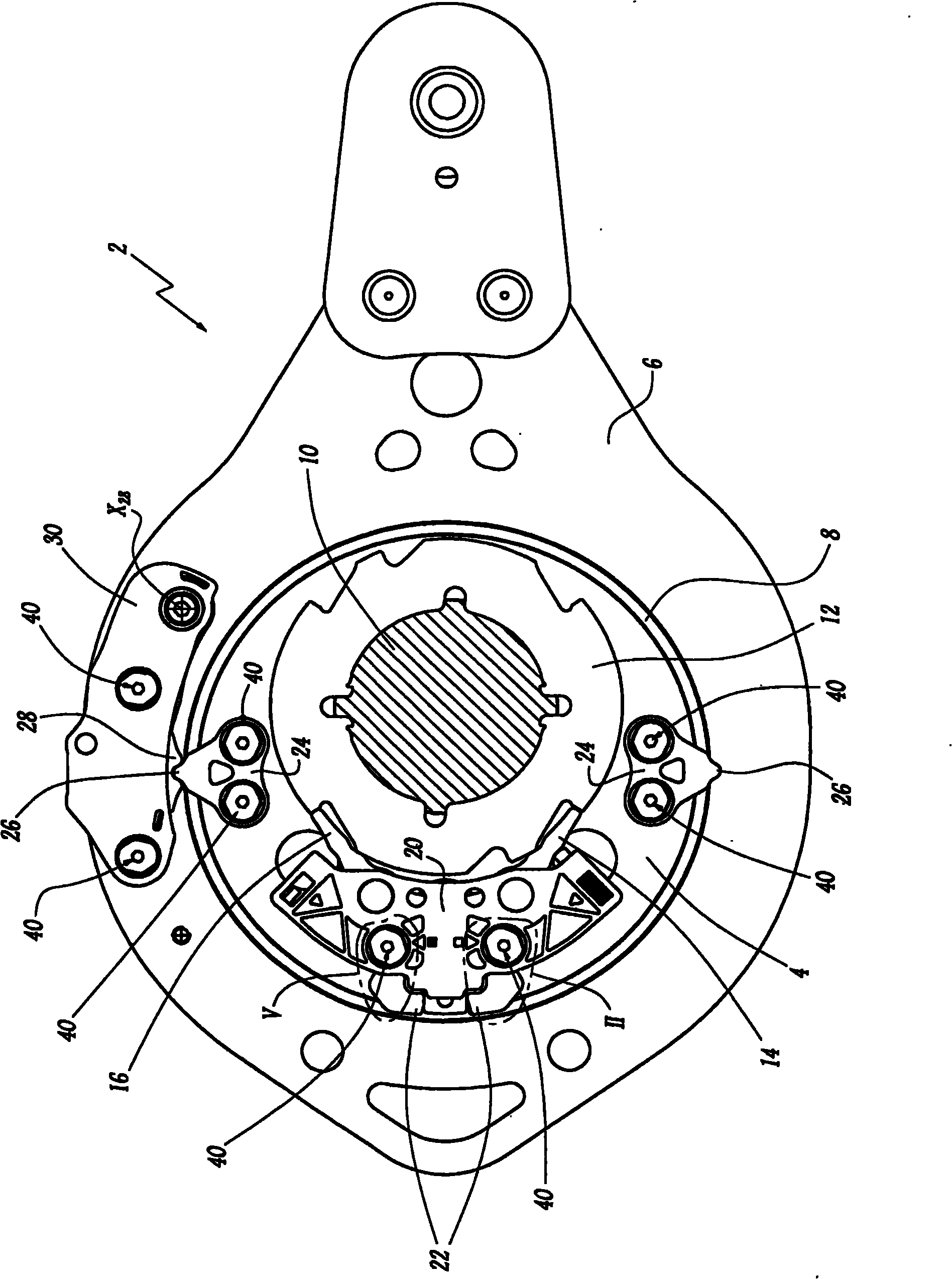
Figure 1 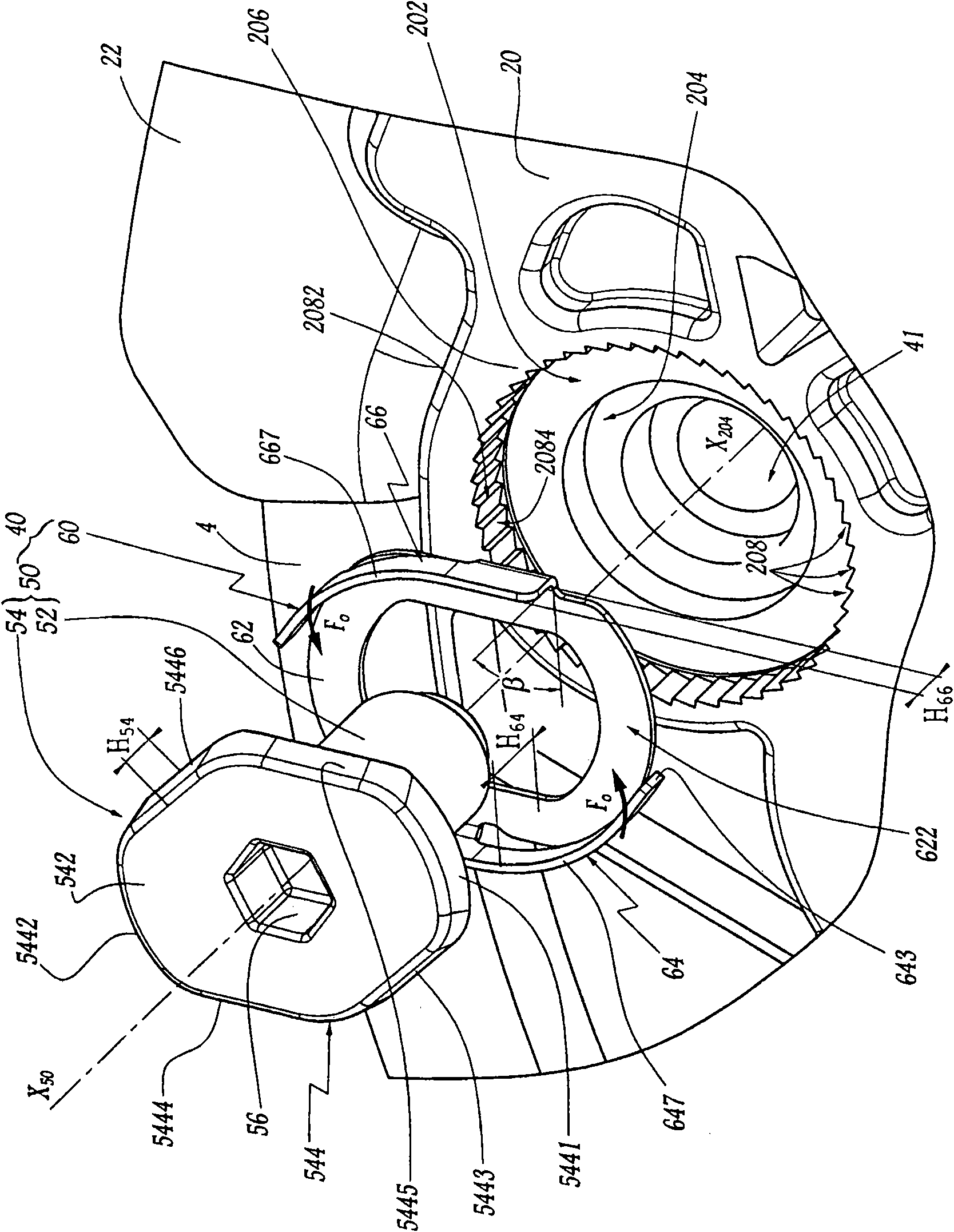
Figure 2 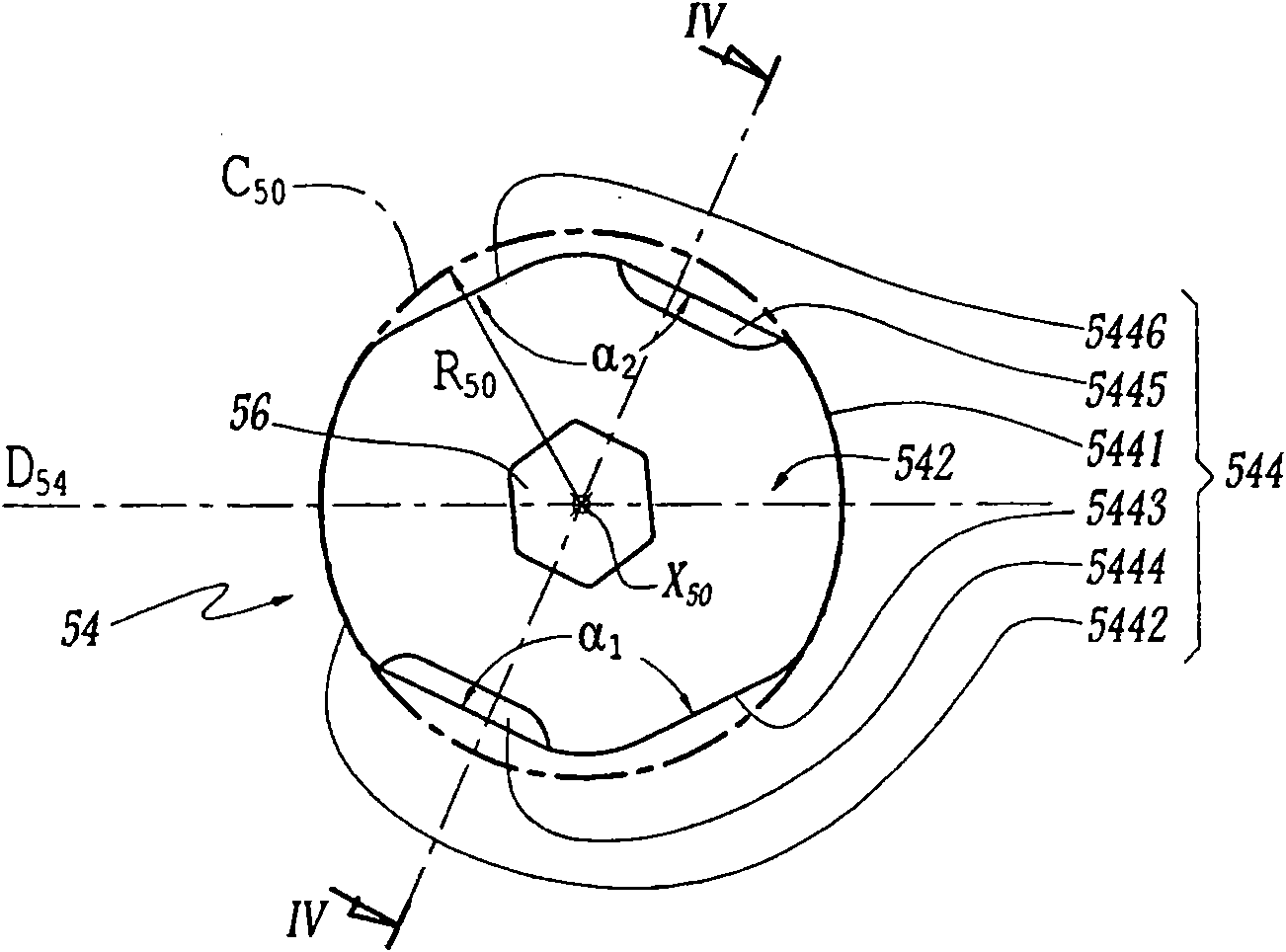
Figure 3
Abstract
Description
Background technique
[0001] In the field of shedding, it is necessary to assemble certain parts of the heald frame lifting unit of the machine during the machine manufacturing process. The hoisting unit is subject to high levels of acceleration and vibration and has a compact structure suitable for the cut size of the loom. For example, FR-A-2899602 shows a rotary dobby in which the cover is mounted on an eccentric disc and holds the needle selector in place. The cover is bolted to the eccentric disc. Due to the aforementioned vibrations and accelerations, such bolts are prone to loosen during dobby use. Likewise, the tongues of the bolts having serrated projections for cooperating with the locking arms are also secured to the eccentric disc with bolts that tend to loosen during use.
[0002] However, in cases where special pressure equipment is not necessary, mounting with bolts is advantageous over rivets. Also, thread locking is not recommended as disassembly of the she...
Examples
Embodiment Construction
[0030] figure 1 A part of the heald frame lifting unit 2 shown in includes an eccentric disk 4 with an opening for an oscillating connecting rod 6 movably mounted thereon, with ball bearings 8 arranged between them. The connecting rod 6 is intended to be connected to a pulling mechanism engaged with the heald frame by means (not shown) comprising a pivot arm. The main shaft 10 driven by intermittent rotation rotates together with the drive disc 12 and pauses every half circle. Detents 14 and 16 controlled in a known manner selectively fasten the eccentric disc 4 to the disc 12 according to the movement transmitted to the heald frame. Detent pins 14 and 16 are made by Figure 2-Figure 7 The plastic material cap 20 of the eccentric disk 4 is held against the eccentric disk 4 by two fastening means 40 shown in detail in . Two guide members 22, generally called "ramps", are provided between the cap 20 and the eccentric disc 4, and they protrude radially from the (not shown) ex...