Refuse burning system and method with functions of deacidifying flue gas and retarding dioxin generation

A technology of waste incineration and waste incinerator, which is applied in the field of waste incineration system with flue gas deacidification and retardation of dioxin generation, can solve the problems that have not been popularized and applied in a large range, and there is no mature and reliable process, personal injury, etc. Health hazards and other problems, to achieve the effect of reducing dioxin emissions, reducing the amount of deacidification agent, and reducing the amount of renovation projects

CN101915423BInactive Publication Date: 2012-10-31BEIJING CHINA SCI GENERAL ENERGY & ENVIRONMENT CO LTD
0 Cites 0 Cited by

Patent Information

Authority / Receiving Office
CN · China
Patent Type
Patents(China)
Current Assignee / Owner
Publication Date
2012-10-31
Estimated Expiration
Not applicable · inactive patent

Smart Images

  • Figure 1
    Figure 1
  • Figure 2
    Figure 2
  • Figure 3
    Figure 3
Patent Text Reader

Abstract

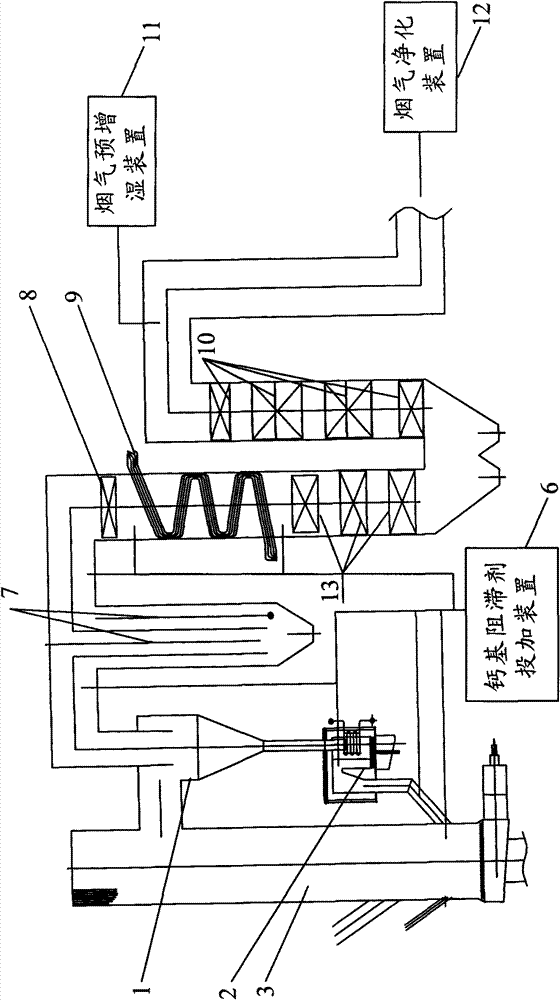
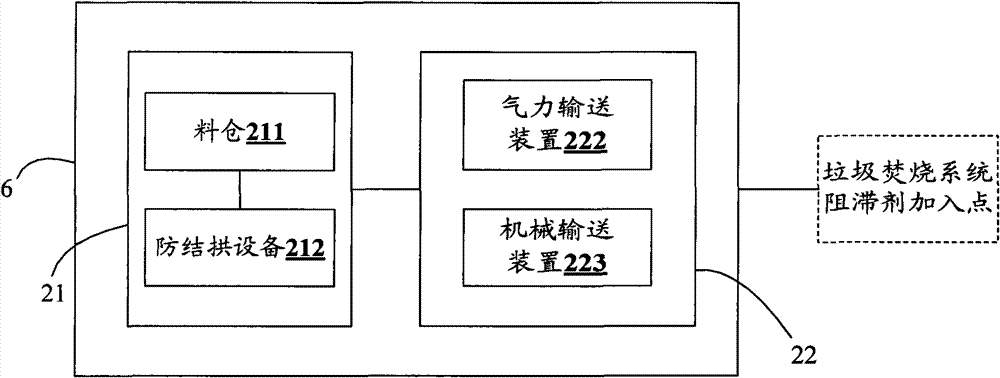
The invention discloses a refuse burning system and method with functions of deacidifying flue gas and retarding dioxin generation. The system of the invention comprises an exhaust-heat boiler, a flue gas cleaning device, a calcium base retardant adding device, a flue gas pre-humidifying device and a control device, wherein the flue gas pre-humidifying device is arranged between the exhaust-heat boiler and the flue gas cleaning device; the retardant adding device is used for adding calcium base retardant to the refuse burning system; and the calcium base retardant adding device, the flue gas pre-humidifying device and the flue gas cleaning device are respectively connected with the control device. The invention can simultaneously reduce the emission of dioxin materials and acidic gas, andis suitable for various solid waste burning systems.
Need to check novelty before this filing date? Find Prior Art

Description

technical field

[0001] The invention relates to the technical field of garbage incineration, and in particular to a garbage incineration system and method capable of deacidifying flue gas and retarding the generation of dioxins. Background technique

[0002] Incineration treatment of solid waste such as household garbage has the advantages of complete harmlessness, high reduction, and high utilization rate of resource (heat recovery), and is one of the technologies that best embodies the three principles of waste treatment. It has been widely used in developed countries and regions such as Europe, America and Japan. Since the end of the 1990s, waste incineration technology has also developed rapidly in my country, and large and medium-sized cities have built waste incineration (power generation, heating) plants one after another. It will increase by a large margin, and the proportion of domestic waste and other solid waste treated by incineration will also increase year by y...

Examples

Embodiment Construction

[0025] In order to make the above objects, features and advantages of the present invention more comprehensible, the present invention will be further described in detail below in conjunction with the accompanying drawings and specific embodiments.

[0026] The mechanism of dioxin emission from waste incineration:

[0027] There are two reasons for the presence of dioxin-like substances in waste incineration emissions: one is that the dioxin-like substances mixed in the waste are not completely oxidized and decomposed during the incineration process, and the other is that the dioxin-like substances produced during the waste incineration process Evils. According to current research at home and abroad, there are three main mechanisms for the formation of dioxins during waste incineration:

[0028] (1) High temperature gas phase generation.

[0029] After the garbage enters the incinerator and starts to burn after drying and preheating, some garbage (large pieces) may be in a l...