
Terminating set for elevator device
A technology of termination device and elevator, which is applied to elevators, transportation and packaging in buildings, etc., can solve the problems of failure of termination device, uneven pressure, uneven pressure of load-bearing components, etc.
- Summary
- Abstract
- Description
- Claims
- Application Information
AI Technical Summary
Problems solved by technology
Method used
Image

Examples
Embodiment Construction
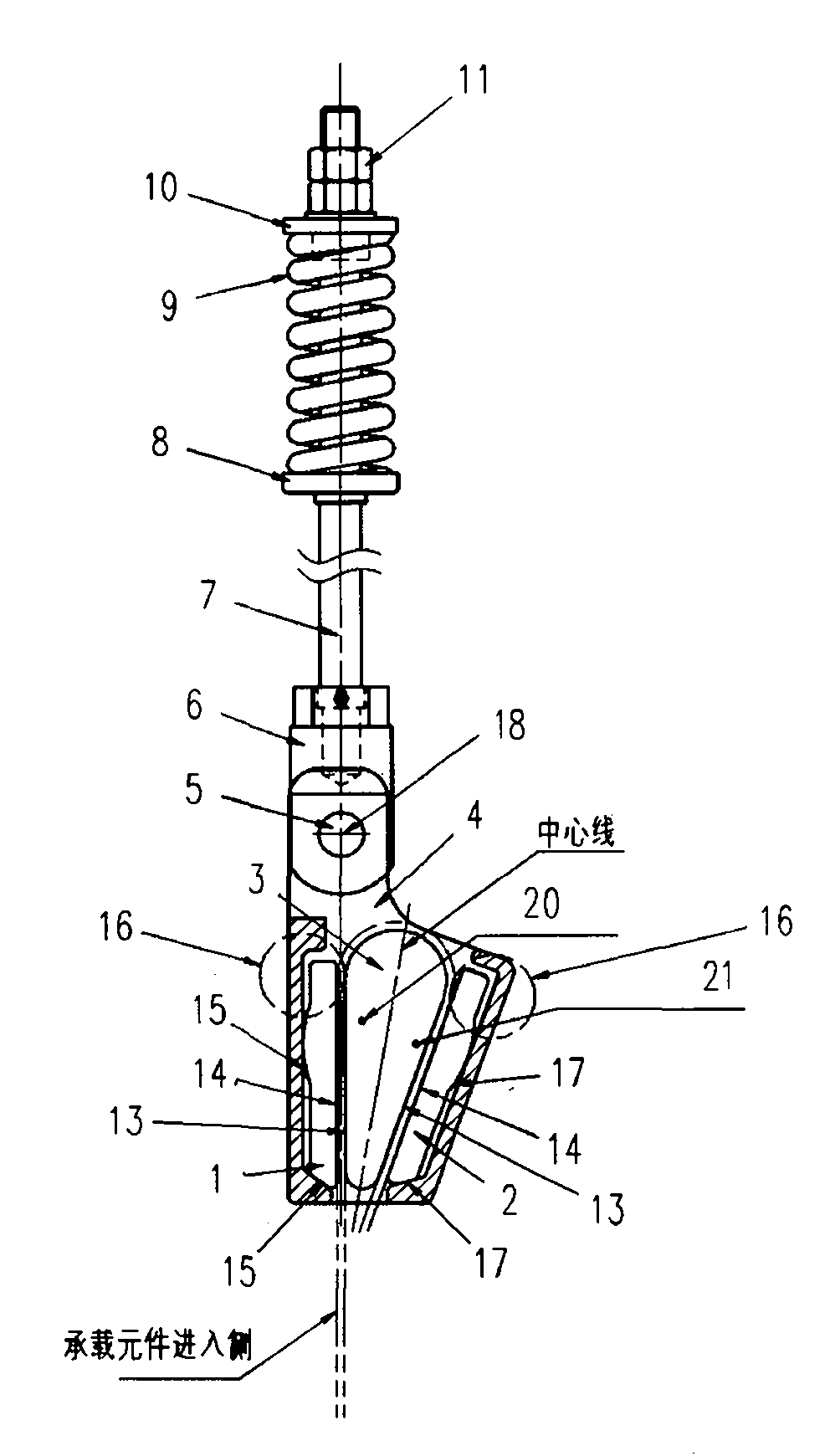
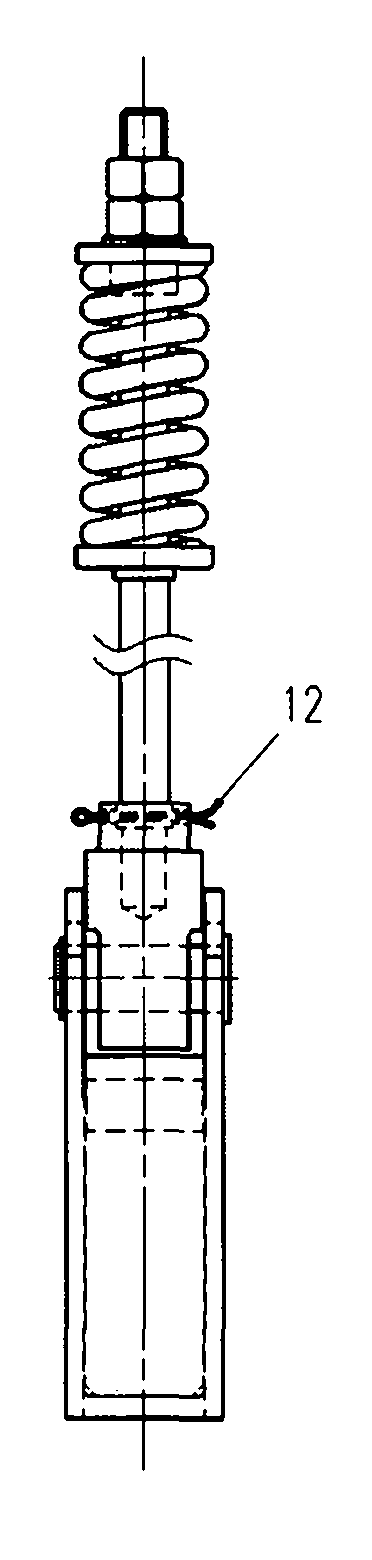
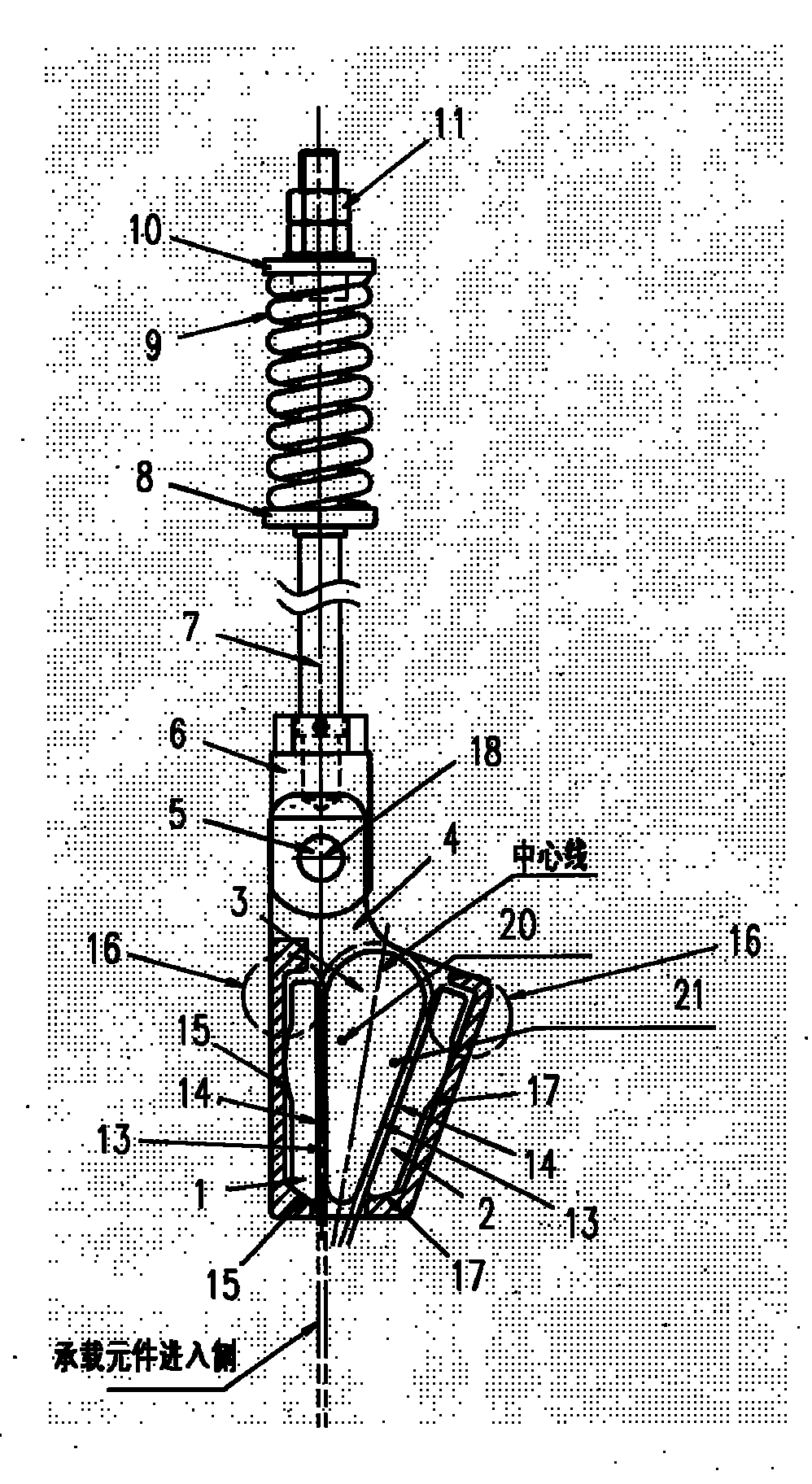
[0011] Such as figure 1 , 2 As shown, in an embodiment of the present invention, the termination device includes a support 1 , a support 2 , a wedge 3 , and a socket 4 . This termination device utilizes pin shaft 5, connector 6, screw rod 7, spring mounting seat 8, spring 9, spring mounting seat 10, nut 11 and cotter pin 12 to be connected on other parts of the elevator, wherein the supporting point 18 of socket 4 is connected to other parts of the elevator. Bearing pin 5 is rotatably connected.
[0012] The wedge 3 has two and its center (see figure 1 marked center line) form a certain included angle, relative to the set first profile surface 13, the included angle ranges from 5° to 15°. In such an included angle range, the normal pressure on the load-bearing element can be reduced, thereby reducing the surface pressure of the load-bearing element.
[0013] In a preferred embodiment, the wedge 3 has two symmetrically arranged first contour surfaces 13, and the angle betwe...
PUM
| Property | Measurement | Unit |
|---|---|---|
| Angle | aaaaa | aaaaa |
Abstract
Description
Claims
Application Information
 Login to View More