
Supported non-metallocene catalyst and preparation method and application thereof
A non-metallocene and non-metallocene ligand technology, applied in the field of non-metallocene catalysts, can solve problems such as low catalytic activity, affecting the stable operation of polymerization production equipment, and limiting the performance of non-metallocene complexes
- Summary
- Abstract
- Description
- Claims
- Application Information
AI Technical Summary
Problems solved by technology
Method used
Image

Examples
preparation example Construction
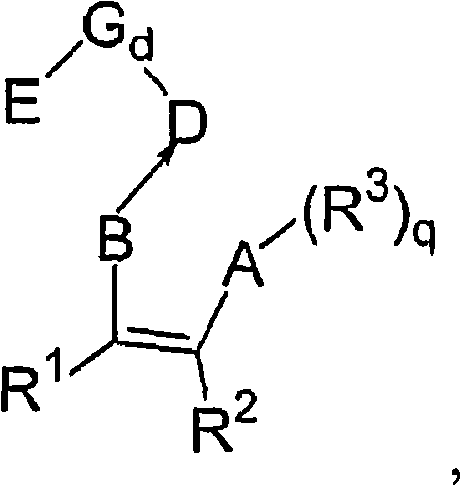
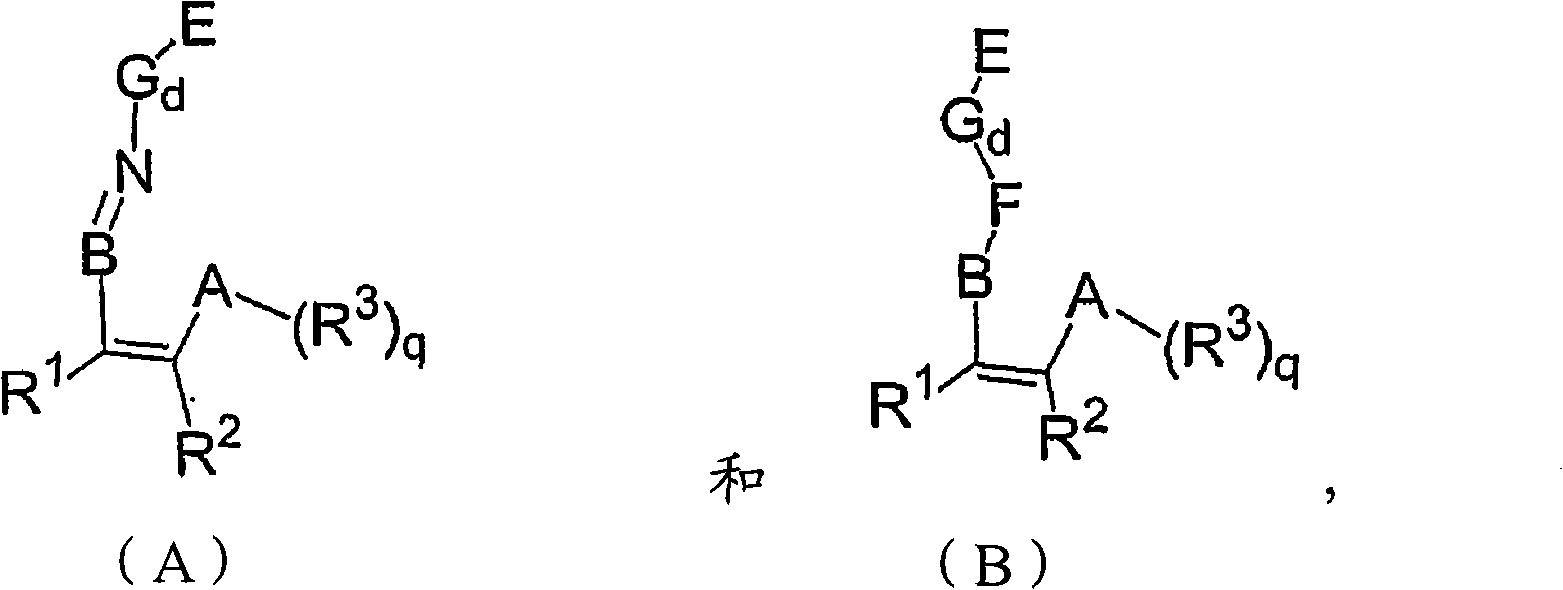
[0082] The invention relates to a preparation method of a supported non-metallocene catalyst, comprising the following steps: reacting a chemical treatment agent selected from group IVB metal compounds with a porous carrier optionally subjected to thermal activation treatment to obtain a modified carrier; making magnesium Dissolving the compound in a solvent to obtain a magnesium compound solution; contacting the modified carrier and the magnesium compound solution with a non-metallocene ligand to obtain a mixed slurry; directly drying the mixed slurry to obtain a composite carrier and reacting a chemical treatment agent selected from the group IVB metal compound with the composite carrier to obtain the supported non-metallocene catalyst.
[0083] The porous carrier will be specifically described below.
[0084] According to the present invention, as the porous support, for example, those organic or inorganic porous solids conventionally used as supports in the production of s...
Embodiment 1
[0267] The porous carrier is silicon dioxide, that is, silica gel, model ES757 of Ineos Company. First, the silica gel is thermally activated by continuously calcining at 600° C. for 4 hours under a nitrogen atmosphere.
[0268] The chemical treatment agent is titanium tetrachloride (TiCl 4 ). Weigh 5g of thermally activated silica gel, add 60ml of hexane, add titanium tetrachloride under normal temperature stirring conditions, react at 60°C for 2h, filter, wash with hexane 3 times, 60ml each time, and finally vacuum dry to obtain modified carrier.
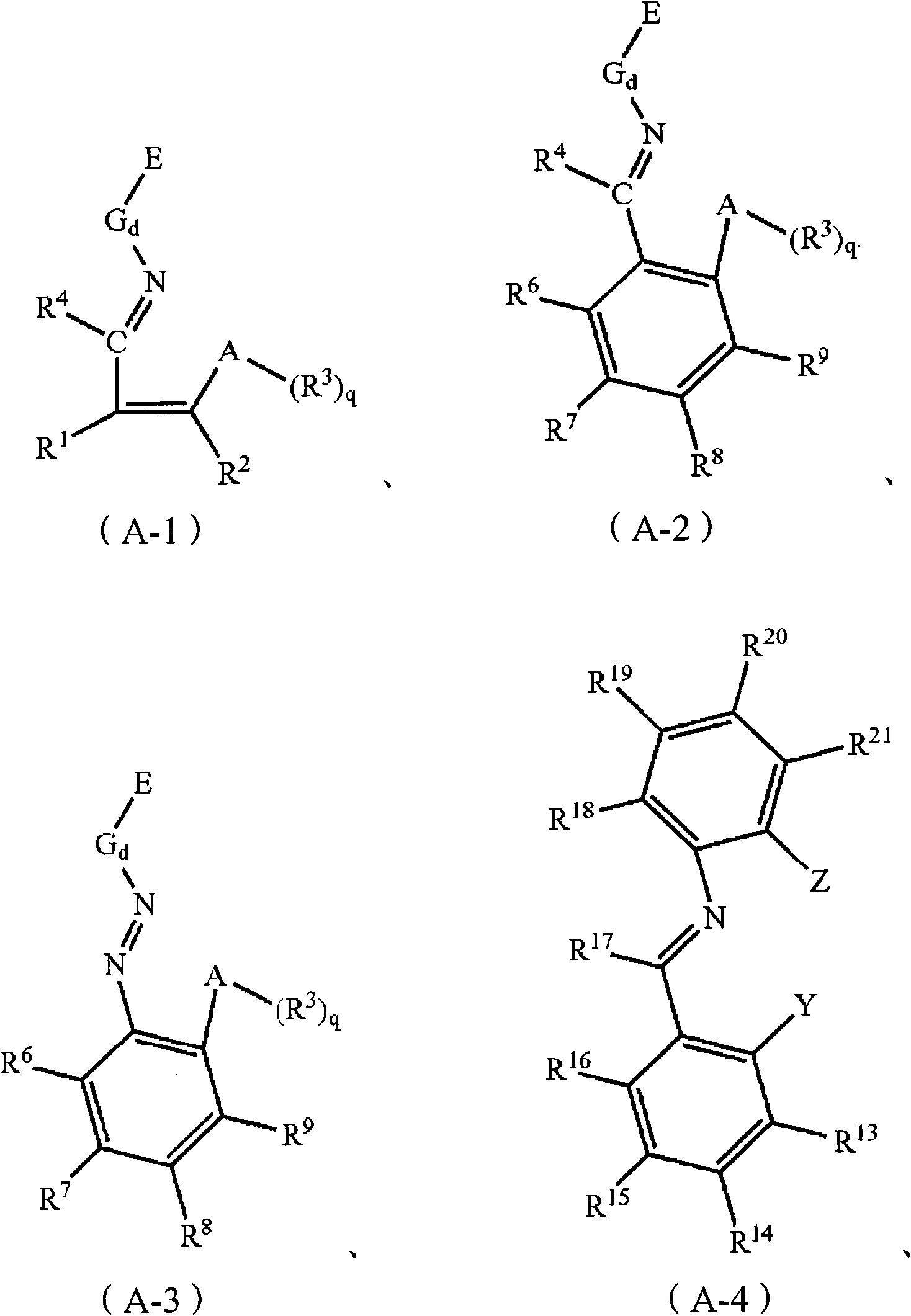
[0269] The magnesium compound adopts anhydrous magnesium chloride, and the solvent for dissolving the magnesium compound and the non-metallocene ligand adopts tetrahydrofuran. The non-metallocene ligand adopts the structure compound of.
[0270] Weigh anhydrous magnesium chloride and non-metallocene ligands, add tetrahydrofuran solvent and dissolve completely at room temperature to obtain a magnesium compound solution, then a...
Embodiment 2
[0275] Basically the same as Example 1, but with the following changes:
[0276] The porous carrier was changed to Grace's 955, and it was continuously calcined at 400° C. for 8 hours under a nitrogen atmosphere to be thermally activated. The chemical treatment agent was changed to zirconium tetrachloride (ZrCl 4 ), hexane was changed to toluene.
[0277] Non-metallocene ligands use The solvent for dissolving the magnesium compound and the non-metallocene ligand was changed to toluene, and the obtained mixed slurry was evenly heated to 100°C, and then directly vacuum-dried to obtain a composite carrier,
[0278] Then add 60ml of toluene to the composite carrier, add zirconium tetrachloride dropwise for 30 minutes under stirring conditions, stir and react at 80°C for 4 hours, filter, wash with toluene twice, use 60ml of toluene each time, vacuum at 60°C Dry to obtain a supported non-metallocene catalyst.
[0279] Wherein the ratio is that the mass ratio of the magnesium comp...
PUM
 Login to View More
 Abstract
Description
Claims
Application Information
 Login to View More