Onboard InSAR data processing method based on BP algorithm and time-varying baseline

A technology of time-varying baseline and BP algorithm, applied in radio wave reflection/re-radiation, radio wave measurement system, utilization of re-radiation, etc., can solve problems such as elevation measurement error and interference phase error, and achieve reduction of elevation error, Expand the effect of the solution
CN103487809AActive Publication Date: 2014-01-01INST OF ELECTRONICS CHINESE ACAD OF SCI

Patent Information

Authority / Receiving Office
CN Β· China
Patent Type
Applications(China)
Current Assignee / Owner
INST OF ELECTRONICS CHINESE ACAD OF SCI
Publication Date
2014-01-01

Smart Images

  • Figure 1
    Figure 1
  • Figure 2
    Figure 2
  • Figure 3
    Figure 3
Patent Text Reader

Abstract

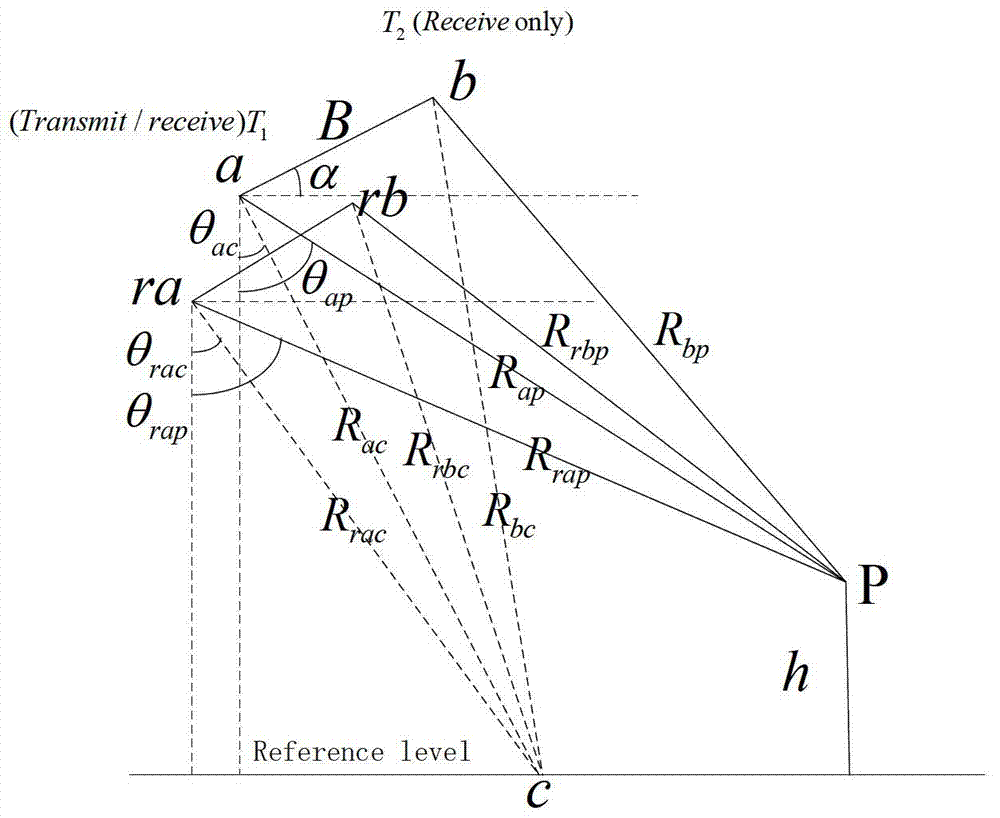
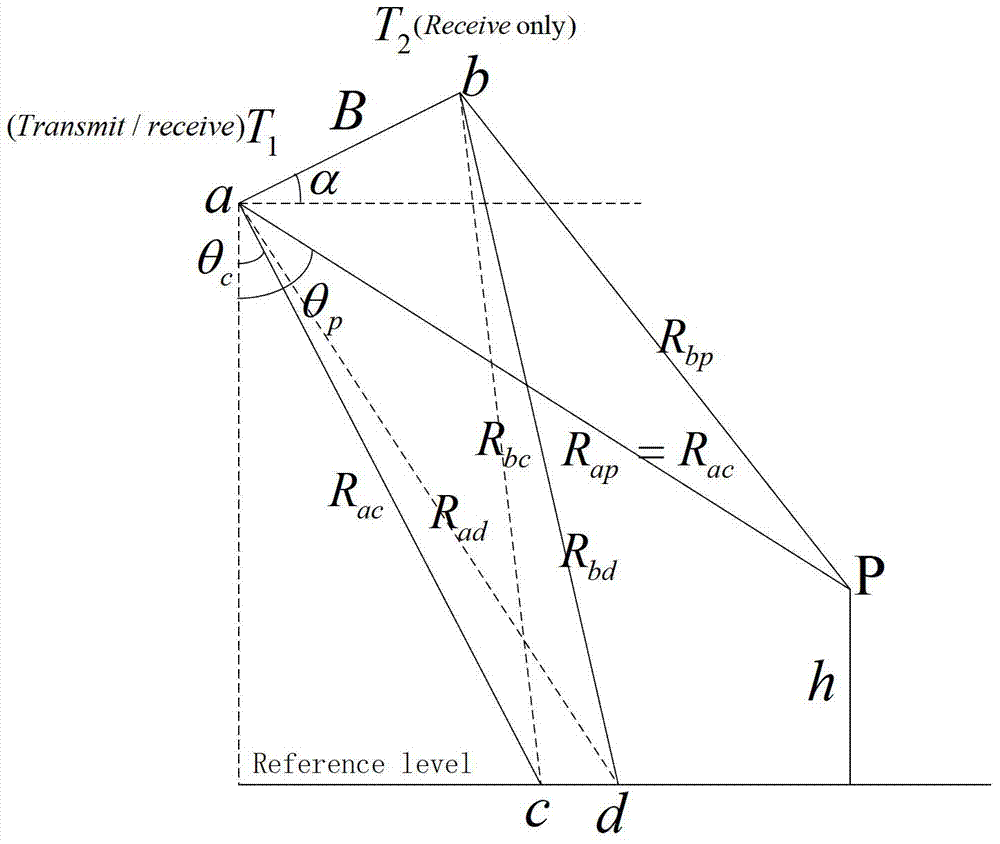
The invention discloses an onboard InSAR data processing method based on a BP algorithm and a time-varying baseline, and belongs to the field of radar imaging and InSAR signal processing. According to the onboard InSAR data processing method based on the BP algorithm and the time-varying baseline, the BP imaging algorithm is used for obtaining complex image data of double antennas, an interferometric phase representing the landform elevation is obtained through phase difference processing, phase filtering processing and phase unwrapping processing, and an accurate digital landform elevation is obtained through an elevation inversion method of the time-varying baseline. According to the BP imaging algorithm, an imaging area is divided into grids, and coherent accumulation in the azimuth direction is carried out on data obtained through pulse compression processing in the distance direction pulse by pulse to obtain high-accuracy complex image data according to motion tracks of phase centers of the antennas. According to the elevation inversion method of the time-varying baseline, parameters of the time-varying baseline change along the imaging grids in the azimuth direction point by point, namely, the parameters of the time-varying baseline change along the slow time, and the parameters of the time-varying baseline are determined by the space positions, at each moment, of the phase centers of the two antennas, and comprise the length of the time-varying baseline and the dip angle of the time-varying baseline.
Need to check novelty before this filing date? Find Prior Art

Description

technical field

[0001] The invention relates to the technical field of radar imaging and InSAR data processing, and can be used for InSAR data processing in the case of drastic changes in the attitude of the carrier aircraft. Background technique

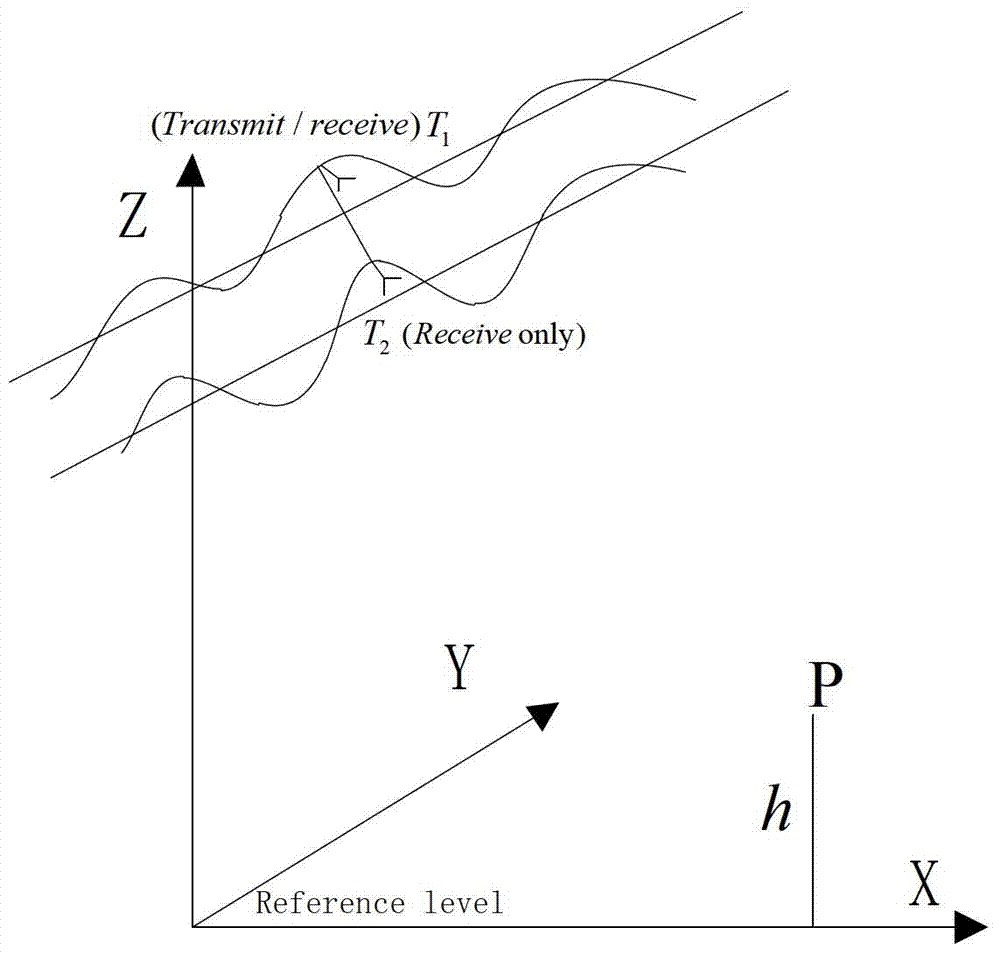
[0002] The side-view imaging geometric model of the airborne dual-antenna InSAR system, such as figure 1 As shown, under normal circumstances, due to atmospheric disturbances, the performance of the airborne platform itself, and other factors, the trajectory of the airborne SAR cannot be an ideal straight line, and it is impossible to ensure that the antenna is parallel to the ground with a stable pointing and a constant speed. linear motion. Traditional SAR imaging requires that the trajectory of the antenna phase center be an ideal straight line. When the motion trajectory of the antenna phase center deviates from the ideal straight line trajectory, motion errors that affect the quality of SAR images will occur, and then phase...

Claims

the structure of the environmentally friendly knitted fabric provided by the present invention; figure 2 Flow chart of the yarn wrapping machine for environmentally friendly knitted fabrics and storage devices; image 3 Is the parameter map of the yarn covering machine
Login to View More