Hydrogel wound dressing for treating laser cauma and burns and scalds as well as preparation method thereof

A wound dressing and hydrogel technology, applied in the field of medical materials, can solve the problems of complex and cumbersome preparation process of nano-silver, complicated preparation process of medical dressing, high preparation cost, etc., to promote wound healing, strong patient adaptability, and long storage time Effect

CN103495199AActive Publication Date: 2014-01-08SAIKE SAISI BIOTECH CO LTD
18 Cites 36 Cited by

Patent Information

Authority / Receiving Office
CN · China
Patent Type
Applications(China)
Current Assignee / Owner
Publication Date
2014-01-08

Smart Images

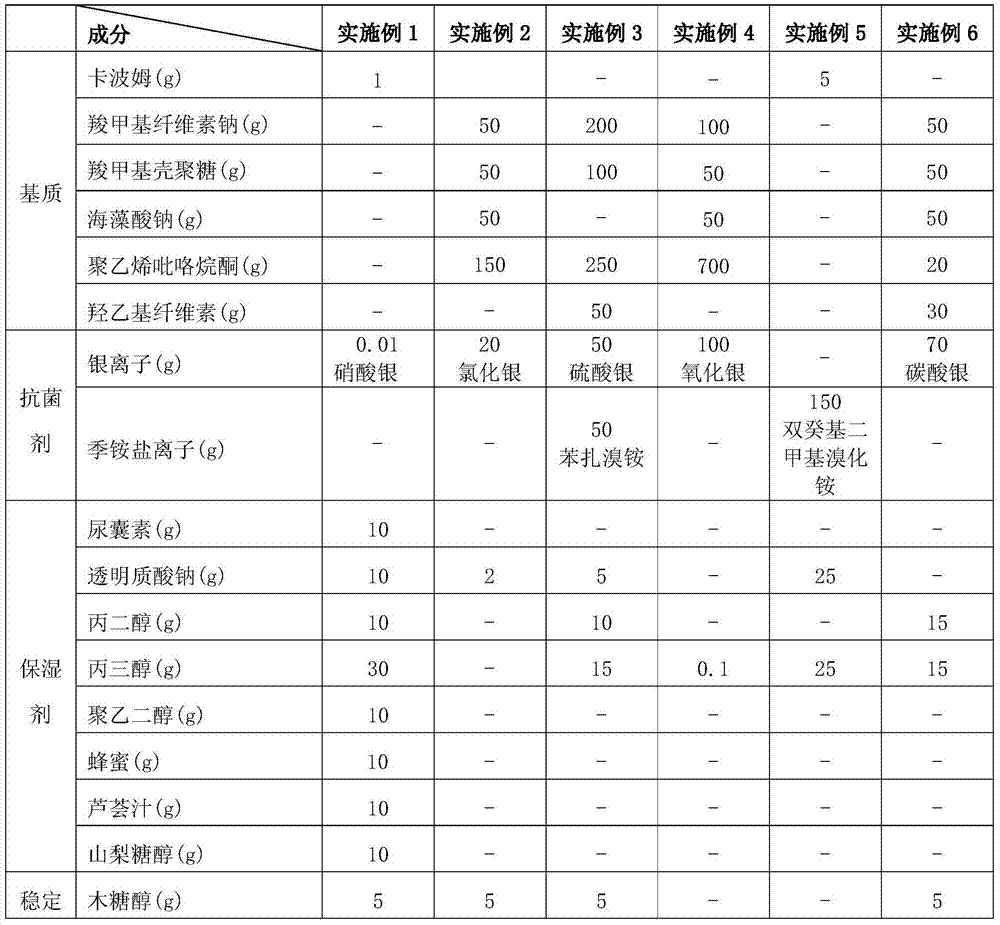
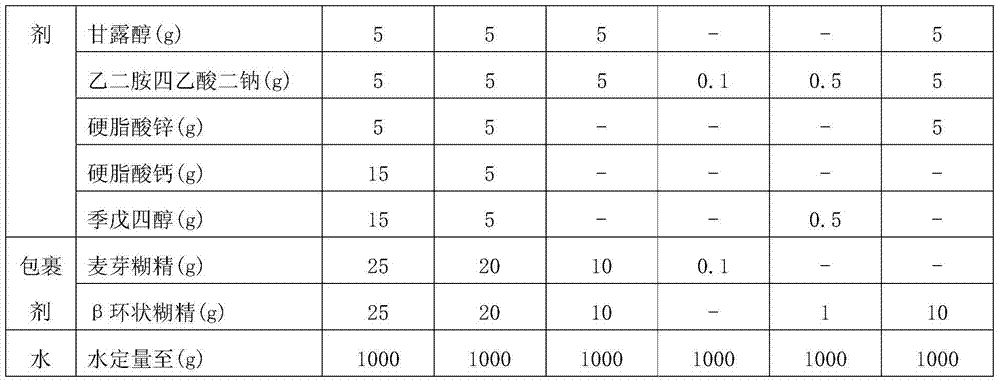
  • Figure 1
    Figure 1
  • Figure 2
    Figure 2
  • Figure 3
    Figure 3
Patent Text Reader

Abstract

The invention relates to hydrogel wound dressing for treating laser cauma and burns and scalds. The active components of the hydrogel wound dressing include an antibacterial agent, a humectant and a stabilizer, wherein the antibacterial agent inhibits adhesion and growth of the wound of laser cauma and surrounding bacteria and can kill various pathogenic bacteria at the cauma part, so as to effectively promote union of the laser cauma. The antibacterial agent adopted by the invention does not generate drug resistance, the humectant can maintain moisture of the wound, promote union of the wound surface, prevent formation of scars and alleviate wound pain. With the adoption of the stabilizer, the hydrogel maintains long-time antibacterial effectiveness. Experiments verify that the hydrogel dressing provided by the invention has the effects of effectively relieving wound pain, controlling local infection, maintaining moisture of wound skins, protecting skins, accelerating and promoting union of wound surface and wound and preventing formation of scars, and can be used for healing laser-burned skin wound surfaces (such as laser mole removal and the like) and wound surfaces of burns and scalds.
Need to check novelty before this filing date? Find Prior Art

Description

Technical field

[0001] The invention belongs to a wound dressing in the technical field of medical materials and a preparation method thereof, and particularly relates to a hydrogel wound dressing for treating laser burns and burns and a preparation method thereof. Background technique

[0002] Everyone will have some moles on their face or body. A few moles are present at birth but most of them increase after puberty. Moles are mainly caused by the accumulation of melanocytes on the skin. They are brown to black spots or papules. Some are flat or raised on the surface of the skin, and some may even grow hair. Most moles are benign, and only a few will have malignant changes, especially the moles located on the lips, palms and soles, which may be malignant and cancerous due to long-term stimulation, so it is advisable to remove them. There are many methods for removing moles, including laser, electrocautery, chemical or salicylic acid cauterization, cryotherapy, and surgical res...

Examples

Embodiment 7-12

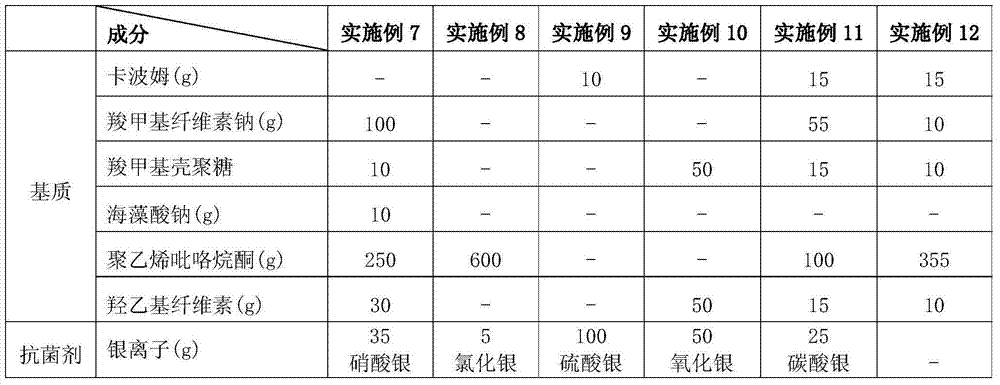
[0088] Example 7-12. Preparation of hydrogel wound dressing for treating laser burns and burns

[0089] The formulations of the hydrogel wound dressings for treatment of laser burns and burns in Examples 7-12 are shown in Table 2:

[0090] Table 2 Formulas of hydrogel wound dressings for treating laser burns and burns

[0091]

[0092]

[0093] The hydrogel wound dressing for treating laser burns and burns and scalds of the present invention includes the following steps:

[0094] 1) Weigh each component according to the formula;

[0095] 2) Dissolve sodium alginate, polyvinylpyrrolidone and / or hydroxyethyl cellulose as a matrix in purified water to fully swell, and then adjust the pH to neutral (pH 7);

[0096] 3) Add maltodextrin and / or β cyclodextrin as a coating agent to the silver ion or quaternary ammonium salt solution as an antibacterial agent, grind, stir and mix well, add water and stir to obtain a solution;

[0097] 4) Add the solution of step 3) to the swollen matrix in step 2)...