
Method and server for robot queuing management
A queuing management and robot technology, applied in the field of robot queuing management, methods and servers, can solve problems such as reduced work efficiency and congestion, and achieve the effects of avoiding congestion, increasing speed, and improving overall work efficiency
- Summary
- Abstract
- Description
- Claims
- Application Information
AI Technical Summary
Problems solved by technology
Method used
Image

Examples
Embodiment 1
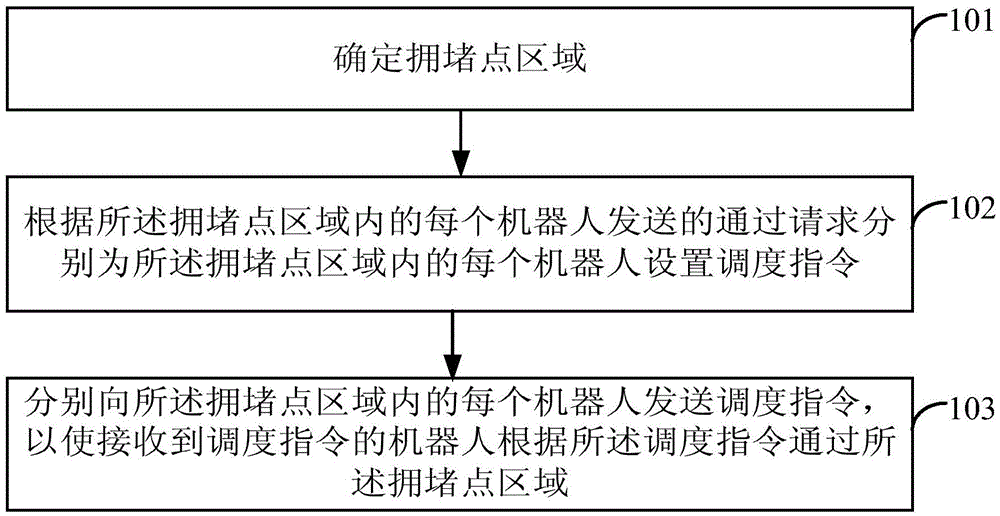
[0039] see figure 1 , the embodiment of the present invention provides a method for robot queuing management. The method specifically includes the following steps:
[0040] Step 101, determining the congestion point area;
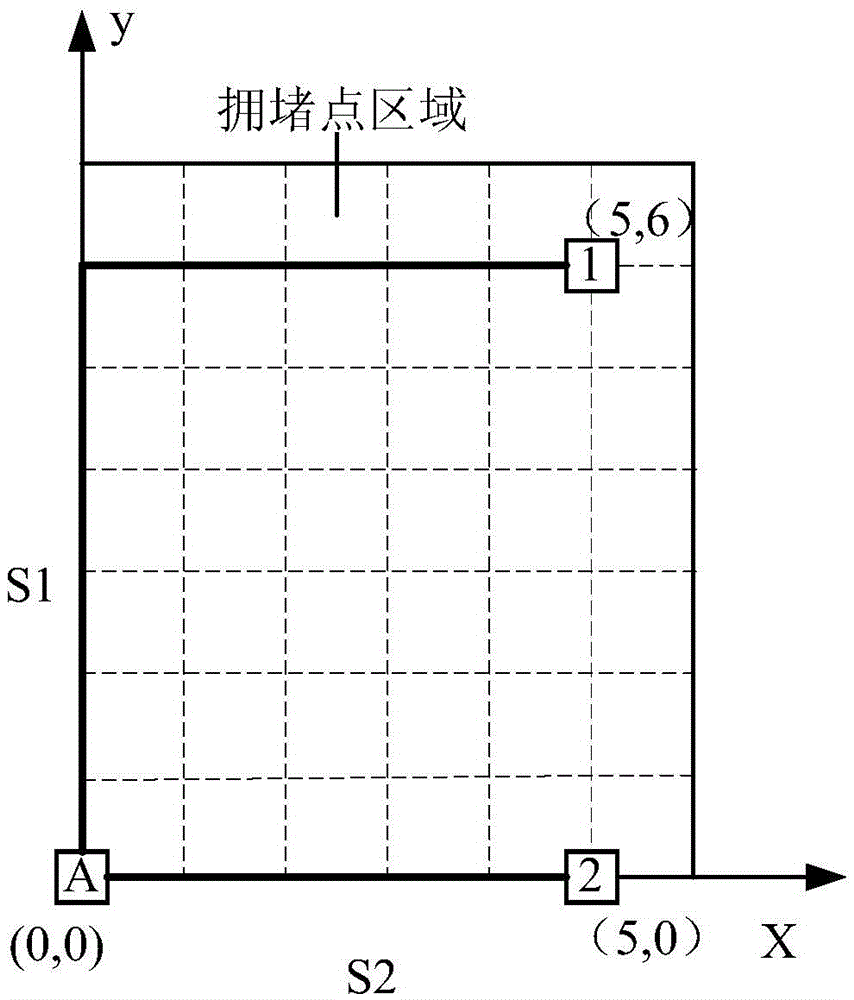
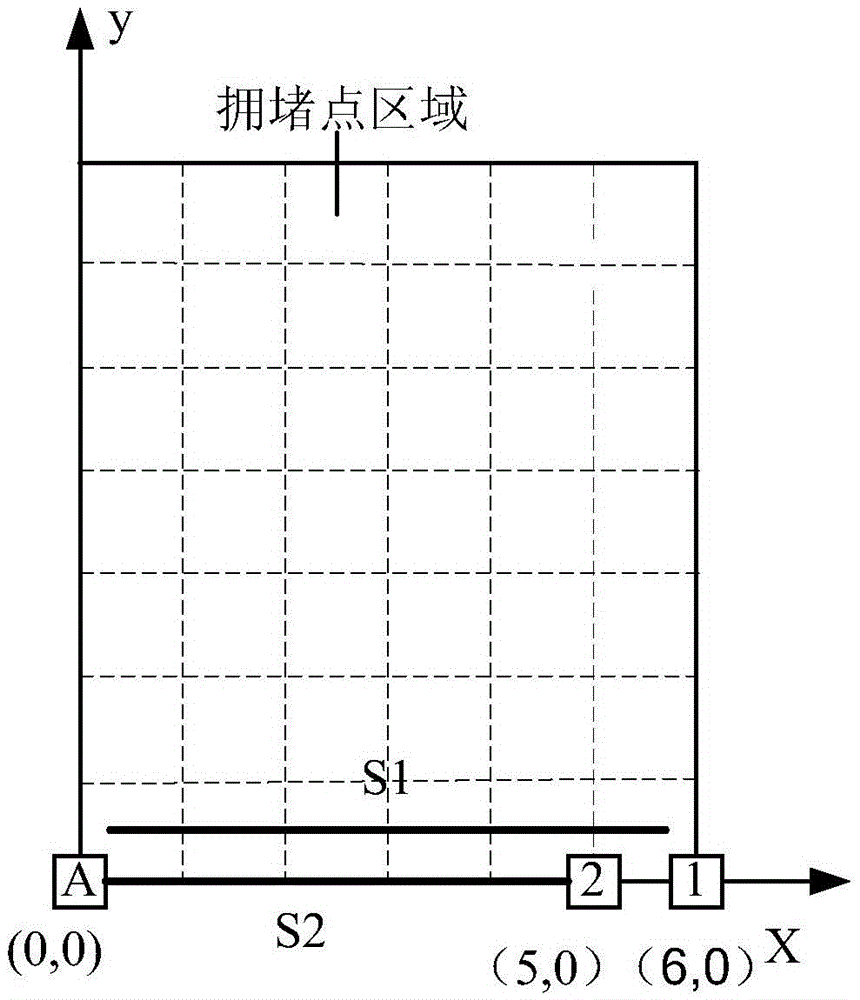
[0041] In the embodiment of the present invention, the server establishes a data connection with multiple robots in the field, and then obtains the paths of the multiple robots, analyzes the paths of the multiple robots, and determines the places with high frequency of occurrence in the paths As a congestion point, the congestion point area is determined from the adjacent areas of the congestion point, wherein the congestion point area is different from arranging robots in a row, and the robots that first enter the congestion point area are arranged in the front queuing area, but the robots are scattered Various locations within the congestion point area.
[0042] Step 102 , according to the passing request sent by each robot in the congestion point area...
Embodiment 2
[0071] This embodiment provides a server for robot queuing management, such as Figure 5 As shown, the server establishes data connections with a plurality of robots, and the server includes:
[0072] Determining module 51, is used for determining congested point area;
[0073] A setting module 52, configured to set scheduling instructions for each robot in the congestion point area according to the passing request sent by each robot in the congestion point area;
[0074] The sending module 53 is configured to send a scheduling instruction to each robot in the congestion point area, so that the robots that have received the scheduling instruction pass through the congestion point area according to the scheduling instruction.
[0075] Wherein, the determination module 51 includes:
[0076] an acquisition unit, configured to acquire the paths of the plurality of robots;
[0077] a congestion point determining unit, configured to determine a congestion point according to the p...
PUM
 Login to View More
 Abstract
Description
Claims
Application Information
 Login to View More