However, in the actual on-site detection work, there are some problems in the installation of hardware equipment and
data acquisition. These problems have caused problems such as long detection time, limited geophone
layout environment, and inconvenient on-site operation, which have affected the field to a certain extent. The construction progress and specific problems are as follows:
[0005] ①The installation efficiency of the acquisition module is low: the installation of the acquisition module mainly includes two parts: the connection between the
wireless module, the
transmission fiber, the
detector, the connection between the fixed blocks and the
coupling with the wall
The
coupling between the fixed block and the wall, the existing method uses a percussion
drill to
drill small holes on the wall, the fixed block is fixed on the surface of the wall through a
metal rod (or rubber hose / short chopsticks), and then the quick-setting agent or anchoring agent is used.
Adhesive coupling, this method is more suitable in conventional tunnels, but in tunnels with
water seepage, because the surface of the rock
mass or wall is infiltrated by
water seepage, the
coupling effect of the quick-setting agent and the anchoring agent is greatly affected, and what is more , so that the
coupling effect is invalid, and the fixed block cannot be fixed on the surrounding rock or wall. It takes time and effort and can not get good detection data, which affects the on-site construction. Therefore, a new installation method for the fixed block of the geophone is urgently needed for on-site detection. , to ensure high-quality acquisition of seismic wave data;
[0006] ② It takes a long time to recycle the acquisition module: the overall disassembly and recycling steps of the existing acquisition module are relatively complicated. The
optical fiber cable is not discounted, which leads to a long take-up time; and in order to ensure the repeated use of the concrete fixed block, it needs to be cleaned after the on-site detection (use a geological hammer to knock the anchoring agent on the fixed block drop), especially when the accelerating agent or anchoring agent coagulates the geophone and the anchor, it needs to be removed without damaging the connecting bolts and the geophone, which consumes a long time. In order to reduce the
workload of
recovery, it is proposed A new recycling method is very necessary;
[0007] ③ Poor
repeatability of seismic
waves excited by sledgehammer: In the current tunnel detection method, in addition to the explosive source, a 2-8 lb sledgehammer provided on site is used as the source trigger device, and the hammer surface is used to excite seismic
waves.
During the hammering process, due to the high position of some hammering points, it is inconvenient to use a sledgehammer for seismic wave excitation; if a small hammer is used for hammering, the energy of the excited seismic wave is slightly insufficient
In addition, due to the particularity of the surface of the rock
mass on site, there is randomness in using the sledgehammer on site. During the knocking process, it is easy to hit the mark points in
dislocation, especially when hammering on the initial lining support, it is easy to fail. triggering circumstances;
[0008] ④The
layout of the observation system is inconvenient: the current three-dimensional observation system
In a TBM tunnel, since the body of the
roadheader basically occupies the
interior space of the cavern, you can stand on the TBM platform to touch all points in the space, and it is relatively easy to mark and install the
receiver points and hammer the source; In tunnels, due to the fact that the geophone mounting point at the
waist or vault position cannot be reached without the use of props
If a ladder is used on site, the vault detection point cannot be reached; if a
loader is used, additional workers are needed and the
operation time will be increased. In particular, this method has potential safety hazards and may cause unnecessary injuries to installers


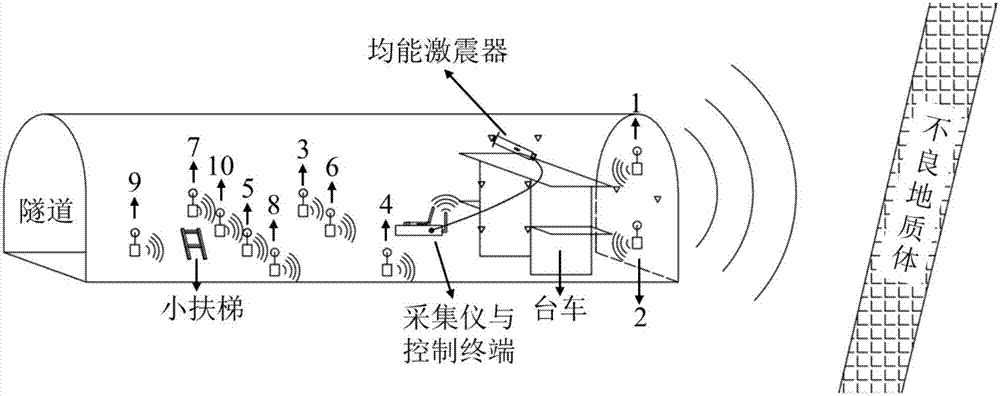
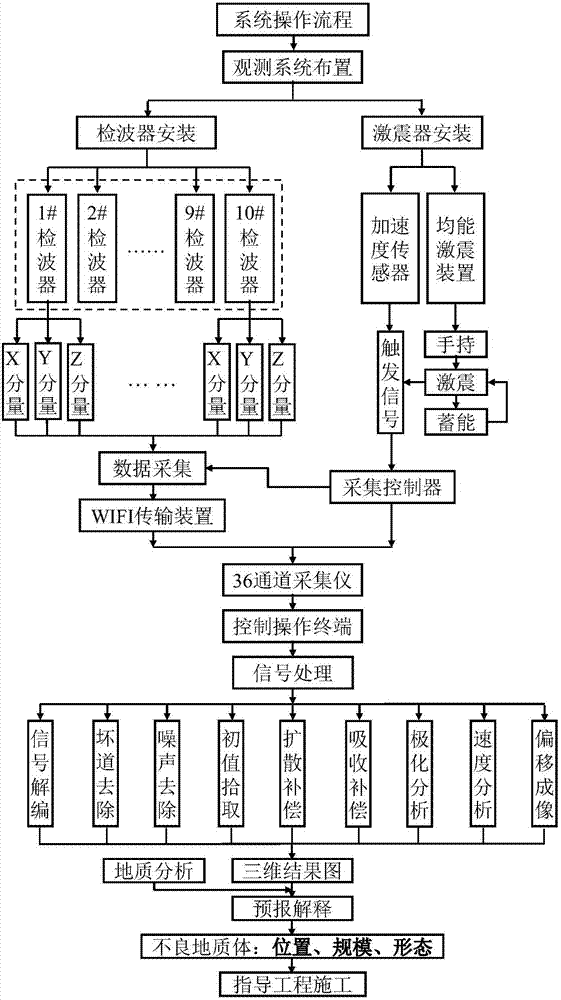
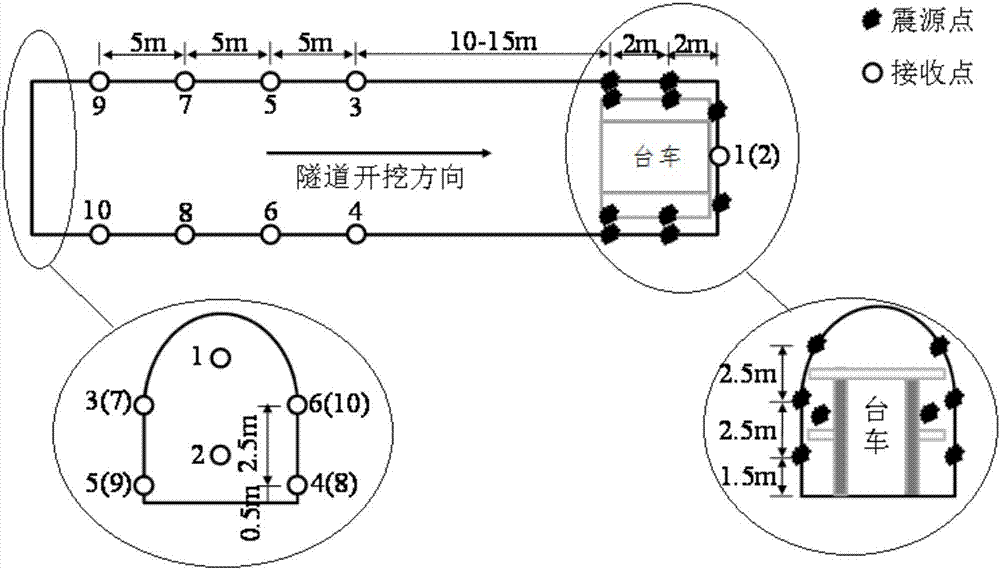
 Login to View More
  Login to View More