Check patentability & draft patents in minutes with Patsnap Eureka AI!

Non-destructive dynamic optimal scheduling method for CAN bus

A CAN bus, dynamic optimization technology, applied in bus network, digital transmission system, data exchange network, etc., can solve static scheduling algorithm communication efficiency and low network utilization, algorithm complexity, network resource overhead defects, and inability to adapt flexibly System changes and other issues

Active Publication Date: 2020-06-30
NINGBO UNIVERSITY OF TECHNOLOGY
View PDF3 Cites 0 Cited by
  • Summary
  • Abstract
  • Description
  • Claims
  • Application Information

AI Technical Summary

Problems solved by technology

Static scheduling algorithm in CAN network control system is very suitable for message scheduling in deterministic hard real-time systems, but static scheduling algorithm is only suitable for systems with fixed system time characteristics, and cannot flexibly adapt to system changes, making it difficult to make full use of system resources
[0003] At present, there have been researches on the dynamic scheduling optimization of CAN bus. Guan Changjiao et al. published a paper "Research on Dynamic Scheduling of CAN Bus Information Triggered by Flexible Time", and Liu Chao et al. , Yang Jie, etc. published the paper "Stochastic Dynamic Priority Scheduling of Aperiodic Information in CAN Bus", etc., but the above scheduling strategies have defects in algorithm complexity, network resource overhead, etc.
The invention proposes a new non-destructive dynamic optimal scheduling method of CAN bus, which solves the problems of low communication efficiency and network utilization of static scheduling algorithms, and ensures the real-time and reliability of messages

Method used

the structure of the environmentally friendly knitted fabric provided by the present invention; figure 2 Flow chart of the yarn wrapping machine for environmentally friendly knitted fabrics and storage devices; image 3 Is the parameter map of the yarn covering machine
View more

Image

Smart Image Click on the blue labels to locate them in the text.
Viewing Examples
Smart Image
  • Non-destructive dynamic optimal scheduling method for CAN bus
  • Non-destructive dynamic optimal scheduling method for CAN bus
  • Non-destructive dynamic optimal scheduling method for CAN bus

Examples

Experimental program
Comparison scheme
Effect test

Embodiment Construction

[0020] The following describes the implementation of the present invention through specific specific examples, and those skilled in the art can easily implement the content disclosed in this specification.

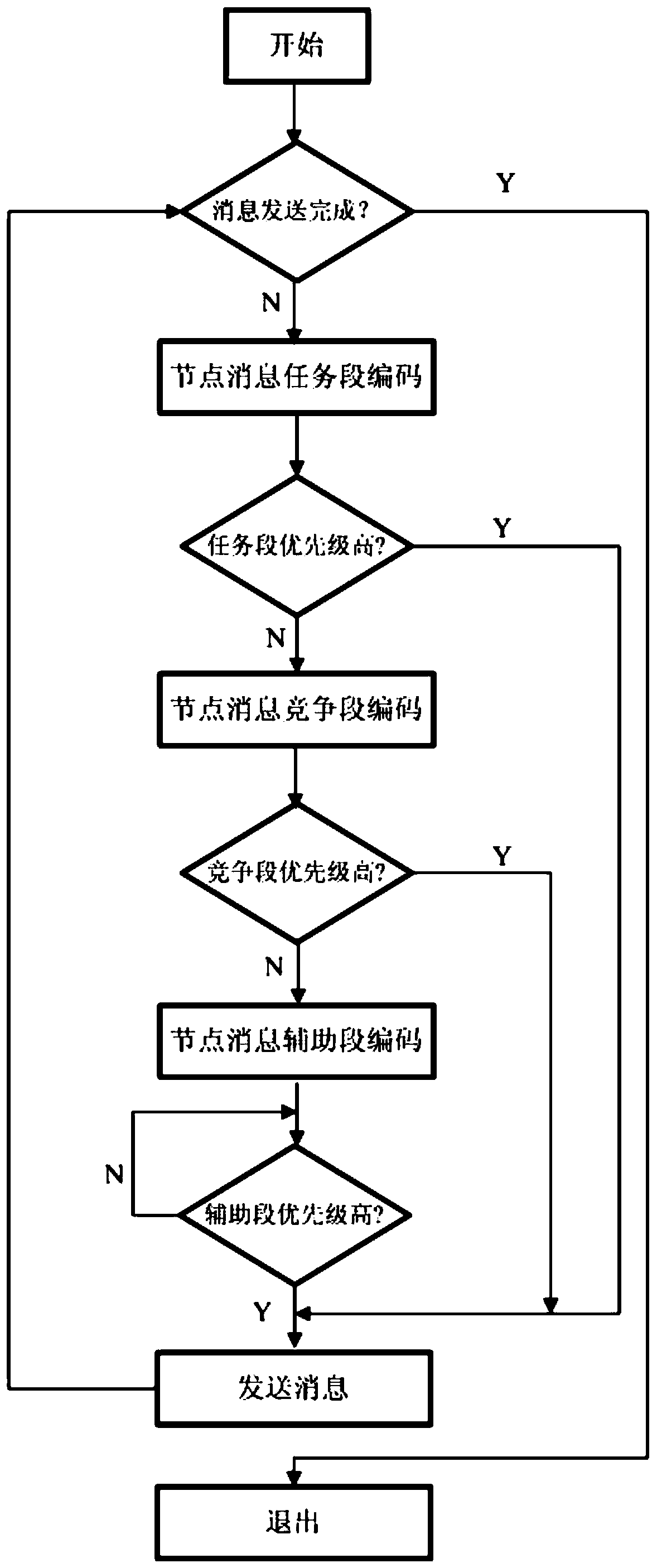
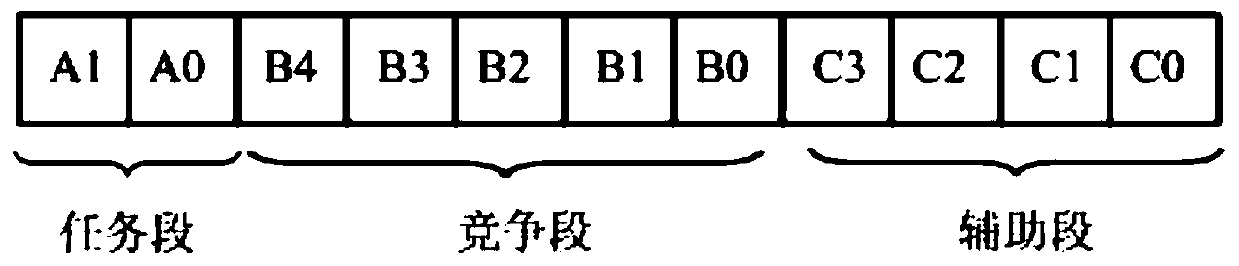
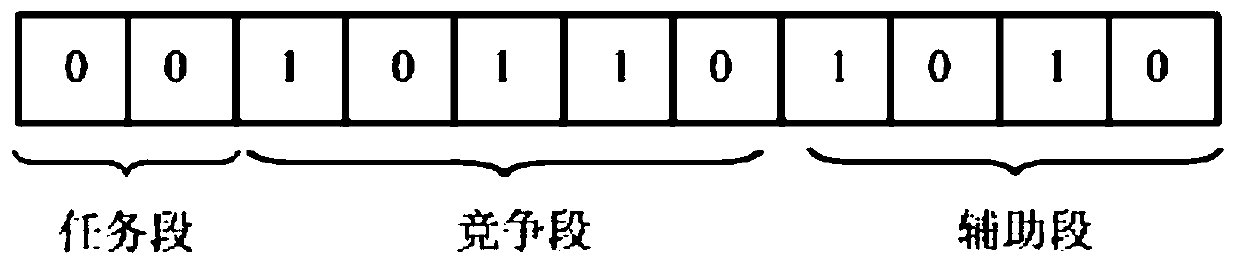
[0021] Such as figure 1 As shown, the non-destructive dynamic optimization scheduling method for the CAN bus of the present invention encodes the identifier of the CAN bus arbitration field through task segment, competition segment, and auxiliary segment. The number of bits in the task segment, competition segment, and auxiliary segment can be Determined according to the specific system. When sending a message, the priority is compared through three segments, the task segment priority> Competition segment priority> Auxiliary segment priority. For messages with the same task segment priority, compare the priority of the competing segment, and compare the priority of the auxiliary segment for messages with the same priority of the competing segment. figure 2 It is the priority...

the structure of the environmentally friendly knitted fabric provided by the present invention; figure 2 Flow chart of the yarn wrapping machine for environmentally friendly knitted fabrics and storage devices; image 3 Is the parameter map of the yarn covering machine
Login to View More

PUM

No PUM Login to View More

Abstract

The invention provides a CAN bus oriented non-destructive dynamic optimal scheduling method. An identifier of a CAN bus arbitration field is encoded by means of three segments, namely, a task segment, a competition segment and an auxiliary segment, wherein the competition segment is encoded by adopting a segmentation method based on an absolute deadline, and can be dynamically updated. Priorities are compared via the three segments; for messages whose priorities are the same in the task segment, the priorities in the competition segment are compared again; and for the messages whose priorities are the same in the competition segment, the priorities in the auxiliary segment are further compared. According to the CAN bus oriented non-destructive dynamic optimal scheduling method provided by the invention, the flexibility of a system is increased, the bus time is reasonably distributed and occupied, the real-time performance of the system is improved, and the system is enabled to be more reliable and has the characteristic of simple debugging.

Description

Technical field [0001] The invention relates to a non-destructive dynamic optimization scheduling method for CAN bus. Background technique [0002] CAN is a serial data communication bus developed by Bosch in 1985 in order to solve the data transmission between many test instruments and control units on automobiles. It has been widely used in distributed real-time control of automobiles, industry, and building automation. field. The static scheduling algorithm in CAN network control system is very suitable for message scheduling in deterministic hard real-time systems, but the static scheduling algorithm is only suitable for systems with fixed system time characteristics, and cannot flexibly adapt to system changes, and it is difficult to make full use of system resources. [0003] At present, there have been researches on the dynamic scheduling optimization of CAN bus. The paper "Research on Flexible Time Triggering CAN Bus Information Dynamic Scheduling" published by Guan Changj...

Claims

the structure of the environmentally friendly knitted fabric provided by the present invention; figure 2 Flow chart of the yarn wrapping machine for environmentally friendly knitted fabrics and storage devices; image 3 Is the parameter map of the yarn covering machine
Login to View More

Application Information

Patent Timeline
no application Login to View More
Patent Type & Authority Patents(China)
IPC IPC(8): H04L12/40
CPCH04L12/40013H04L12/40039H04L12/4013H04L12/40143H04L12/4015H04L12/40156H04L12/40163H04L2012/40215
Inventor 何金保
Owner NINGBO UNIVERSITY OF TECHNOLOGY
Features
  • R&D
  • Intellectual Property
  • Life Sciences
  • Materials
  • Tech Scout
Why Patsnap Eureka
  • Unparalleled Data Quality
  • Higher Quality Content
  • 60% Fewer Hallucinations
Social media
Patsnap Eureka Blog
Learn More