
Method for measuring relative positions of propeller and rudder blades of vessel
A relative position and propeller technology, applied in ship components, ship construction, ship design, etc., can solve problems that cannot be directly measured
- Summary
- Abstract
- Description
- Claims
- Application Information
AI Technical Summary
Problems solved by technology
Method used
Image

Examples
Embodiment Construction
[0032] In order to make the object, technical solution and advantages of the present invention clearer, the present invention is described below through specific embodiments shown in the accompanying drawings. It should be understood, however, that these descriptions are exemplary only and are not intended to limit the scope of the present invention. Also, in the following description, descriptions of well-known structures and techniques are omitted to avoid unnecessarily obscuring the concept of the present invention.
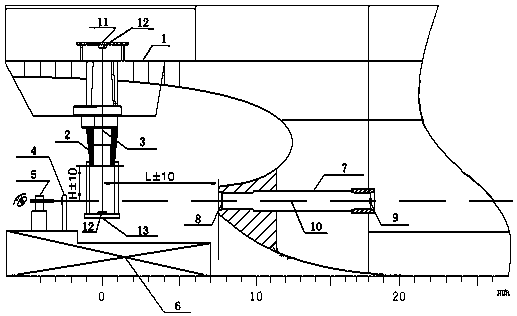
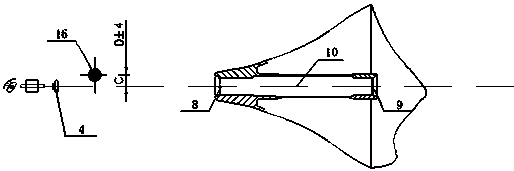
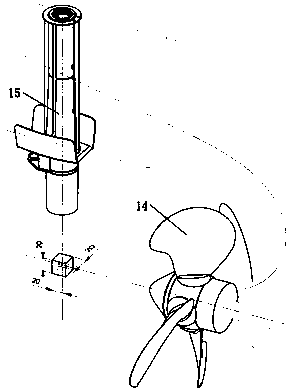
[0033] combine figure 1 , figure 2 This embodiment is described. The integrated suspension rudder of the present invention is applicable to the rudder system without boring processing, and is especially suitable for the propulsion system of a ship with a highly matched hydrodynamic performance of the propeller and the rudder. It should be noted that the determination and measurement of the relative positions of the ship's propeller and rudder blades is carr...
PUM
 Login to View More
 Abstract
Description
Claims
Application Information
 Login to View More