
Delftia lacustris and application thereof in rice false smut prevention and control
A technology of delft bacteria and rice false smut, applied in the direction of application, microbe-based methods, chemicals for biological control, etc., can solve the problems that there are not many reports, and achieve low nutritional requirements, The effect of reduced use and reduced incidence of disease
- Summary
- Abstract
- Description
- Claims
- Application Information
AI Technical Summary
Problems solved by technology
Method used
Image

Examples
Embodiment 1
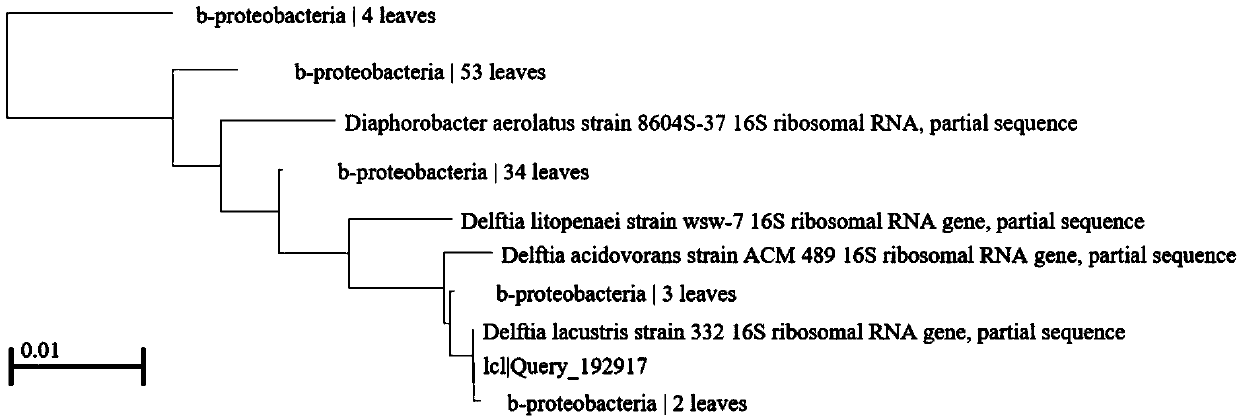
[0033] Isolation and identification of embodiment 1 pond-living Delftia
[0034] 1. Isolation of endophytes from rice ears
[0035] Pick healthy rice grains from the diseased strains of rice koji in Wenling, disinfect them with 75% ethanol for about 1 minute, rinse them with sterilized water for 3 times to remove the residual disinfectant, and finally put them on sterile absorbent paper to absorb excess Then put it into a sterile mortar, add 6mL of BPS buffer to grind, take the supernatant and dilute it 10, 50, 100 times, take 200 μL of each dilution and spread it on the LB plate, and verify the last washing water at the same time Spread on LB plates, check whether the tissue surface is thoroughly disinfected, culture in dark at 30°C for 1-2 days, and record the colony shape, size and color.
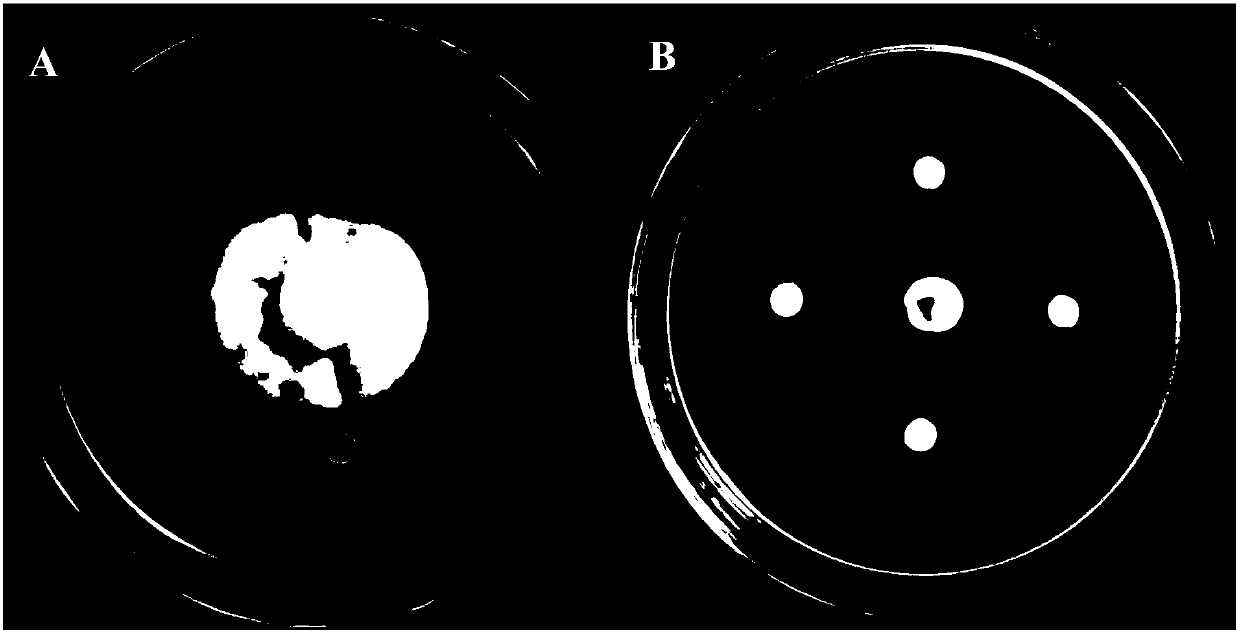
[0036] The biological characteristics of the above-mentioned Delftia chinensis are: the colony isolated and purified on LB medium is round, with smooth surface, neat edges, shiny, opaqu...
Embodiment 2
[0057] Preparation and application of embodiment 2 biocontrol agents
[0058] 1. Preparation of biocontrol agents
[0059] Streak Delftia chinensis on the LB plate, pick a single colony into a conical flask filled with 50mL LB liquid medium, shake and culture at 180rpm at 30°C for about 18-22h, when the OD value at 600nm is measured When it is between 0.8-1.0, then add the seed solution to a 250mL Erlenmeyer flask with 100mL LB medium at an inoculum amount of 1%, and vibrate at 180rpm at 30°C for 24 hours, and the number of viable bacteria can reach 10 9 CFU / mL.
[0060] In terms of volume fraction, take 87.5% of the prepared fermentation broth, add 2% of dispersant SP-SC29, 33% of dispersant SP-SC, 0.5% of penetrant organosilicon, and 7% of bacterial liquid supernatant. After mixing, the raw Antibiotics, for field use.
[0061] 2. Effect of field application of biocontrol agents on rice false smut
[0062] Application location: Wenling Time: 5-7 days before the rice break...
PUM
 Login to View More
 Abstract
Description
Claims
Application Information
 Login to View More