
A method for suppressing the formation of positive charges captured by oxides in electronic components
A technology of electronic components and oxides, which is applied in the direction of electrical components, semiconductor/solid-state device manufacturing, circuits, etc., can solve the problems of changing the carrier surface recombination rate and affecting the minority carrier lifetime, and achieves cost reduction, easy operation, and wide application The effect of applying the foreground
- Summary
- Abstract
- Description
- Claims
- Application Information
AI Technical Summary
Problems solved by technology
Method used
Image

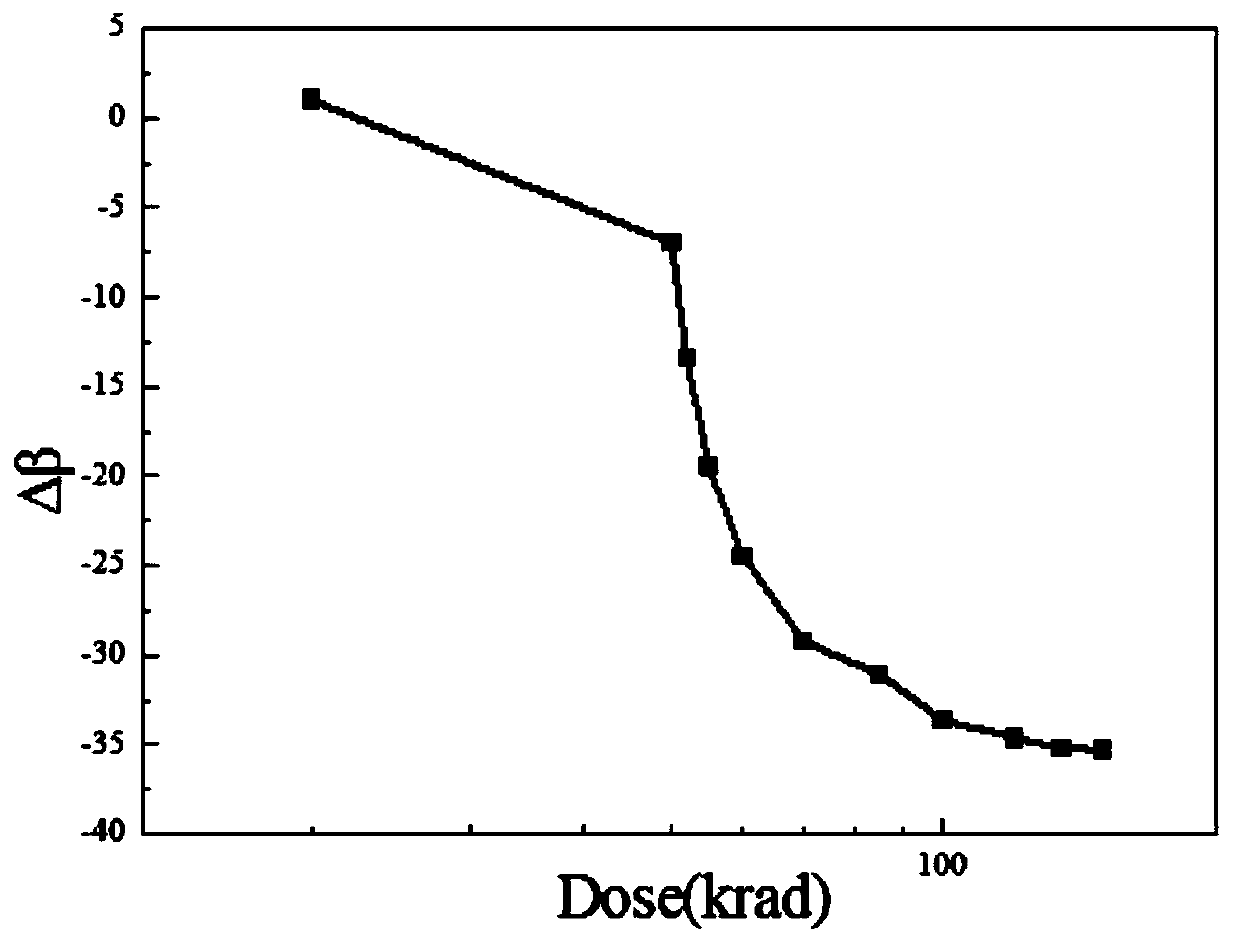
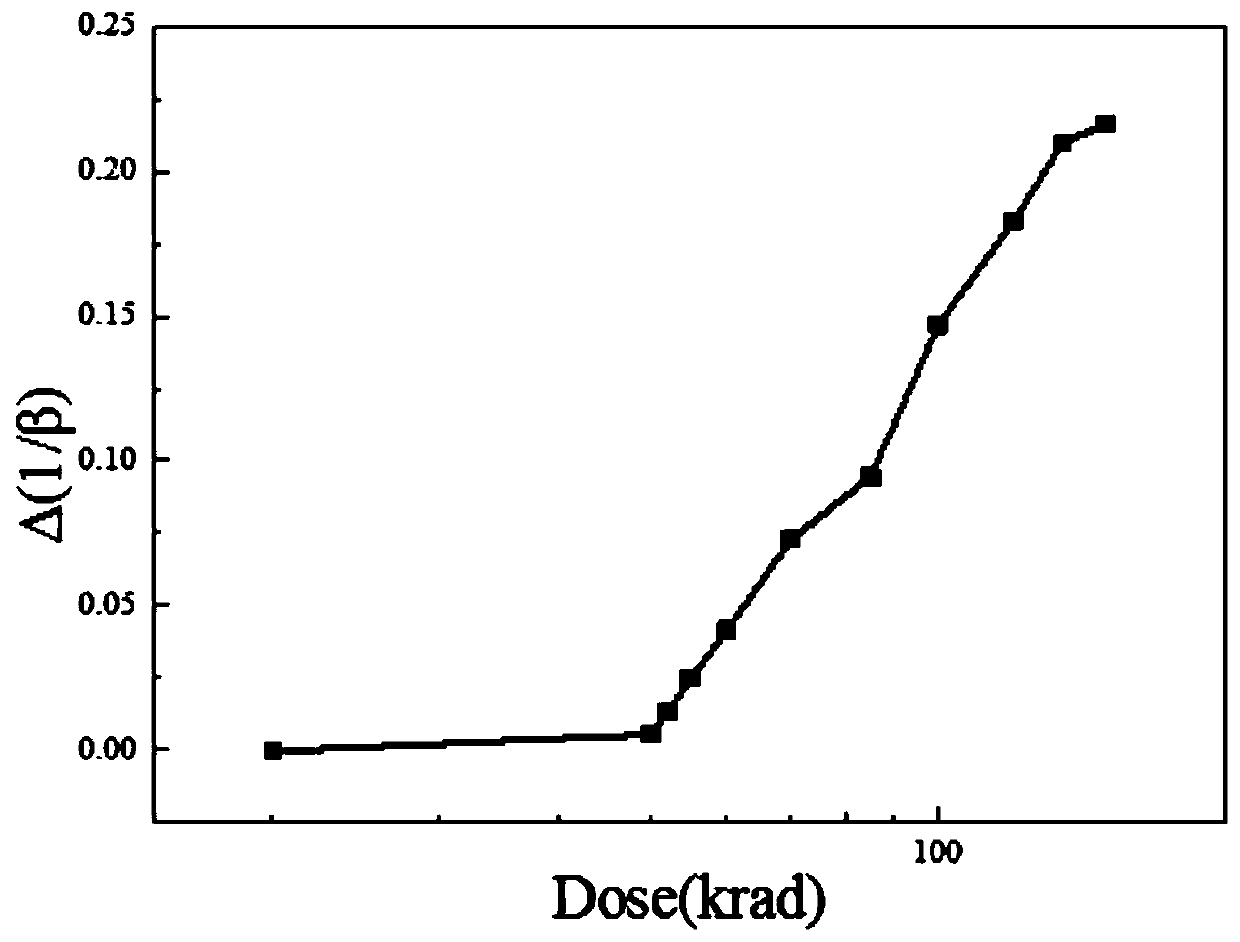
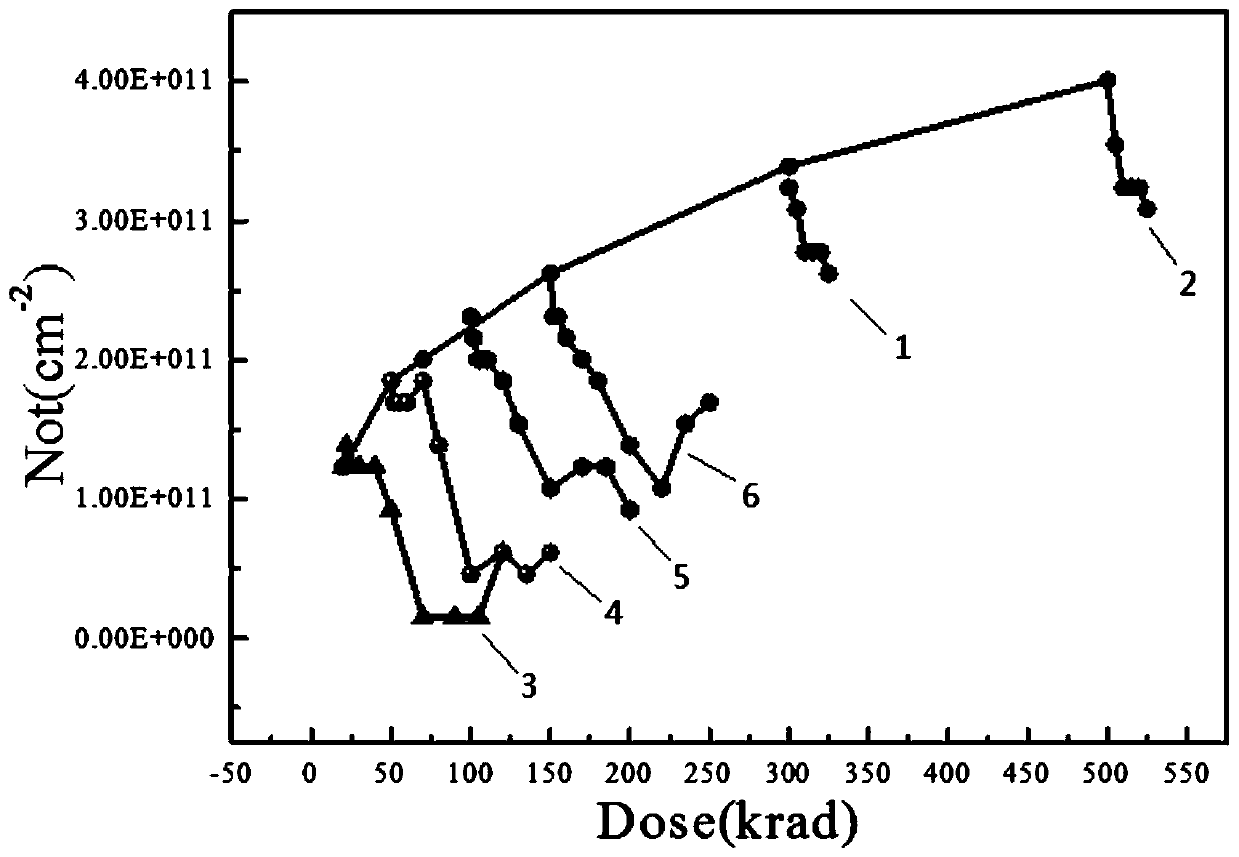
Examples
specific Embodiment approach 1
[0030] Specific implementation mode 1: The method for suppressing the formation of positive charges captured by oxides in bipolar process electronic components in this implementation mode includes the following steps:
[0031] Step 1, determining the chip thickness a of the electronic component sample;
[0032] Step 2: Select the incident particle, input the radiation source energy of the incident particle through Geant4 software, calculate the incident depth d of the incident particle in the sample chip, and ensure that the input radiation source energy satisfies d>4a;
[0033] Step 3, according to the radiation source energy of step 2, by Geant4 software, calculate the ionized absorbed dose (I) of the incident particles of the unit fluence in the sample d ) and displacement absorbed dose (D d );
[0034] According to ionizing absorbed dose (I d ) and displacement absorbed dose (D d ) With the distribution of incident depth, the ionized absorbed dose (I d ) and displacem...
specific Embodiment approach 2
[0041] Specific embodiment 2: The difference between this embodiment and specific embodiment 1 is that the electronic components described in step 1 use SiO 2 Bipolar process electronic components as insulating material and passivation layer. Others are the same as in the first embodiment.
specific Embodiment approach 3
[0042] Embodiment 3: The difference between this embodiment and Embodiment 1 or 2 is that the incident particles in step 2 are photons, mesons, charged particles or neutrons. Others are the same as in the first or second embodiment.
PUM
 Login to View More
 Abstract
Description
Claims
Application Information
 Login to View More