
Mesoporous silica nanosphere and its preparation method and application in drug loading
A technology of mesoporous silica and nanospheres, applied in the direction of silica, silicon oxide, nanotechnology, etc., can solve the problems of unsatisfactory bioavailability and low drug dissolution rate, and achieve good application prospects, theory and practice Significant, size-controlled effects
- Summary
- Abstract
- Description
- Claims
- Application Information
AI Technical Summary
Problems solved by technology
Method used
Image

Examples
Embodiment 1
[0056] Embodiment 1 of the present invention provides a method for preparing mesoporous silica nanospheres, the specific steps are as follows:
[0057] Measure 78mL of deionized water, 27mL of absolute ethanol, and 0.75mL of ammonia water. After mixing, add 0.3g of CTAB (cetyltrimethylammonium bromide) and ultrasonically mix to obtain solution A; measure 1.65mL of TEOS , and fully mixed with 2.175mL of absolute ethanol, wherein the volume ratio of TEOS (tetraethyl orthosilicate) to absolute ethanol is 0.758, to obtain solution B; quickly add solution B to solution A, seal, and magnetically stir React for 24 hours; then filter the obtained product with suction, wash with deionized water and absolute ethanol three times each, until neutral.
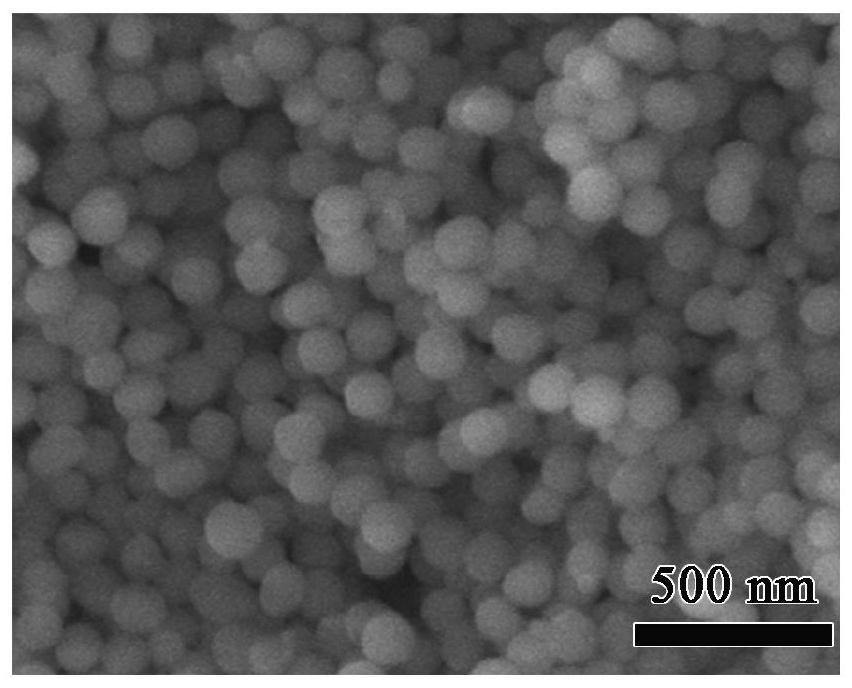
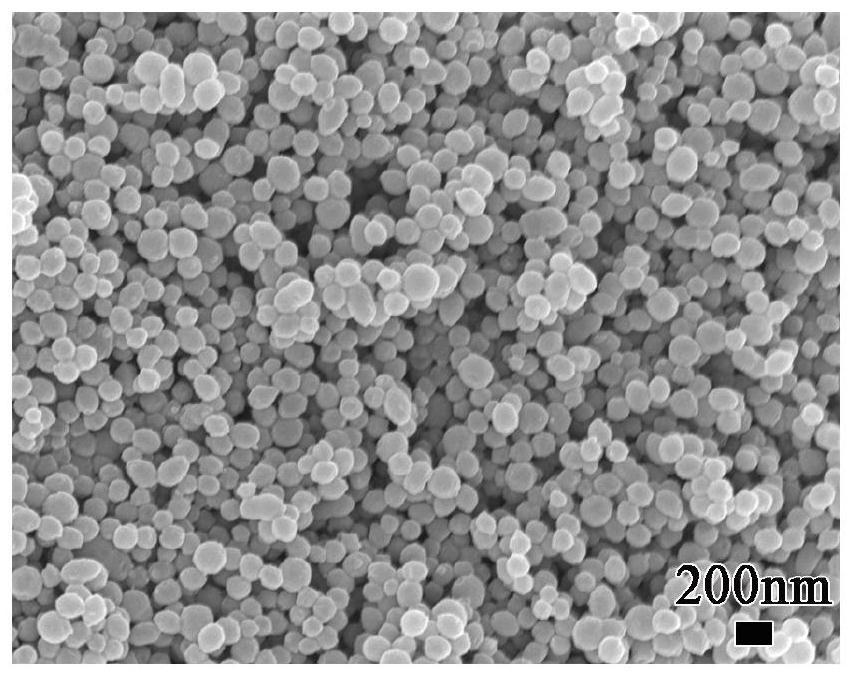
[0058] The suction-filtered product was dried at 50° C. for 12 hours, and then calcined in a muffle furnace at 550° C. for 5 hours to obtain mesoporous silica nanospheres with a diameter of 50 nm.
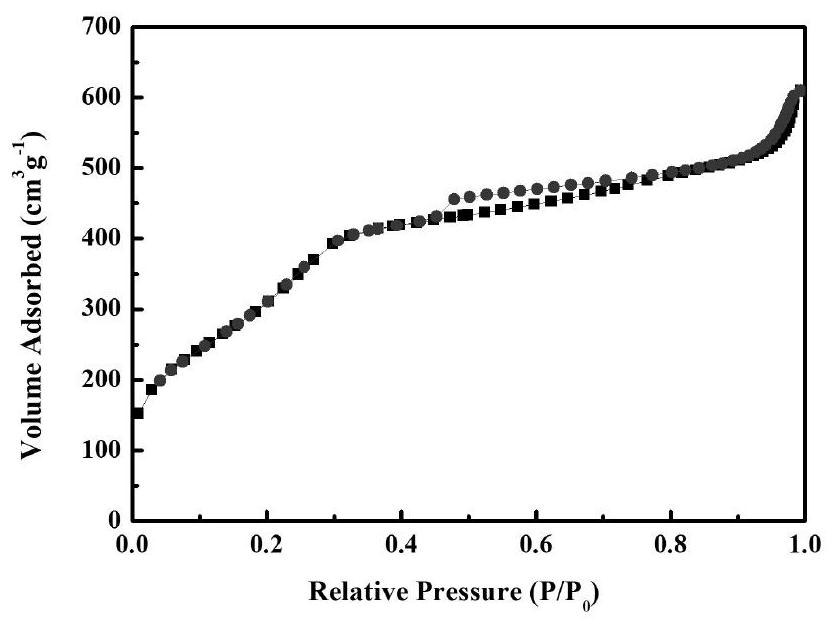
[0059] figure 1 and figure 2 These ar...
Embodiment 2
[0062] Embodiment 2 of the present invention provides a method for preparing mesoporous silica nanospheres, the specific steps are as follows:
[0063] Measure 78mL of deionized water, 27mL of absolute ethanol, and 0.75mL of ammonia water, mix well, add 0.3g of CTAB, and ultrasonically mix to obtain solution A. Measure 1.65mL of TEOS and fully mix with 1.25mL of absolute ethanol, wherein the volume ratio of TEOS to absolute ethanol is 1.32 to obtain solution B. Solution B was quickly added to solution A, sealed, and magnetically stirred for 24 hours. Then the obtained product was subjected to suction filtration, washed with deionized water and absolute ethanol three times, until neutral.
[0064] The suction-filtered product was dried at 50° C. for 12 hours, and then calcined in a muffle furnace at 550° C. for 5 hours to obtain mesoporous silica nanospheres with a diameter of 150 nm.
[0065] Figure 5 and Figure 6 These are the scanning electron micrographs of the mesopo...
Embodiment 3
[0067] Embodiment 3 of the present invention provides a method for preparing mesoporous silica nanospheres, the specific steps are as follows:
[0068] Measure 27mL of deionized water, 78mL of absolute ethanol, and 0.75mL of ammonia water, mix well, add 0.3g of CTAB, and ultrasonically mix to obtain solution A. Measure 1.65mL of TEOS and fully mix with 1.25mL of absolute ethanol, wherein the volume ratio of TEOS to absolute ethanol is 1.32 to obtain solution B. Solution B was quickly added to solution A, sealed, and magnetically stirred for 24 hours. Then the obtained product was subjected to suction filtration, washed with deionized water and absolute ethanol three times, until neutral.
[0069] The suction-filtered product was dried at 50° C. for 12 hours, and then calcined in a muffle furnace at 550° C. for 5 hours to obtain mesoporous silica nanospheres with a diameter of 1 μm.
[0070] Figure 7 and Figure 8 These are the scanning electron micrographs of the mesoporo...
PUM
| Property | Measurement | Unit |
|---|---|---|
| particle diameter | aaaaa | aaaaa |
| pore size | aaaaa | aaaaa |
| diameter | aaaaa | aaaaa |
Abstract
Description
Claims
Application Information
 Login to View More