Novel swing self-reset bridge pier with energy dissipation device and application thereof

A technology of self-resetting bridge piers and energy-dissipating devices, which is applied in the field of bridge anti-seismic and seismic isolation, can solve problems such as limited scope of application, permanent residual deformation, and difficulty in repairing, and achieve superior seismic isolation performance, small residual deformation, and structural stability. Recovery effect

CN109972501AInactive Publication Date: 2019-07-05FUZHOU UNIVERSITY
10 Cites 9 Cited by

Patent Information

Authority / Receiving Office
CN · China
Current Assignee / Owner
Publication Date
2019-07-05
Estimated Expiration
Not applicable · inactive patent

Smart Images

  • Figure 1
    Figure 1
  • Figure 2
    Figure 2
  • Figure 3
    Figure 3
Patent Text Reader

Abstract

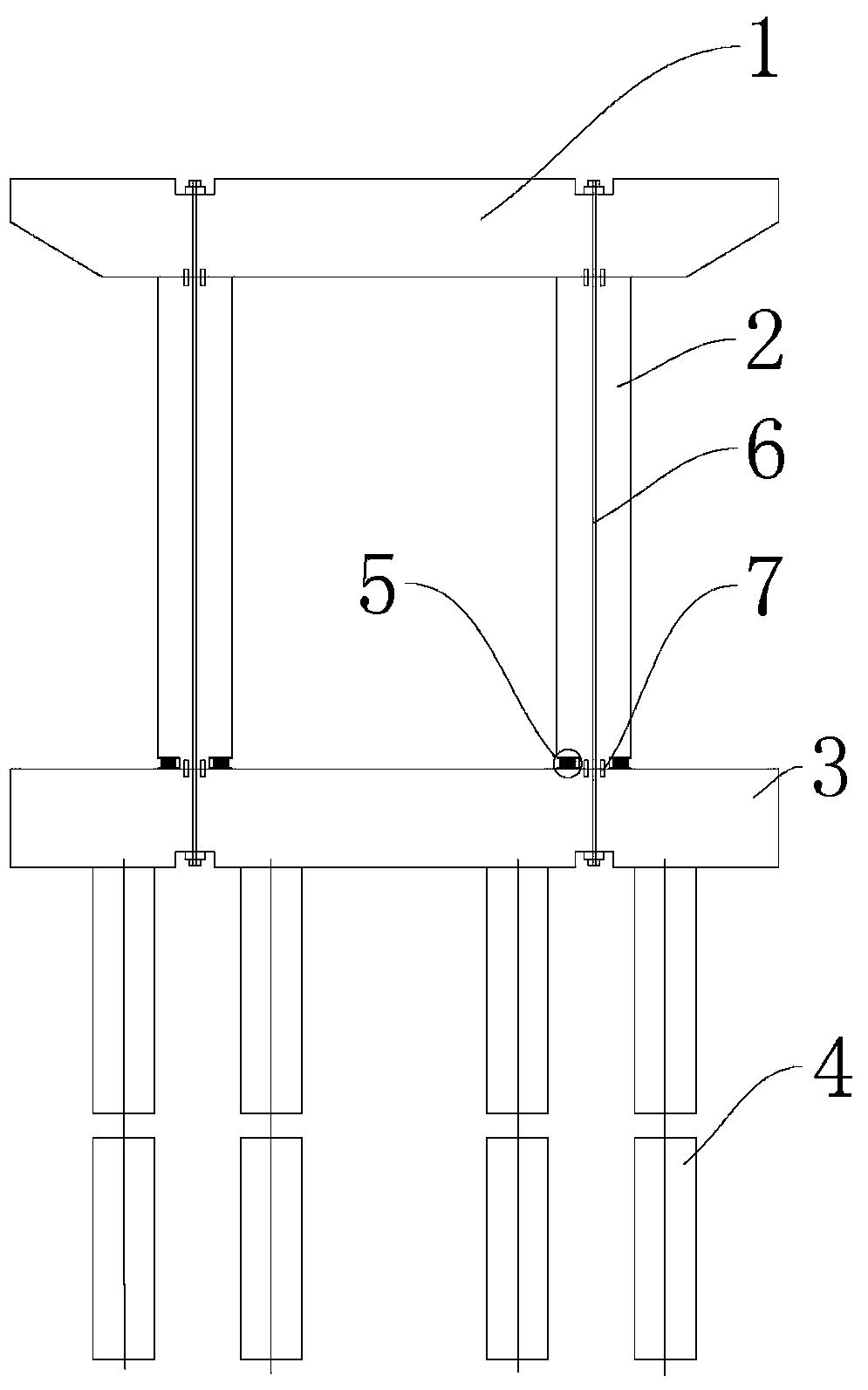
The invention relates to a novel swing self-reset bridge pier with an energy dissipation device and an application thereof, belonging to the technical field of anti-seismic and seismic mitigation andisolation of bridges. The novel swing self-reset bridge pier with the energy dissipation device comprises a cap beam (1), a pier body (2), a bearing cap (3), pile foundations (4), prestressed steel bars (6) and shear anchor bolts (7). The bearing cap (3) is anchored to the ground through the pile foundations (4), and the cap beam (1) is anchored to the bearing cap (3) through the pier body (2), the prestressed steel bars (6) and the shear anchor bolts (7). The novel swing self-reset bridge pier with the energy dissipation device further comprises a tension-compression combined energy dissipation device (5) and the tension-compression combined energy dissipation device (5) is installed and fixed at the junction of the bottom of the pier body (2) and the top surface of the bearing cap (3). The swing self-reset bridge pier has the obvious advantages of no damage after earthquake, small residual deformation and recoverable structure.
Need to check novelty before this filing date? Find Prior Art

Description

technical field

[0001] The invention belongs to the technical field of bridge anti-seismic and anti-seismic isolation, and in particular relates to a novel swinging self-resetting bridge pier with an energy dissipation device and its application. Background technique

[0002] At present, my country's bridge seismic design code mainly adopts ductile seismic design and support seismic isolation design for seismic design. The ductile anti-seismic design method can effectively avoid the collapse of the bridge structure, but at the same time, it will cause local damage to the bridge components, especially the bridge piers, permanent residual deformation, and difficulty in repairing after the earthquake. Although the shock absorption and isolation technology of bearings can avoid local damage to bridge components, it also has defects such as limited scope of application, and the effect of shock absorption and isolation is greatly affected by the characteristics of the input ground...

Examples

Embodiment Construction

[0021] The structural composition and working principle of a new swinging self-resetting bridge pier with an energy dissipation device provided by the present invention will be further described in detail below in conjunction with the accompanying drawings.

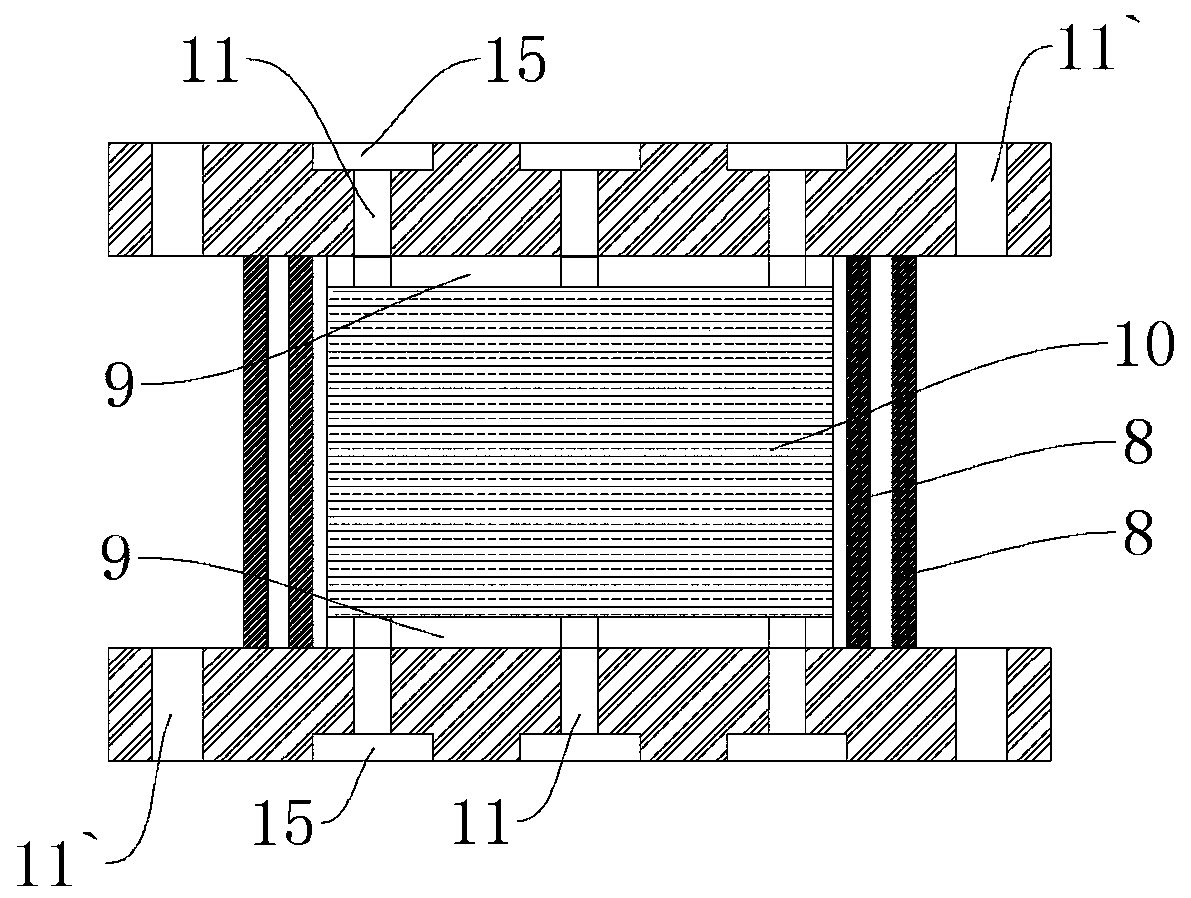
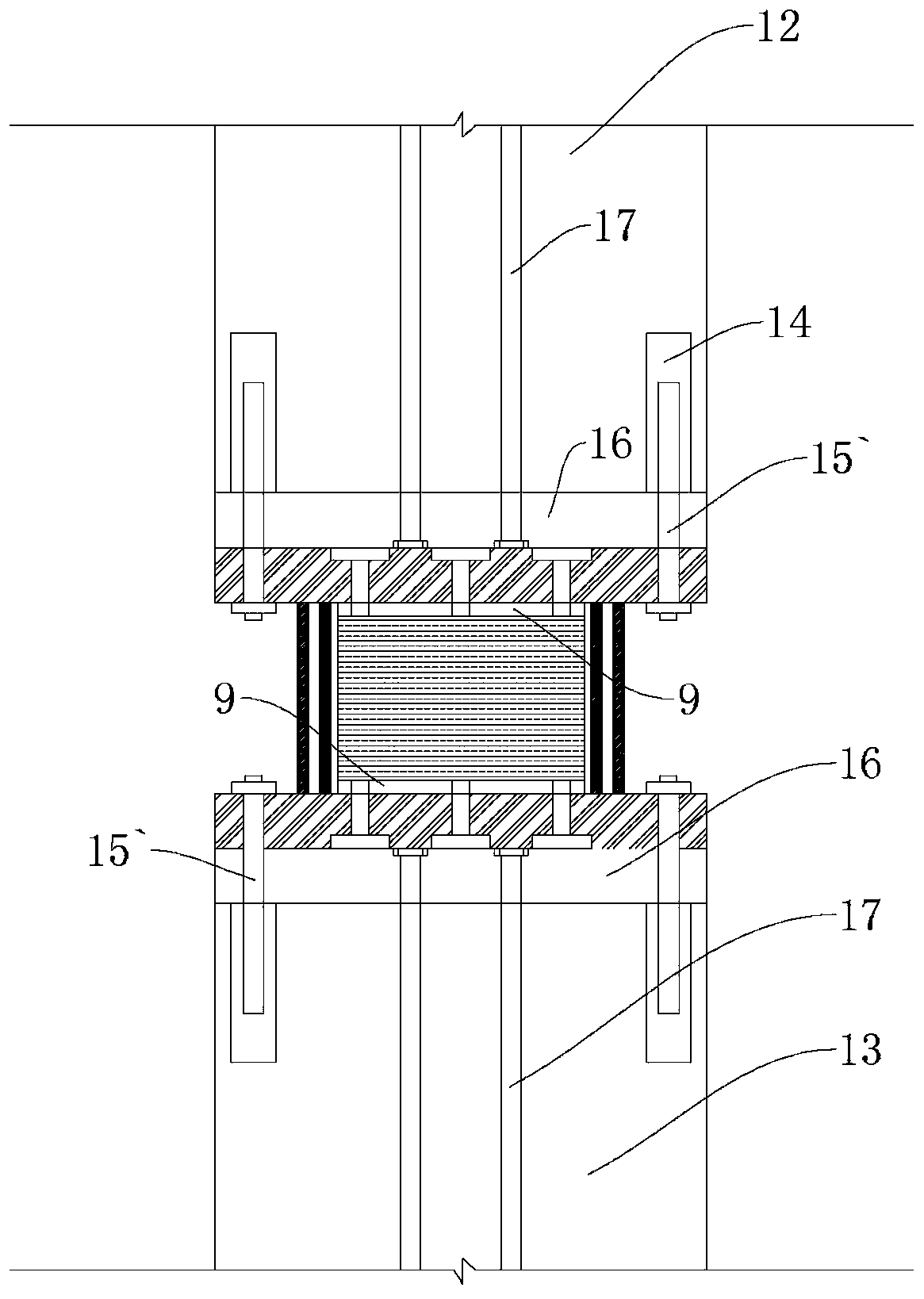
[0022] Such as Figure 1-3 Shown is a structural schematic diagram of a new type of swinging self-resetting pier with an energy dissipation device provided by the present invention. The swinging self-resetting bridge pier mainly includes components such as a cover beam 1, a pier body 2, a cap 3, a pile foundation 4, and prestressed steel bars 6. The cap 3 is anchored to the ground through the pile foundation 4, and the cover beam 1 is anchored to the cap 3 through the pier body 2, the prestressed steel bar 6 and the shear anchor bolt 7. It also includes a combined tension-compression energy dissipation device 5, which is installed and fixed at the junction of the bottom of the pier body 2 and the top surface of the cap 3...