
A method and device for obtaining aerosol extinction coefficient
A technology of extinction coefficient and aerosol, which is applied in the direction of measuring devices, climate sustainability, particle and sedimentation analysis, etc., and can solve problems with large limitations and difficulty in achieving high precision
Patent Information
- Authority / Receiving Office
- CN · China
- Patent Type
- Patents(China)
- Current Assignee / Owner
- Publication Date
- 2021-08-31
Smart Images
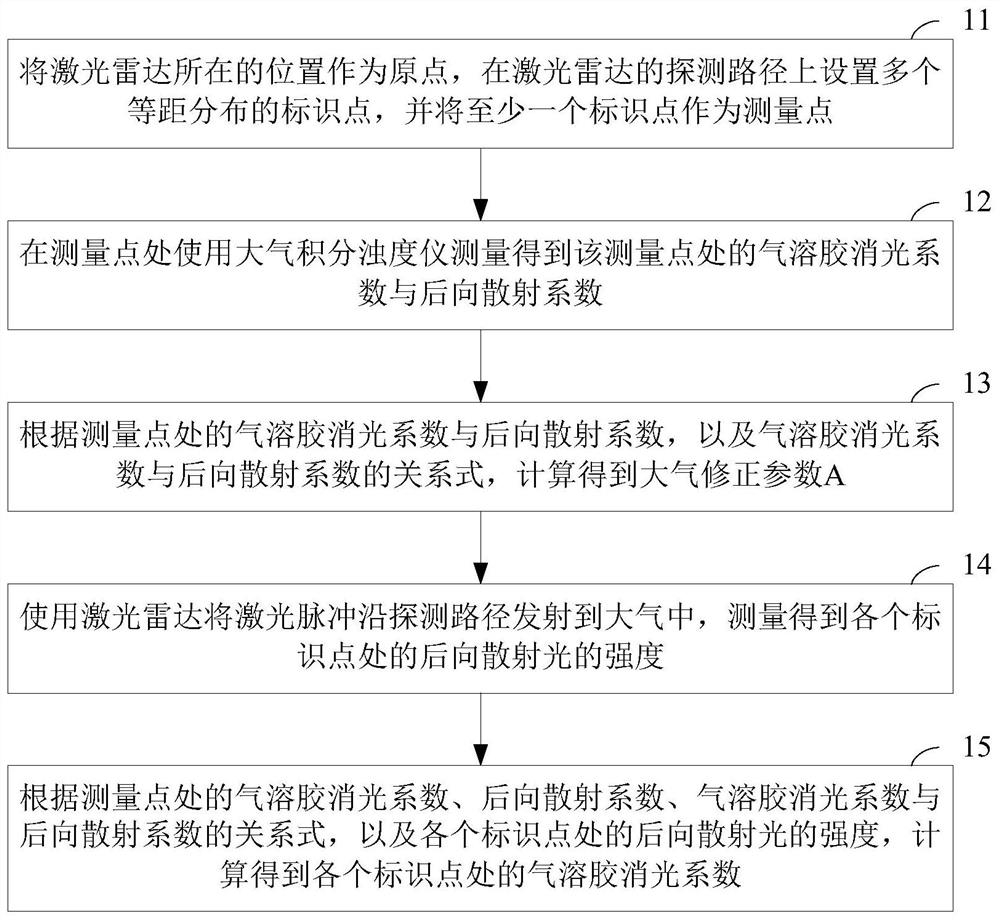
Figure 1 
Figure 2 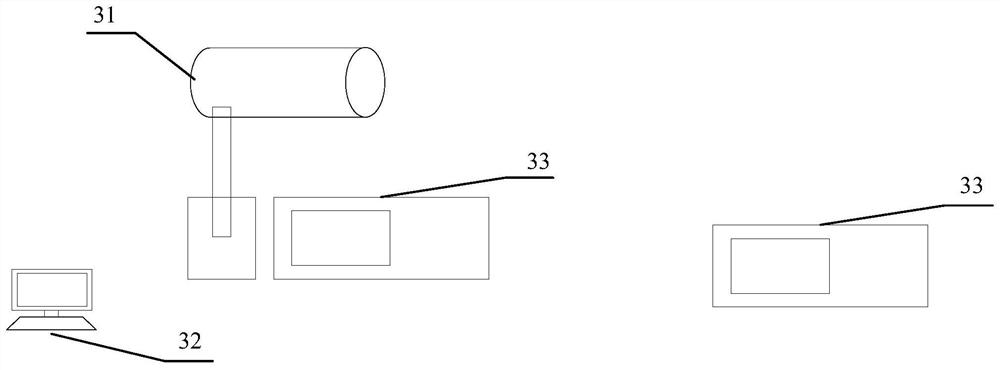
Figure 3
Abstract
Description
technical field
[0001] The present application relates to the technical field of lidar, and in particular to a method and device for obtaining an aerosol extinction coefficient. Background technique
[0002] With the aggravation of industrial pollution, smog weather occurs frequently, and air pollution has seriously affected human health. Therefore, the detection of air quality has become particularly important, and the monitoring, analysis and research of particulate matter in the air has become the focus of current environmental protection work.
[0003] According to the aerodynamic diameter, atmospheric particulate matter can be divided into: (1) total suspended particulate matter (TSP for short) with a diameter of less than 100 microns; (2) inhalable particulate matter with a diameter of less than 10 microns; fine particles. Among them, fine particulate matter PM2.5 can be suspended in the atmosphere for a long time, which has an important impact on air quality and vis...
Examples
specific Embodiment 1
[0104] Specific embodiment one (the 2nd identification point is measuring point),
[0105]First, take the position where the lidar is located as the origin, and set n+1 equidistant marker points on the detection path of the lidar (such as figure 2 shown), and take the second mark point on the detection path starting from the origin as the measurement point. In addition, as an optional embodiment, the distance L between two adjacent marking points is 15 meters (m).
[0106] The aerosol extinction coefficient α at the measurement point is obtained by measuring the atmospheric integral turbidimeter at the second mark point 2 and the backscatter coefficient β 2 , and calculate the atmospheric correction parameter A. For example, as an optional embodiment, α 2 =1*10 -5 , β 2 =2*10 -6 , A=1.
[0107] Use the laser radar to launch the laser pulse into the atmosphere along the detection path, and measure the intensity I of the backscattered light at each mark point on the det...
specific Embodiment 2
[0118] Specific embodiment two (the nth marking point is a measuring point),
[0119] First, take the position where the lidar is located as the origin, and set n+1 equidistant marker points on the detection path of the lidar (such as figure 2 shown), and take the nth mark point on the detection path starting from the origin as the measurement point. In addition, as an optional embodiment, the distance L between two adjacent marking points is 15 meters (m).
[0120] The aerosol extinction coefficient α at the measurement point is obtained by measuring the atmospheric integral turbidimeter at the nth mark point n and the backscatter coefficient β n , and calculate the atmospheric correction parameter A. For example, as an optional embodiment, α n =1.5*10 -5 , β n =2.3*10 -6 , A=1.1.
[0121] Use the laser radar to launch the laser pulse into the atmosphere along the detection path, and measure the intensity I of the backscattered light at each mark point on the detecti...