

Vehicle-mounted-based automatic calibration control method, storage medium and system
A technology of automatic calibration and calibration point, which is applied in the field of image processing and can solve the problems of high participation in manual interaction and low repeatability.
- Summary
- Abstract
- Description
- Claims
- Application Information
AI Technical Summary
Problems solved by technology
Method used
Image

Examples
Embodiment Construction
[0024] The technical means or technical effects involved in the present invention will be further described below. Obviously, the provided examples are only some implementations of the present invention, not all of them. All other embodiments that can be obtained by those skilled in the art based on the embodiments of the present invention and the explicit or implied representations of the pictures and texts will fall within the protection scope of the present invention.
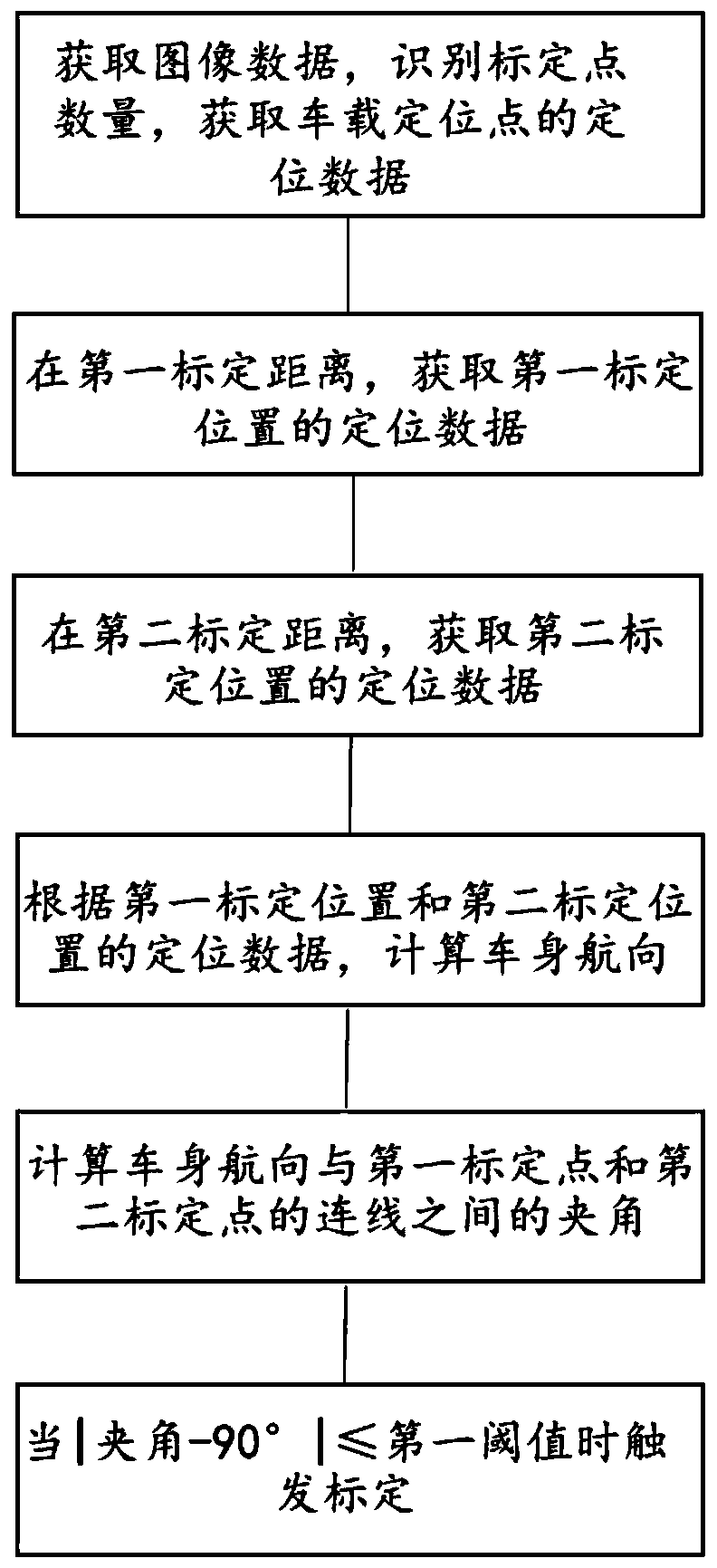
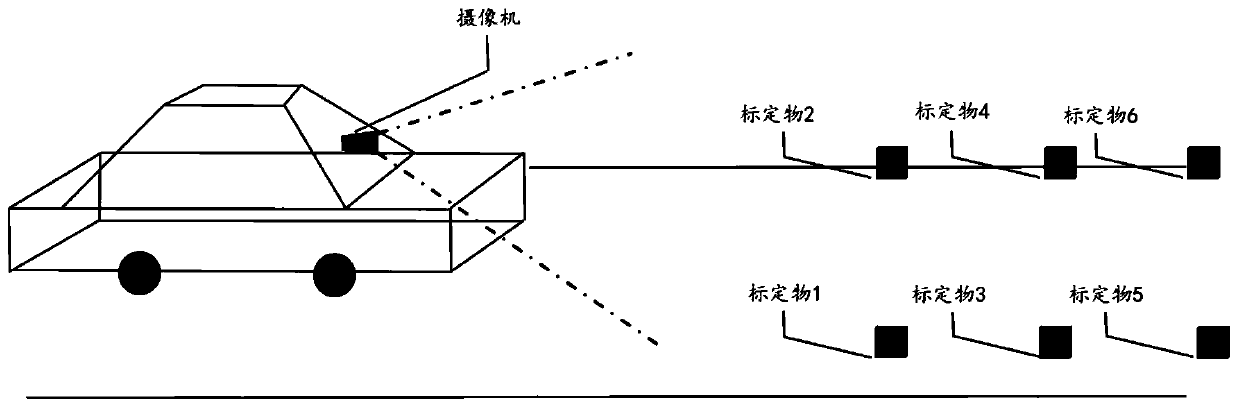
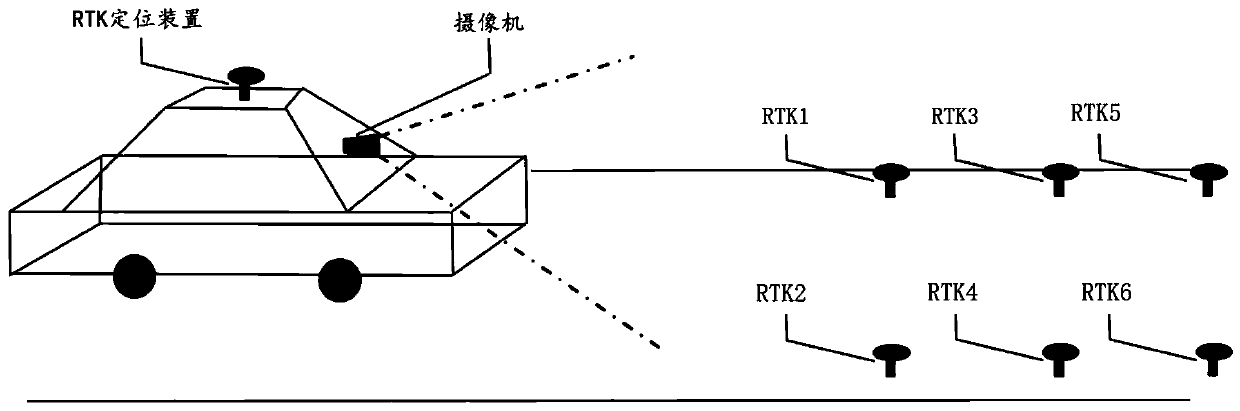
[0025] On the general idea, the present invention discloses a vehicle-based automatic calibration control method, which includes the following steps: acquiring image data, identifying the number of calibration points, and obtaining positioning data of vehicle positioning points; at the first calibration distance, obtaining the first calibration The positioning data of the position; at the second calibration distance, obtain the positioning data of the second calibration position; calculate the heading of the ...
PUM
 Login to View More
 Abstract
Description
Claims
Application Information
 Login to View More