Fruit segmentation method based on sparse convolution kernel

A convolution kernel and sparse technology, applied in the fields of computer vision and agricultural engineering, can solve the problems of lack of quantitative indicators and no neighborhood pixel information into consideration, so as to improve the accuracy rate, reduce the amount of calculation, and ensure the effect of segmentation

CN111709427AActive Publication Date: 2020-09-25HUAIYIN INSTITUTE OF TECHNOLOGY
5 Cites 2 Cited by

Patent Information

Authority / Receiving Office
CN · China
Patent Type
Applications(China)
Current Assignee / Owner
Publication Date
2020-09-25

Smart Images

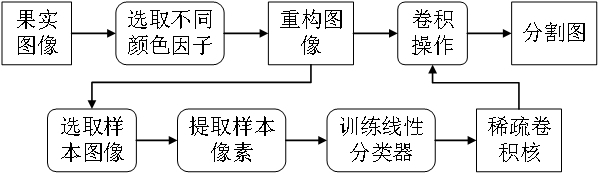
  • Figure 1
    Figure 1
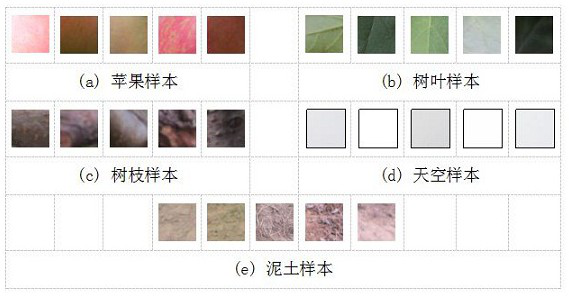
  • Figure 2
    Figure 2
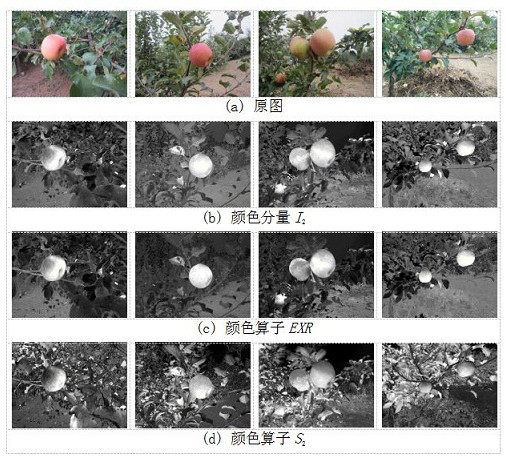
  • Figure 3
    Figure 3
Patent Text Reader

Abstract

The invention discloses a fruit segmentation method based on a sparse convolution kernel. According to the invention, the method comprises the steps: analyzing the distinction degree of a main objectin a fruit image under different color factors; selecting an appropriate color channel to reconstruct an image, and then proposing a sparse convolution kernel construction mode that elements are spaced from one another and are not adjacent to one another, and determining elements in a sparse convolution kernel by adopting a linear classifier; and finally performing convolution operation on the reconstructed image by adopting the sparse convolution kernel, so fruit segmentation is realized.
Need to check novelty before this filing date? Find Prior Art

Description

technical field

[0001] The invention relates to the fields of computer vision and agricultural engineering, in particular to an image segmentation method for field fruit recognition, and in particular to a fruit segmentation method based on a sparse convolution kernel. Background technique

[0002] Fruit identification is an important step to realize automatic fruit picking and intelligent yield estimation. Color is the direct representation of fruit in vision, and it is also one of the easiest image features to extract, so it has been widely used in fruit recognition, especially for fruits with large differences between color and background, such as apples, tomatoes, citrus, etc. Wait.

[0003] Some scholars proposed to use the a component of the Lab color space to realize the recognition of ripe citrus, and proposed to use the R-G color operator to realize the recognition of ripe apples or tomatoes. In order to further improve the effect of fruit segmentation, some schol...

Examples

Embodiment 1

[0042] A fruit segmentation method based on a sparse convolution kernel. In this embodiment, a sparse convolution kernel with a size of 5×5 is used to segment an apple image. The specific process is as follows figure 1 As shown, the following steps are included:

[0043] Step 1: Extract the main object samples in the apple image

[0044] Although the light environment in the apple image is complex and the fruit states are diverse, the composition of the main objects in the image is relatively fixed. Analyzing the image shows that the objects that make up the image can be mainly divided into five categories: fruit, leaves, branches, sky and soil. In order to analyze the color features of these five types of objects, 60 images were selected as sample images, and the pixel samples of these five types of objects were extracted from these images, and some sample areas such as figure 2 shown. When selecting samples, the difference and representativeness of sample pixels are full...