
Traditional Chinese medicine composition for inhibiting helicobacter pylori and application thereof
A technology of Helicobacter pylori and a composition, applied in the field of medical and health care, can solve the problems of increasing the drug resistance of Helicobacter pylori, increasing the difficulty of treatment, and recurring disease, so as to improve bioavailability, kill Helicobacter pylori, and inhibit infection. Effect
- Summary
- Abstract
- Description
- Claims
- Application Information
AI Technical Summary
Problems solved by technology
Method used
Image

Examples
Embodiment 1
[0033] A toothpaste for inhibiting Helicobacter pylori, by weight percentage, comprising: 0.2% active ingredient; the balance is toothpaste base;
[0034] Wherein, the active ingredients include: 3 parts of glycyrrhetinic acid, 0.1 part of thymol, 1 part of paeonol, 0.5 part of peppermint oil, 3.5 parts of eucalyptus oil and 0.1 part of lactoferrin in parts by weight;
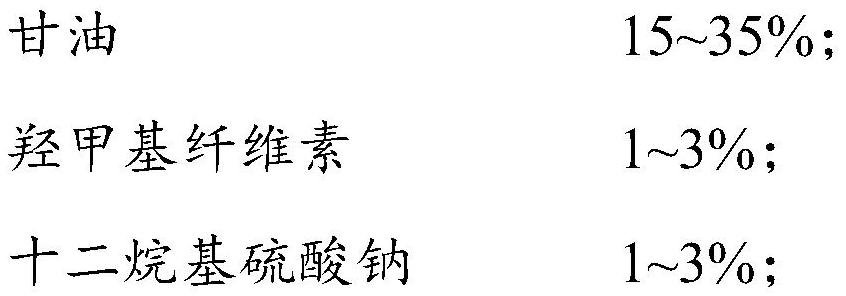
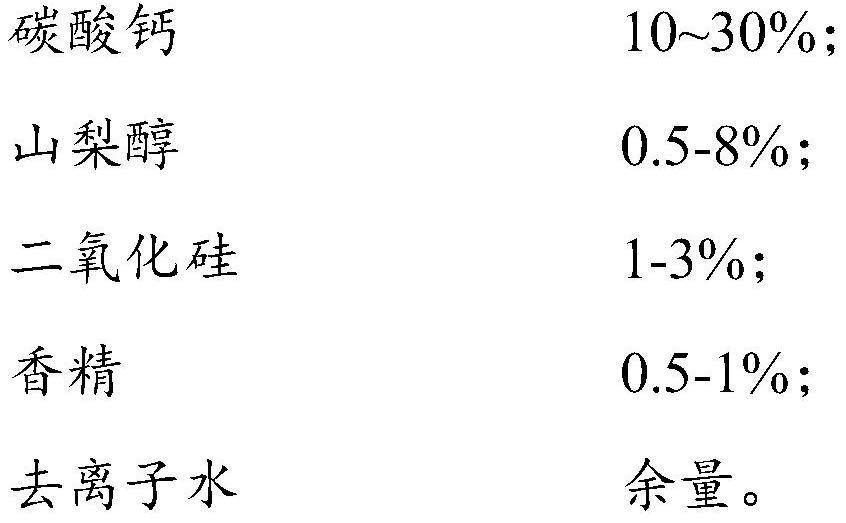
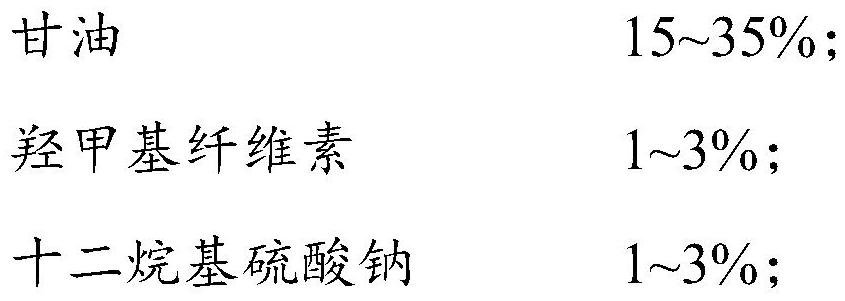
[0035] Toothpaste base, by weight percentage, includes: glycerin 15%; hydroxymethylcellulose 3%; sodium lauryl sulfate 1%; calcium carbonate 20%; sorbitol 2%; silicon dioxide 2%; 0.5%; the balance of deionized water;
[0036] The raw materials of each component are fully stirred and mixed, and then put into a toothpaste making machine for homogeneous emulsification for 45 to 75 minutes to obtain the toothpaste.
Embodiment 2
[0038] A toothpaste for inhibiting Helicobacter pylori, by weight percentage, comprising: 2% active ingredient; the balance is toothpaste base;
[0039] Wherein, the active ingredients include, by weight parts, 5 parts of glycyrrhetinic acid, 1 part of thymol, 2 parts of paeonol, 1 part of peppermint oil, 2 parts of eucalyptus oil and 1 part of lactoferrin;
[0040] Toothpaste base, by weight percentage, includes: glycerin 20%; hydroxymethylcellulose 2%; sodium lauryl sulfate 3%; calcium carbonate 10%; sorbitol 6%; silicon dioxide 1%; essence 1%; the balance of deionized water;
[0041] The raw materials of each component are fully stirred and mixed, and then put into a toothpaste making machine for homogeneous emulsification for 45 to 75 minutes to obtain the toothpaste.
Embodiment 3
[0043] A toothpaste for inhibiting Helicobacter pylori, comprising: 5% of active ingredients; the remainder is toothpaste base;
[0044] Wherein, the active ingredients are calculated in parts by weight, including: 1 part of glycyrrhetinic acid, 0.5 part of thymol, 0.2 part of paeonol, 0.1 part of peppermint oil, 0.5 part of eucalyptus oil and 0.5 part of lactoferrin;
[0045] Toothpaste base, by weight percentage, includes: 35 parts of glycerin; 1 part of hydroxymethylcellulose; 2 parts of sodium lauryl sulfate; 30 parts of calcium carbonate; 0.5 parts of sorbitol; 3 parts of silicon dioxide; essence 1 part; the balance of deionized water;
[0046] The raw materials of each component are fully stirred and mixed, and then put into a toothpaste making machine for homogeneous emulsification for 45 to 75 minutes to obtain the toothpaste.
PUM
| Property | Measurement | Unit |
|---|---|---|
| Particle size | aaaaa | aaaaa |
Abstract
Description
Claims
Application Information
 Login to View More