
Microbial agent and preparation method thereof, and application of microbial agent in sewage treatment
A technology of microbial agent and composite microbial agent, applied in the field of microbial agent and its preparation, can solve the problems of high cost of chemical method, unstable growth environment of bacteria group, increase of manpower, material resources and resource cost, etc., and achieve relaxation of bacteria group survival and growth conditions, protect the survival and growth of bacteria, and ensure the effect of sewage treatment
- Summary
- Abstract
- Description
- Claims
- Application Information
AI Technical Summary
Problems solved by technology
Method used
Image

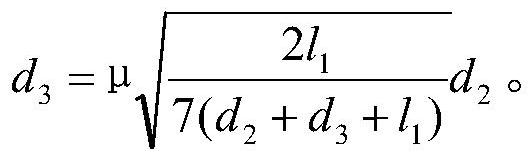
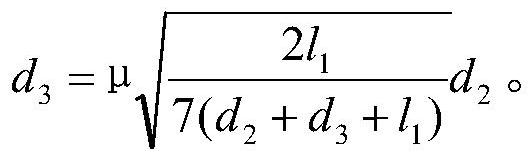
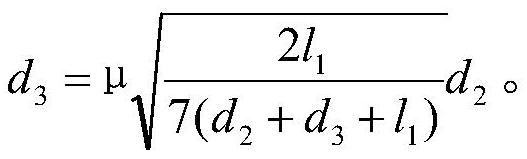
Examples
Embodiment 1
[0037] Embodiment 1 prepares microbial bacterial agent:
[0038] (1) Mix the porous carbon material, biological carbon source, starch adhesive, and carbon sponge evenly, add sterile water, mix evenly, let stand, granulate, and dry;
[0039] (2) The particles obtained in step (1) are soaked in the compound microbial bacterial liquid;
[0040] (3) The granules obtained in step (2) are taken out and subjected to programmed cold / heat treatment to obtain solid granular microbial bacterial agents.
[0041] The porous carbon material in step (1) is bamboo charcoal powder. The biological carbon source in step (1) is wheat bran; the biological carbon source is in powder form with a particle size of 150-200 mesh. The starch adhesive in step (1) includes composite starch adhesive or modified starch adhesive, etc., and the main component is starch or modified starch, purchased from the market. The carbon sponge in step (1) is in powder form with a particle size of 0.2-0.5mm. The mass ...
Embodiment 2
[0050] Embodiment 2 prepares microbial bacterial agent:
[0051] (1) Mix the porous carbon material, biological carbon source, starch adhesive, and carbon sponge evenly, add sterile water, mix evenly, let stand, granulate, and dry;
[0052] (2) The particles obtained in step (1) are soaked in the compound microbial bacterial liquid;
[0053] (3) The granules obtained in step (2) are taken out and subjected to programmed cold / heat treatment to obtain solid granular microbial bacterial agents.
[0054] The porous carbon material in step (1) is bamboo charcoal powder. The biological carbon source in step (1) includes bran and straw, and the mass ratio of the two is 3:1; the biological carbon source is in powder form, and the particle size is 150-200 mesh. The starch adhesive in step (1) includes composite starch adhesive or modified starch adhesive, etc., and the main component is starch or modified starch, purchased from the market. The carbon sponge in step (1) is in powder ...
Embodiment 3
[0063] Embodiment 3 prepares microbial bacterial agent:
[0064] (1) Mix the porous carbon material, biological carbon source, starch adhesive, and carbon sponge evenly, add sterile water, mix evenly, let stand, granulate, and dry;
[0065] (2) The particles obtained in step (1) are soaked in the compound microbial bacterial liquid;
[0066] (3) The granules obtained in step (2) are taken out and subjected to programmed cold / heat treatment to obtain solid granular microbial bacterial agents.
[0067] The porous carbon material in step (1) is bamboo charcoal powder. The biological carbon source in step (1) includes bran and straw, and the mass ratio of the two is 3:1; the biological carbon source is in powder form, and the particle size is 150-200 mesh. The starch adhesive in step (1) includes composite starch adhesive or modified starch adhesive, etc., and the main component is starch or modified starch, purchased from the market. The carbon sponge in step (1) is in powder ...
PUM
| Property | Measurement | Unit |
|---|---|---|
| Particle size | aaaaa | aaaaa |
| Particle size | aaaaa | aaaaa |
Abstract
Description
Claims
Application Information
 Login to View More