

Interpolymer paste resin and its preparing method
A technology of paste resin and copolymerization, which is applied in the field of preparing vinyl chloride-vinyl acetate copolymer paste resin, and can solve problems such as inability to form paste, irregular shape, and inability to apply PVC paste resin processing and application fields.
- Summary
- Abstract
- Description
- Claims
- Application Information
AI Technical Summary
Problems solved by technology
Method used
Image

Examples
Embodiment 1
[0027] Feeding formula: vinyl chloride 95 (weight percent, the same below), vinyl acetate 5, pure water 120, sodium lauryl sulfate 1.2, C 12-26 Fatty alcohol 1.5, azobisisoheptanonitrile 0.02, toluene 0.1, ethylhexyl peroxydicarbonate 0.01.
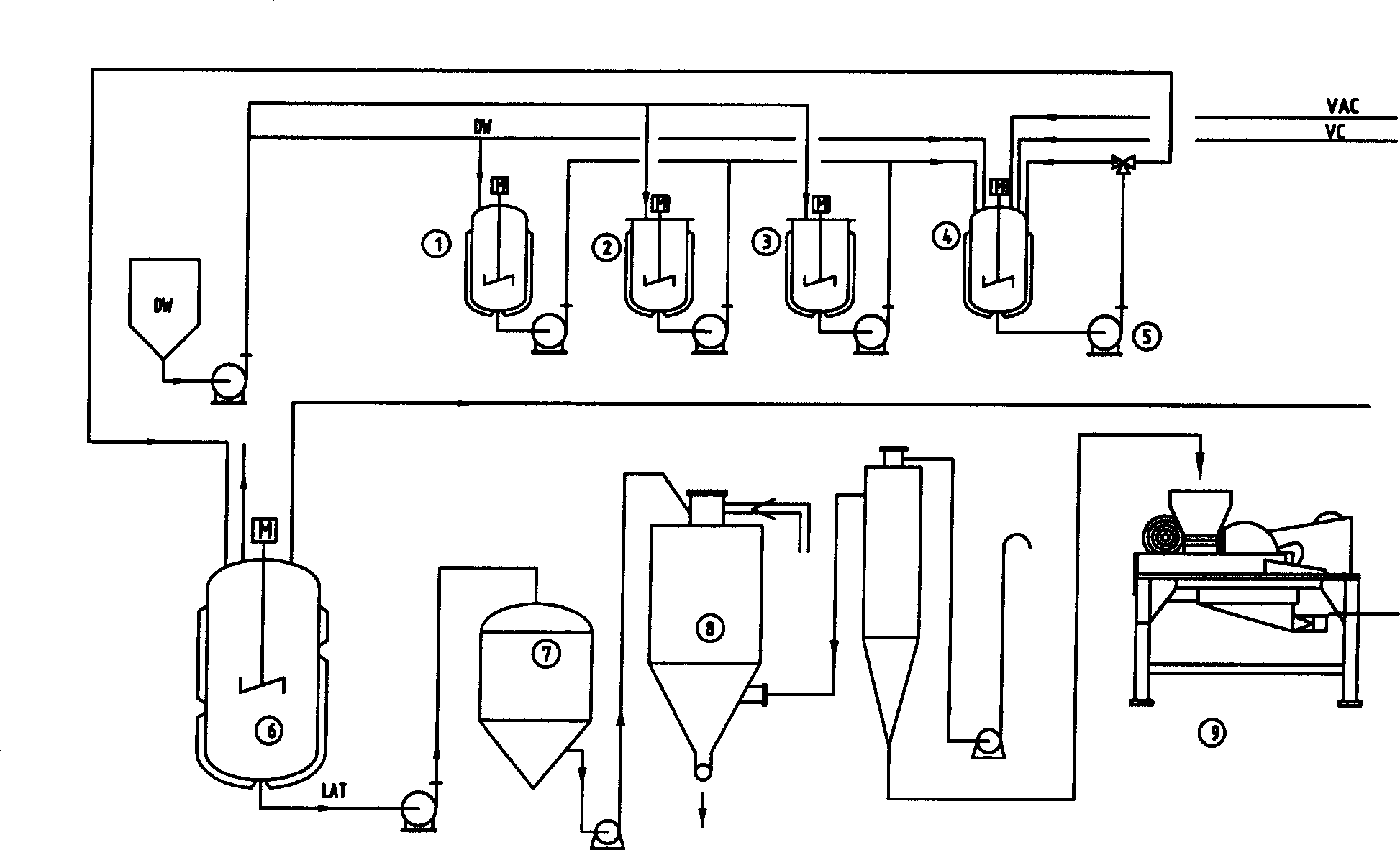
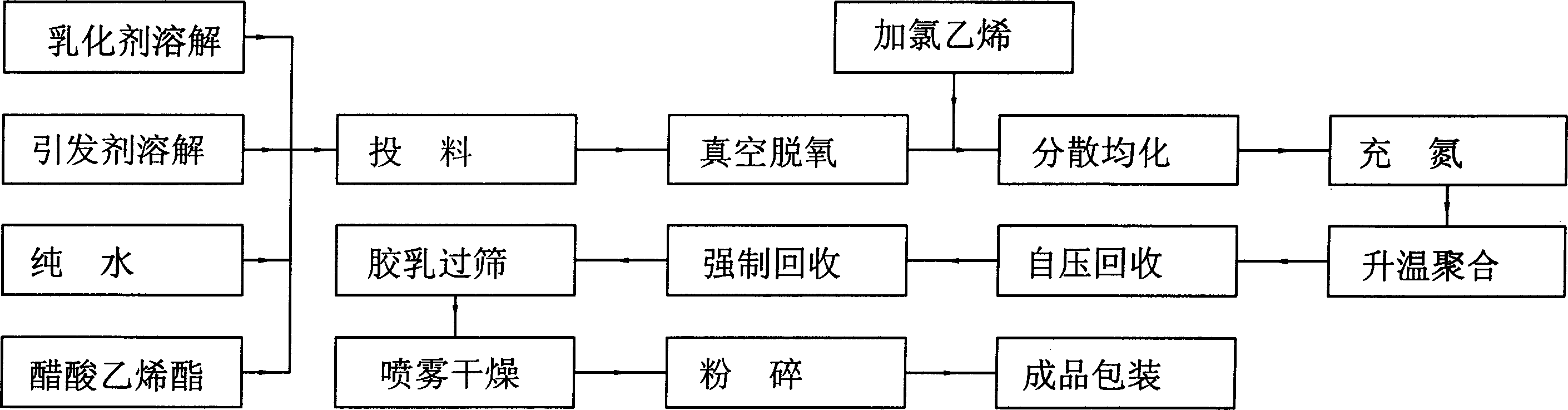
[0028] Sodium lauryl sulfate, C 12-26 Fatty alcohol, 10 parts of pure water (DW) was added to the emulsifier dissolving tank ( figure 1 Stir in equipment 3). Azobisisoheptanonitrile, toluene, 5 parts of pure water are added to initiator dissolving tank 1 ( figure 1 Stir in equipment 1). Add ethylhexyl peroxydicarbonate, 5 parts of pure water to initiator dissolving tank 2 ( figure 1 Stir in equipment 2). Simultaneously vinyl chloride (VC), vinyl acetate (VAC), pure water (100 parts), emulsifier after dissolving, initiator are added dispersion tank ( figure 1 Middle equipment 4), open dispersion pump ( figure 1 Middle equipment 5), while dispersing, towards the polymerization kettle ( figure 1 Middle equipment 6) feeding, the dispe...
PUM
| Property | Measurement | Unit |
|---|---|---|
| particle diameter | aaaaa | aaaaa |
| particle diameter | aaaaa | aaaaa |
| particle diameter | aaaaa | aaaaa |
Abstract
Description
Claims
Application Information
 Login to View More