FEXT determination system

A line and vectorization technology, applied in transmission systems, multi-frequency code systems, digital transmission systems, etc.

CN1965498AActive Publication Date: 2007-05-16ADAPTIVE SPECTRUM & SIGNAL
0 Cites 11 Cited by

Patent Information

Authority / Receiving Office
CN · China
Patent Type
Applications(China)
Current Assignee / Owner
Publication Date
2007-05-16

Smart Images

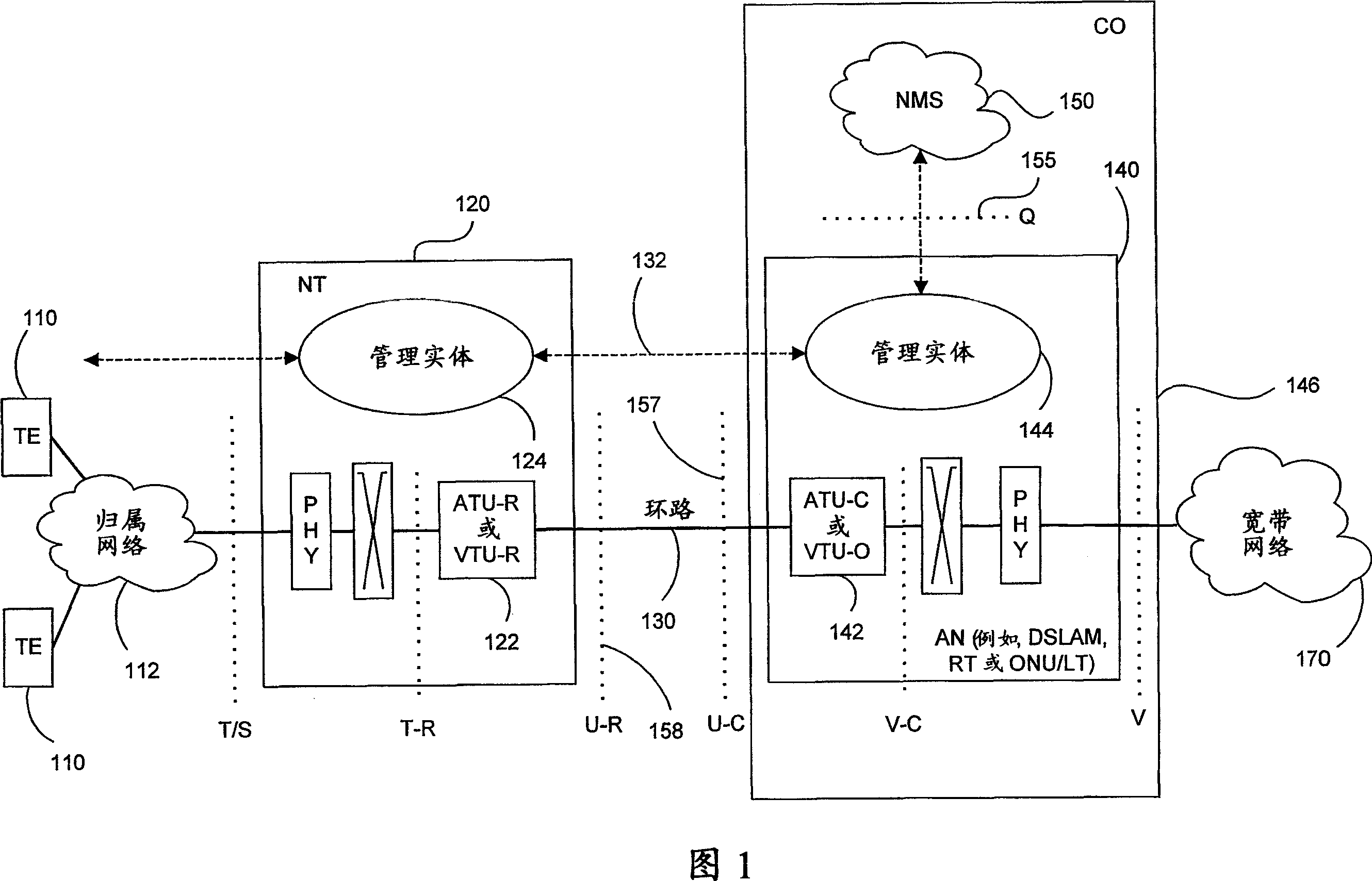
  • Figure 1
    Figure 1
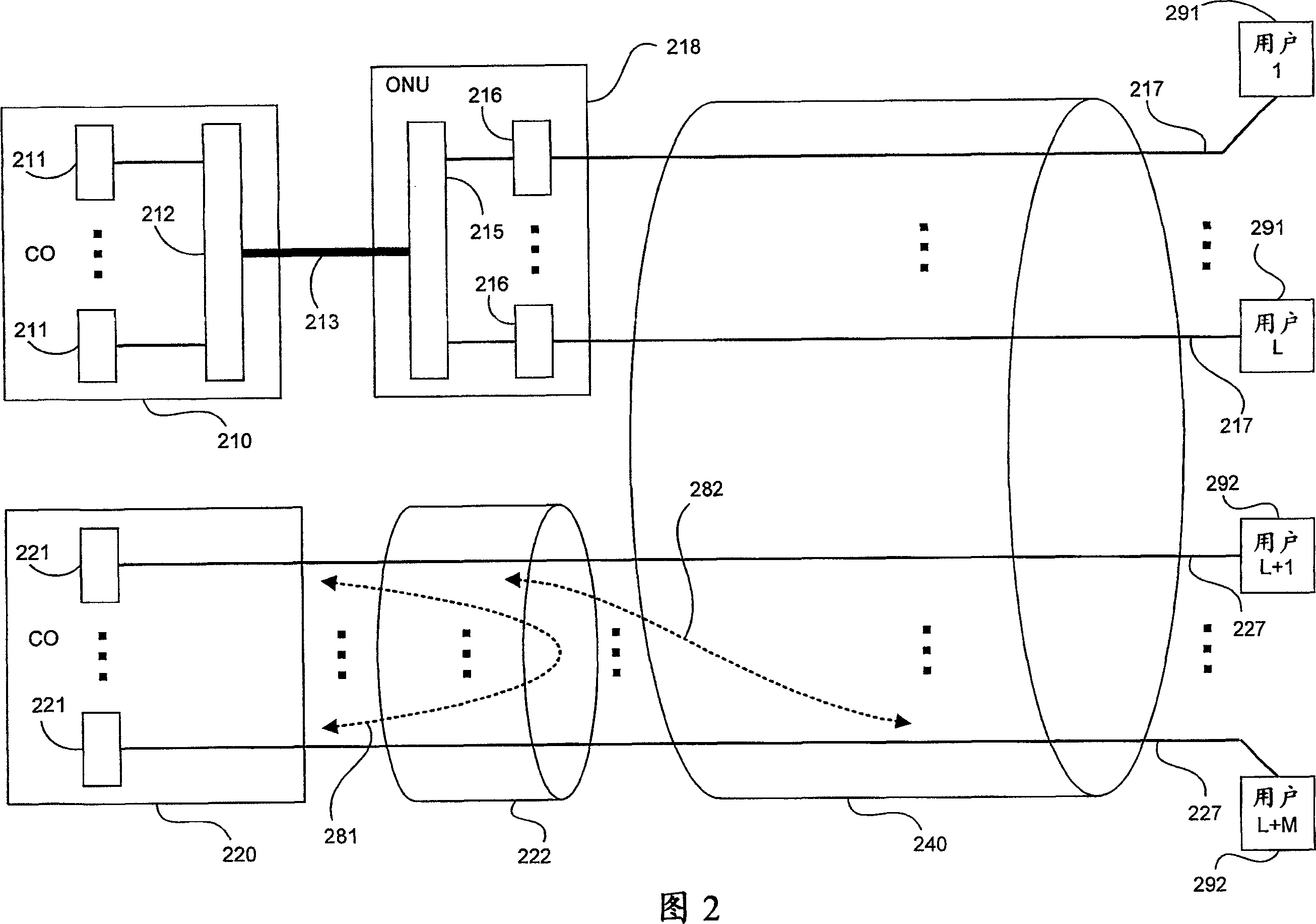
  • Figure 2
    Figure 2
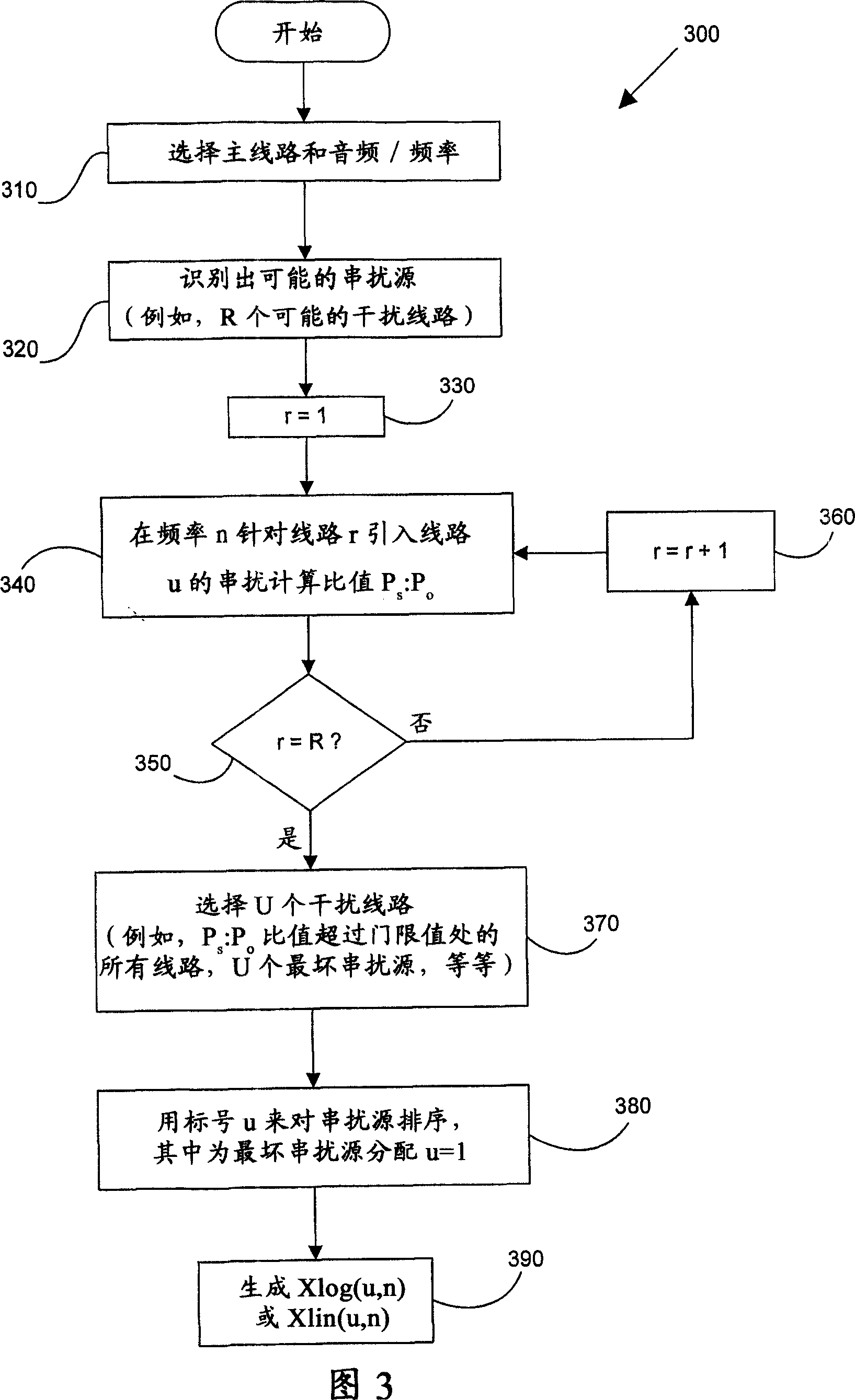
  • Figure 3
    Figure 3
Patent Text Reader

Abstract

Operational data is utilized to determine the FEXT interference induced by one line into the other DSL line. FEXT interference can be calculated using the NEXT interference measured between the two lines at the upstream ends of the loops and the downstream channel transfer function of one of the loops. Because the NEXT and transfer function constitute a linear time-invariant system, as does the FEXT interference between the lines, the NEXT interference and line transfer function can be multiplied (if in linear format) or added (if in logarithmic format) to approximate the FEXT interference between the lines. The collection of data, calculations and other functions performed in these techniques may be performed by a system controller, such as a DSL optimizer. An Xlog(u,n) quantity is a decibel-magnitude representation of the insertionloss equivalent of FEXT transfer functions and is defined as the ratio of (1) a line u's source power into a matched load of 100 Ohms when no binder is present to (2) the power at the output of the subject line when line u is excited with the same source and the binder is present. Xlin(u, n) is the linear equivalent of Xlog(u, n). The Xlog(u, n) and Xlin(u,n) quantities may be represented in specific formats that assist in their use in DSL and other systems. When defined as a line's insertion loss, Xlin (or equivalently Xlog) does not include the effect of any transmit filter.
Need to check novelty before this filing date? Find Prior Art

Description

[0001] Cross References to Related Applications

[0002] Pursuant to Title 35, United States Code, Section 119e, this application requests Serial No. 60 / 572,051 (Agent Filing No. 0101-p07p), filed May 18, 2004, entitled "DYNAMIC MANAGEMENT OF COMMUNICATION SYSTEM )”, the disclosure of which is hereby incorporated by reference. technical field

[0003] The present invention generally relates to methods, systems and apparatus for managing digital communication systems. More specifically, the present invention relates to collecting operational data from modems and / or other components in a communication system such as a DSL system, and making a determination of FEXT interference (far-end crosstalk) between two DSL lines without Take direct measurements. More specifically, at least one embodiment of the present invention includes a method and apparatus for measuring NEXT interference (near-end crosstalk) between two lines, and measuring the line channel of one of the lines, there...

Examples

Embodiment Construction

[0020] The following detailed description of the invention will refer to one or more embodiments of the invention, but is not limited to these embodiments. Rather, these detailed descriptions are exemplary only. Those skilled in the art will readily appreciate that the detailed description given herein with respect to the accompanying drawings is for illustrative purposes only, and that the present invention goes beyond the scope of these limited embodiments.

[0021] Embodiments of the present invention use data readily available at the upstream end of a pair of DSL loops to determine the FEXT interference introduced by one line into the other. The FEXT interference is calculated using the NEXT interference which can be measured between the two lines at the upstream end of the loop and the downlink channel transfer function of one of the lines. Since NEXT and the transfer function form a linear time-constant system, like the FEXT interference between lines, it can be calcula...