Low power mode

a low-power mode and power management technology, applied in the direction of data processing power supply, instruments, high-level techniques, etc., can solve the problems of limited functionality, unused portion of the battery capacity, and reduced peripheral usage, so as to reduce peripheral usage and extend the useful operation of the electronic device.

US10228751B2Inactive Publication Date: 2019-03-12APPLE INC
53 Cites 6 Cited by

Patent Information

Authority / Receiving Office
US · United States
Patent Type
Patents(United States)
Current Assignee / Owner
Publication Date
2019-03-12
Estimated Expiration
Not applicable · inactive patent

Smart Images

  • Figure 1
    Figure 1
  • Figure 2
    Figure 2
  • Figure 3
    Figure 3
Patent Text Reader

Abstract

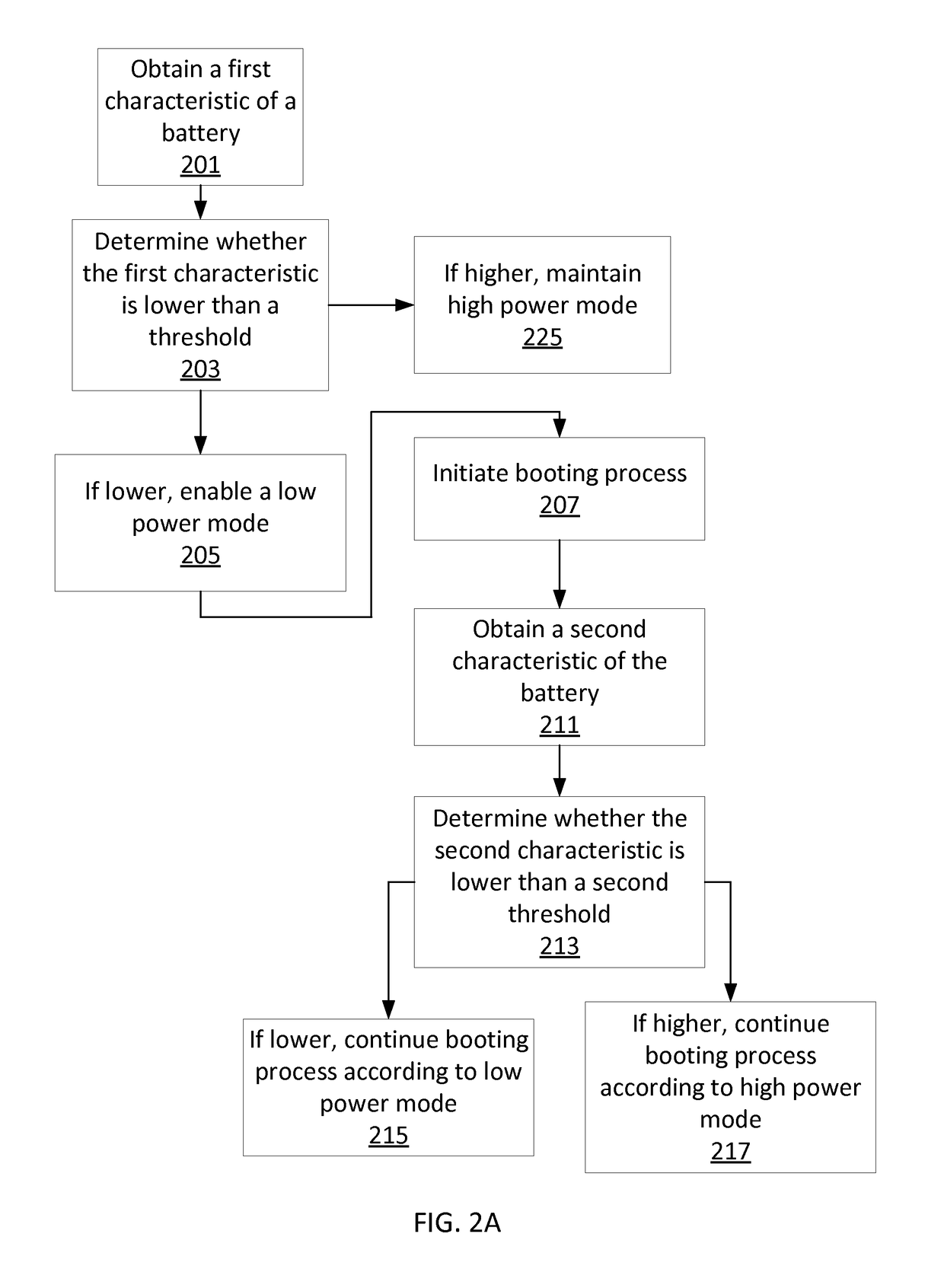
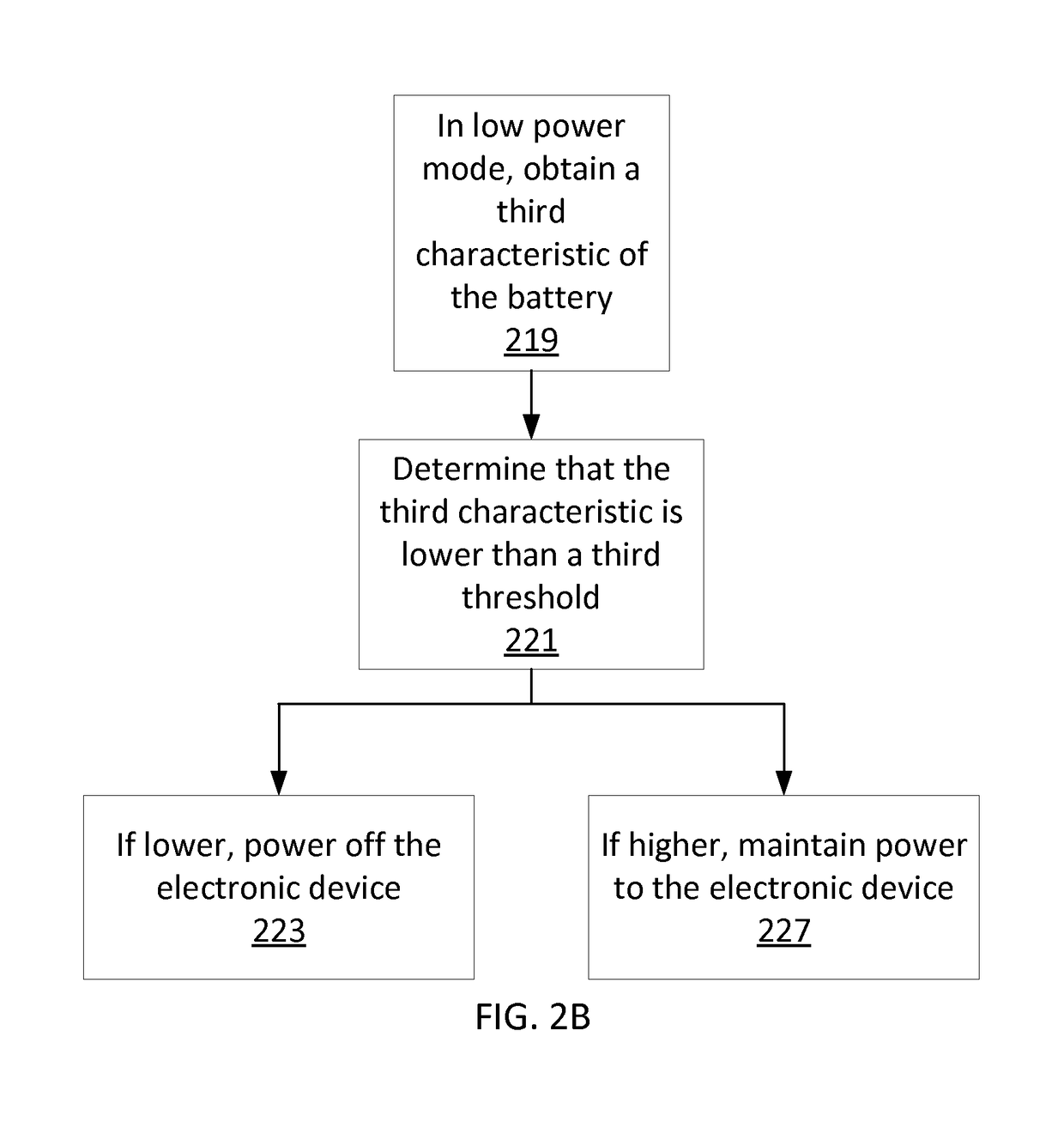
Examples of the disclosure are directed to a method of, after hitting a UVLO threshold, rebooting an electronic device in a low power mode having a lower UVLO threshold, such that the device can continue to be used past the first UVLO threshold. For example, in a high power mode, the device may be capable of a number of functionalities of a modern portable electronic device, such as network access, the ability to run applications, Bluetooth connections, etc. In a low power mode, the device may only be able to check and display a current time, play an alarm sound at a predefined time, perform near field communication (NFC) transactions / payments, among other possibilities described herein. The limited functionality and reduced usage of peripherals in the low power mode may prevent the battery from experiencing peaks in current level that may be problematic at relatively low levels of voltage.
Need to check novelty before this filing date? Find Prior Art

Description

CROSS-REFERENCE TO RELATED APPLICATIONS

[0001] This application is related to and claims the benefit of U.S. Provisional Application Ser. No. 62 / 033,819, filed Aug. 6, 2014, entitled “Low Power Mode”, and to U.S. Provisional Application Ser. No. 62 / 034,103, filed Aug. 6, 2014, entitled “Reduced-Size User Interfaces for Battery Management,” the entire disclosure of which is herein incorporated by reference in their entirety for all purposes.FIELD OF THE DISCLOSURE

[0002] This relates generally to power management of an electronic device.BACKGROUND OF THE DISCLOSURE

[0003] An electronic device may require a power supply, such as a battery. Further, the electronic device may require that the power supply have a certain minimum voltage in order to function properly. For example, a battery may not be able to sustain peaks in current level when the voltage drops below a certain level. Accordingly, an electronic device may monitor the voltage of its power supply and power down when the voltage f...

Examples

Embodiment Construction

[0012]In the following description of examples, reference is made to the accompanying drawings which form a part hereof, and in which it is shown by way of illustration specific examples that can be practiced. It is to be understood that other examples can be used and structural changes can be made without departing from the scope of the disclosed examples.

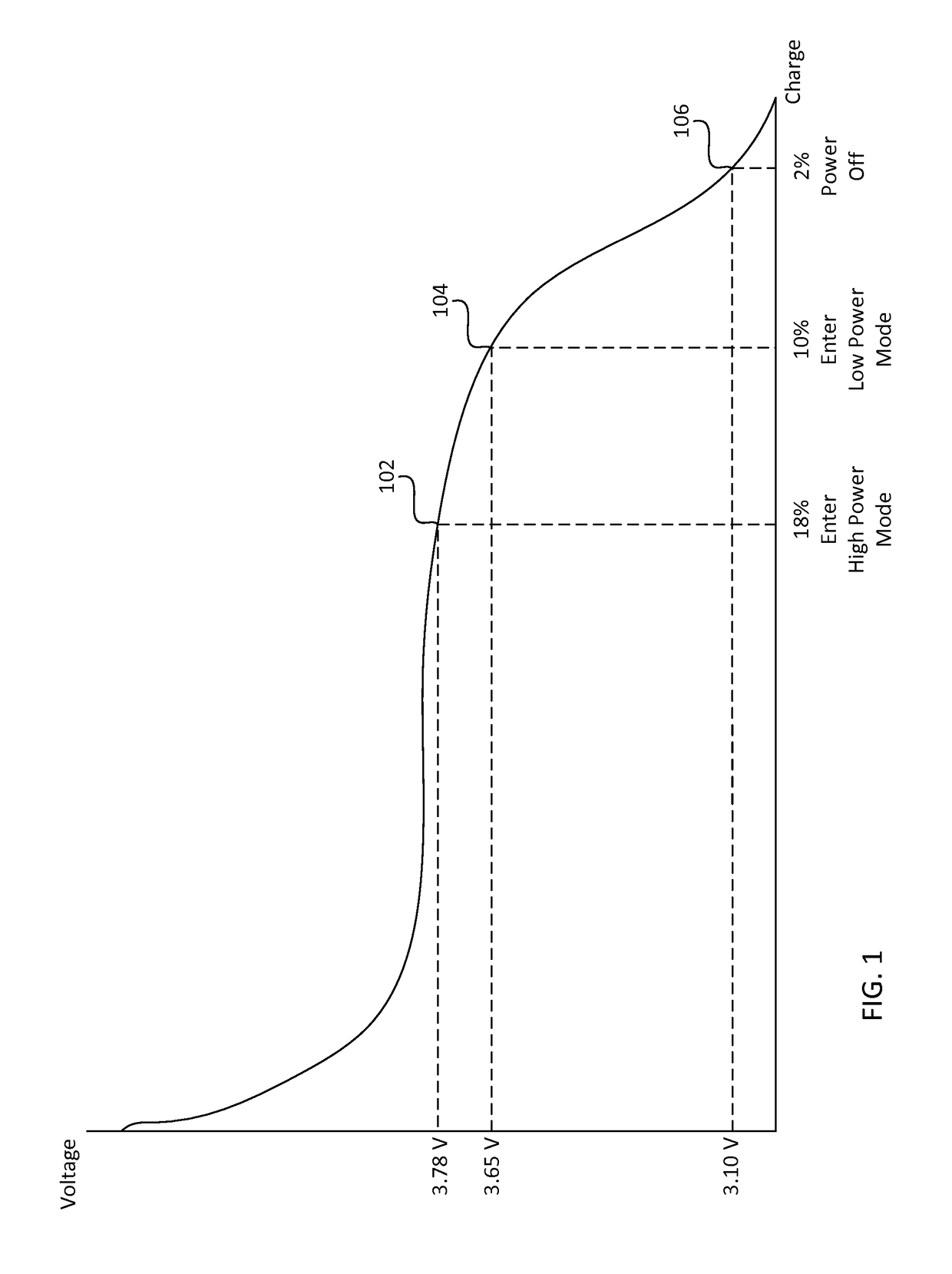
[0013]Examples of the disclosure are directed to a method of, after hitting a voltage threshold, rebooting an electronic device in a low power mode having a lower voltage threshold, such that the device can continue to be used. An undervoltage lockout (UVLO) threshold is presented for the sake of example, but other and / or additional thresholds can be used. For example, in a high power mode, the device may be capable of a number of functionalities of a modern portable electronic device, such as network access, the ability to run applications, Bluetooth connections, etc. In a low power mode, the device may only be able to perform a ...