However, the smaller a Coriolis
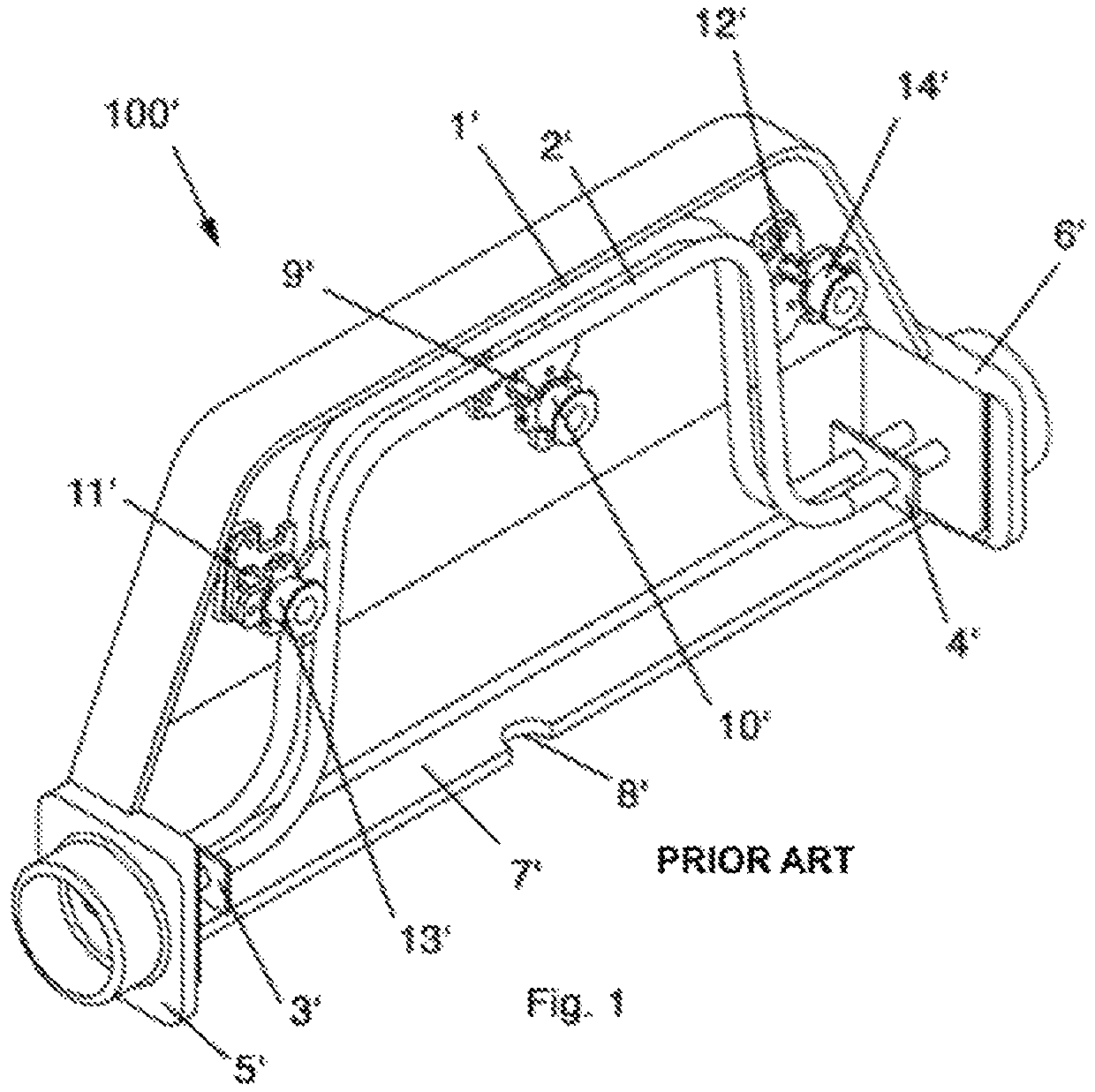
mass flow meter 100′ according to the prior art becomes, the more design and ultimately measurement-related problems arise, because while most of the components of the device can also be made smaller when the meter 100′ is made smaller (in accordance with the measurement range), such as the measurement tubes 1′, 2′, the magnets 9′, 11′, 12′, the
coupling elements 3′, 4′ etc. and even the housing 7′, a scaling down to small sizes for the coils 10′, 13′,14′ of the vibration exciters and vibration sensors and accordingly for their fastening elements on the measurement tubes 1′, 2′, the so-called coil holders, is no longer so easily possible.
Both have various unfavourable measurement properties of these devices and lead to design difficulties in the case of small Coriolis mass flow meters according to the prior art.
However, this arrangement is also not easily scalable to smaller sizes, because with smaller measurement arrangements, even minor inaccuracies in the construction, for example in the positioning of the magnets or the gusset plates, have a relatively increasing influence on the measurement accuracy.
The
diameter of the coil wire would then be so thin that it could hardly be wound and that sudden wire breaks on the connecting wires which connect the coil to the continued lines inside the device could or would occur.
Such wire breaks are a common occurrence, even in very large devices, because in Coriolis mass flow meters according to the prior art, the connecting wires always vibrate together with the coils, more or less in an uncontrolled manner, which leads to problems even in meters with correspondingly large dimensions and is no longer manageable for small meters in a correspondingly small measurement range.
The fact that coils, coil wire and coil holder cannot be reduced to any size, however, causes further problems in small Coriolis mass flow meters according to the prior art.
From a certain size, coiling and coil holding become very heavy compared to the measurement tubes themselves.
The devices then operate in ranges of very low frequencies, e.g. near 100 Hz or even lower, which makes the devices not only less accurate but also very sensitive to external influences such as, for example, vibrations, shock
waves, etc.
Furthermore, the local increase in mass due to the coils and the coil holders causes very high jumps in mass in the “measurement tube-fluid-coil-coil holder”
system, so that there are various inherent dynamic
modes during operation that further distort the measurement result.
A further problem also arises in small Coriolis mass flow meters according to the prior art due to the reduction in size.
As a result, small devices are in most cases more difficult to manufacture and usually less accurate than larger devices.
This means that the measurement tubes are deflected from an unstable state and tend (due to the
instability, similar to a pressure rod that can break out in any direction), to superimpose the vibration of the measurement tubes in the opposite direction (i.e. the measurement-relevant vibration) with additional deflections that randomly change in any direction (in other words: to “contaminate”) and thus distort the measurement results.
These harmful deflections are so small that they are generally not visible to the
naked eye.
However, they can influence the vibration behaviour and—especially in the case of small measurement arrangements—can lead to significant measurement inaccuracies.
This counteracts undesirable vibrations of the circuit board.
In the case of a thin
weld seam, this can be very complex and technically difficult.



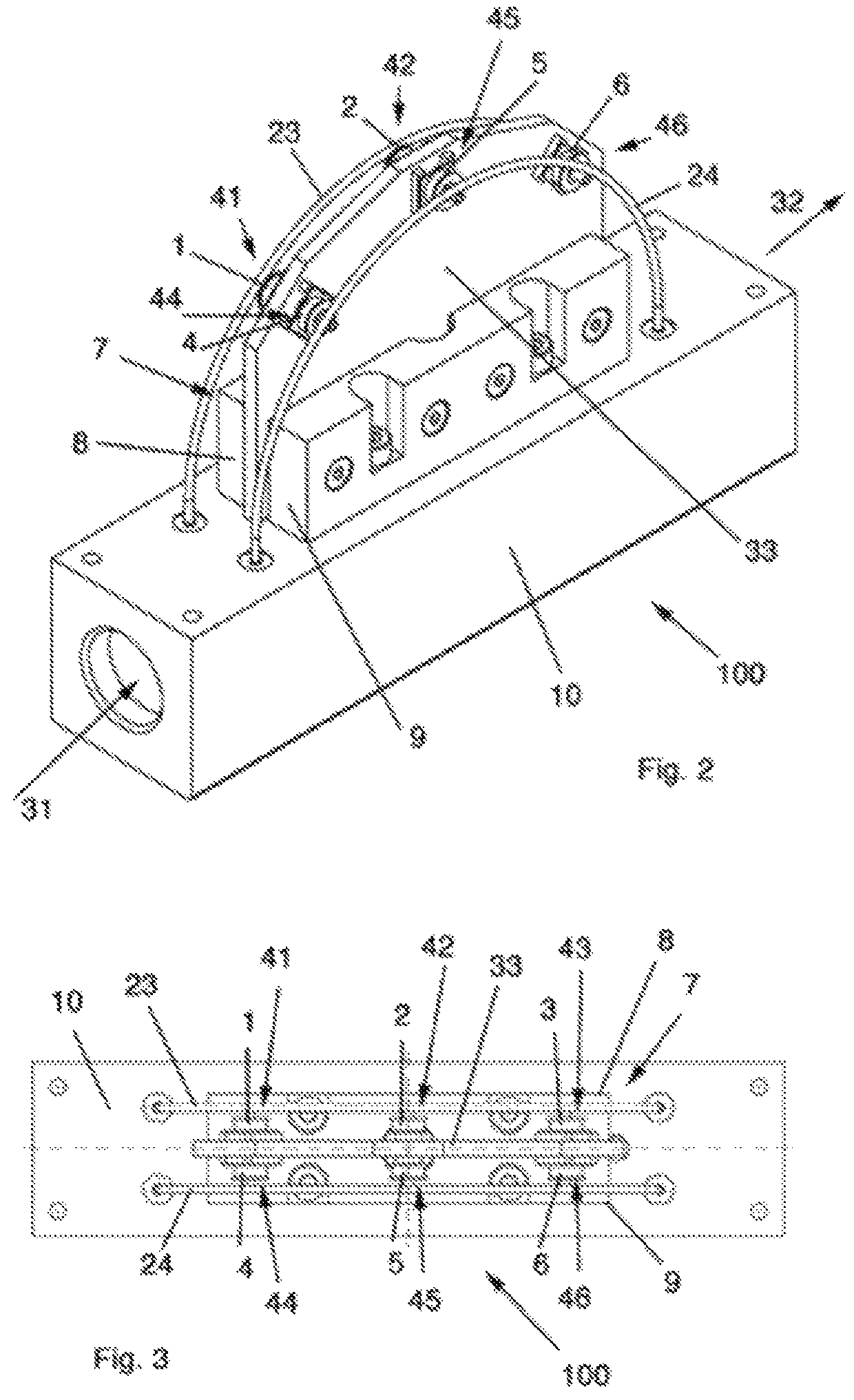
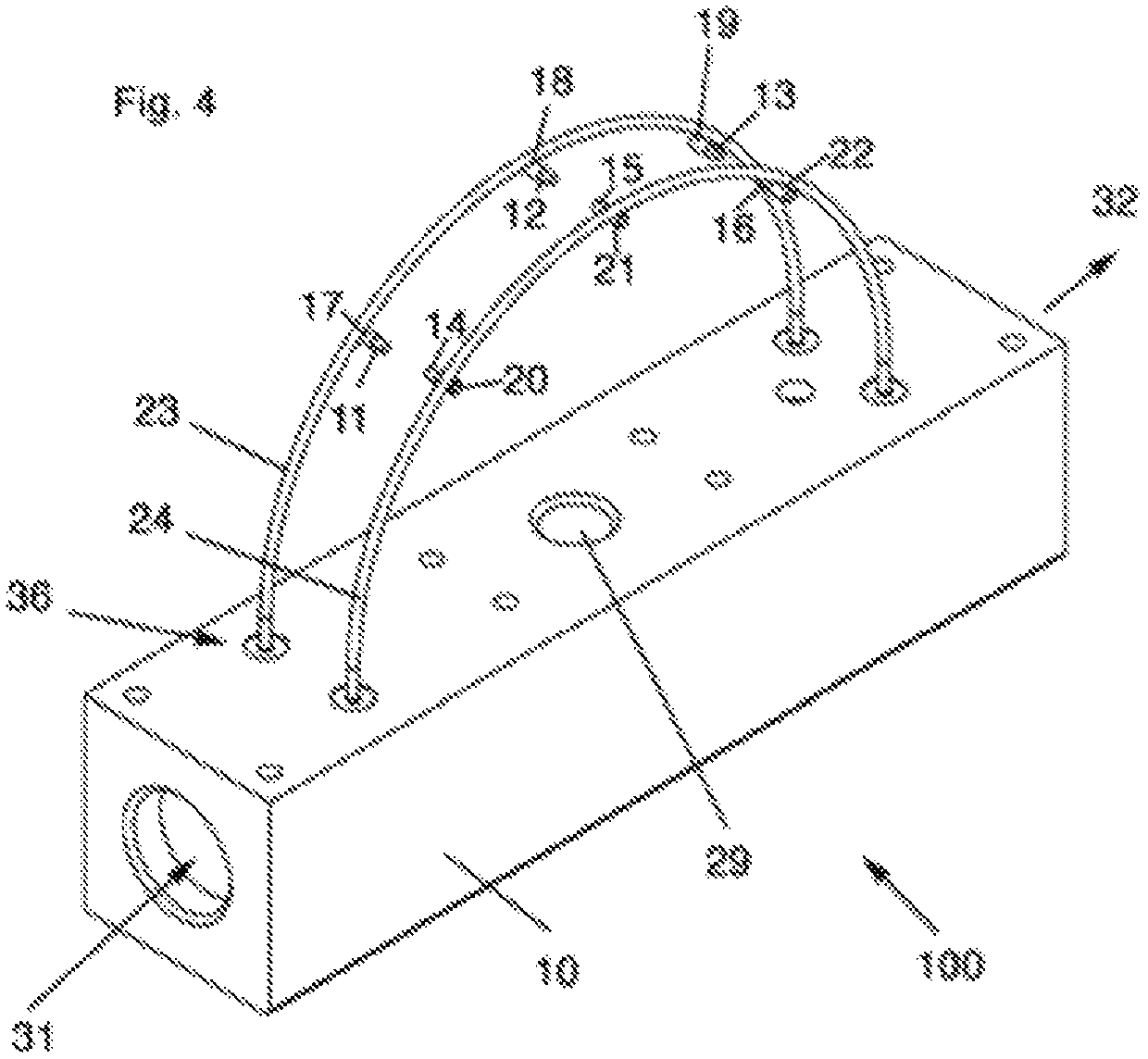
 Login to View More
  Login to View More