Functional gap average on-line randomness test

a randomness test and functional gap technology, applied in the field of random number generators, can solve the problems of biased 0/1, catastrophic consequences of security breach, and difficult real-time random sequence generation in real-time application

US20030187889A1Inactive Publication Date: 2003-10-02KONINKLIJKE PHILIPS ELECTRONICS NV
3 Cites 10 Cited by

Patent Information

Authority / Receiving Office
US · United States
Patent Type
Applications(United States)
Current Assignee / Owner
Publication Date
2003-10-02
Estimated Expiration
Not applicable · inactive patent

Smart Images

  • Figure 1
    Figure 1
  • Figure 2
    Figure 2
  • Figure 3
    Figure 3
Patent Text Reader

Abstract

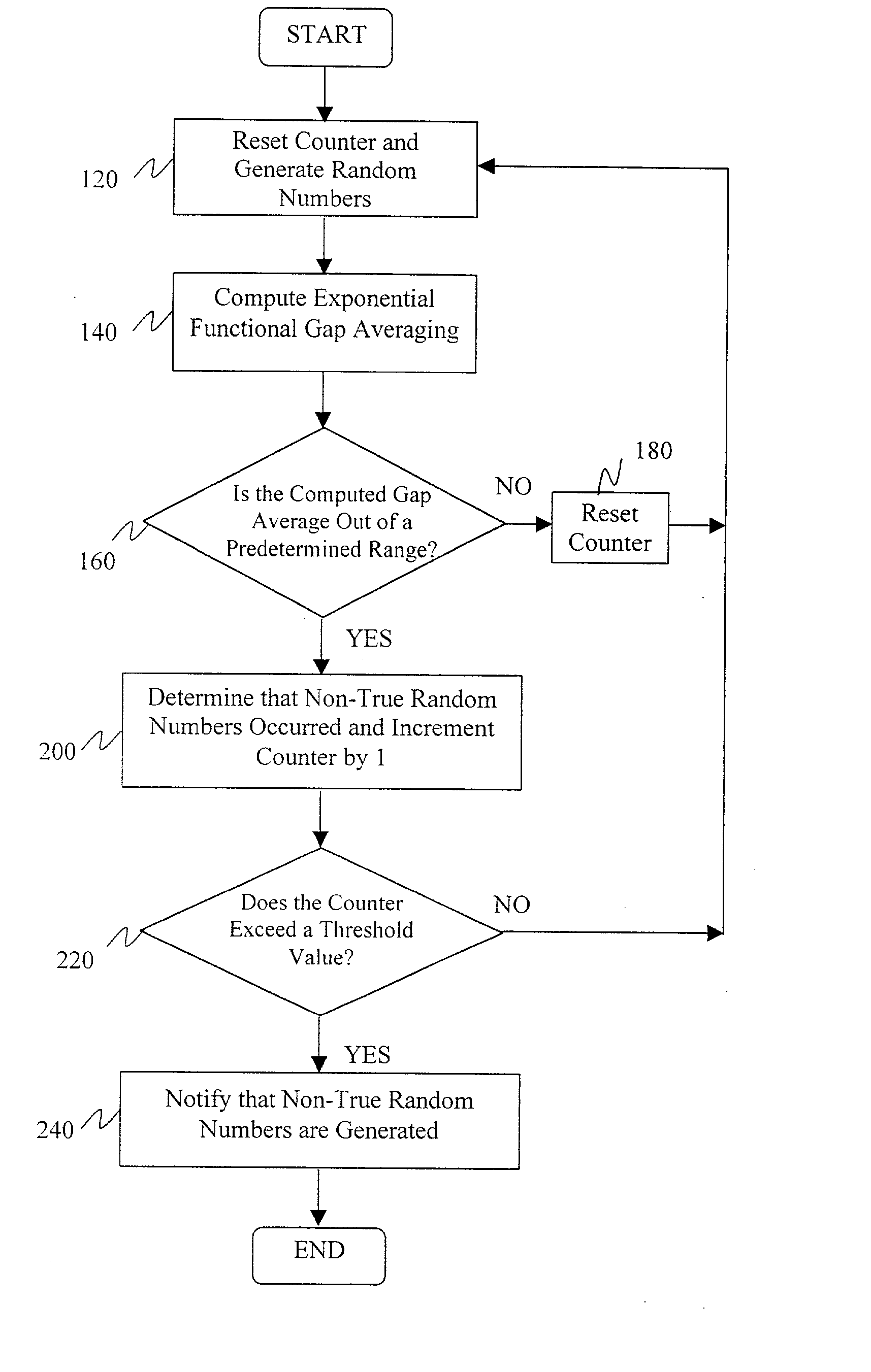
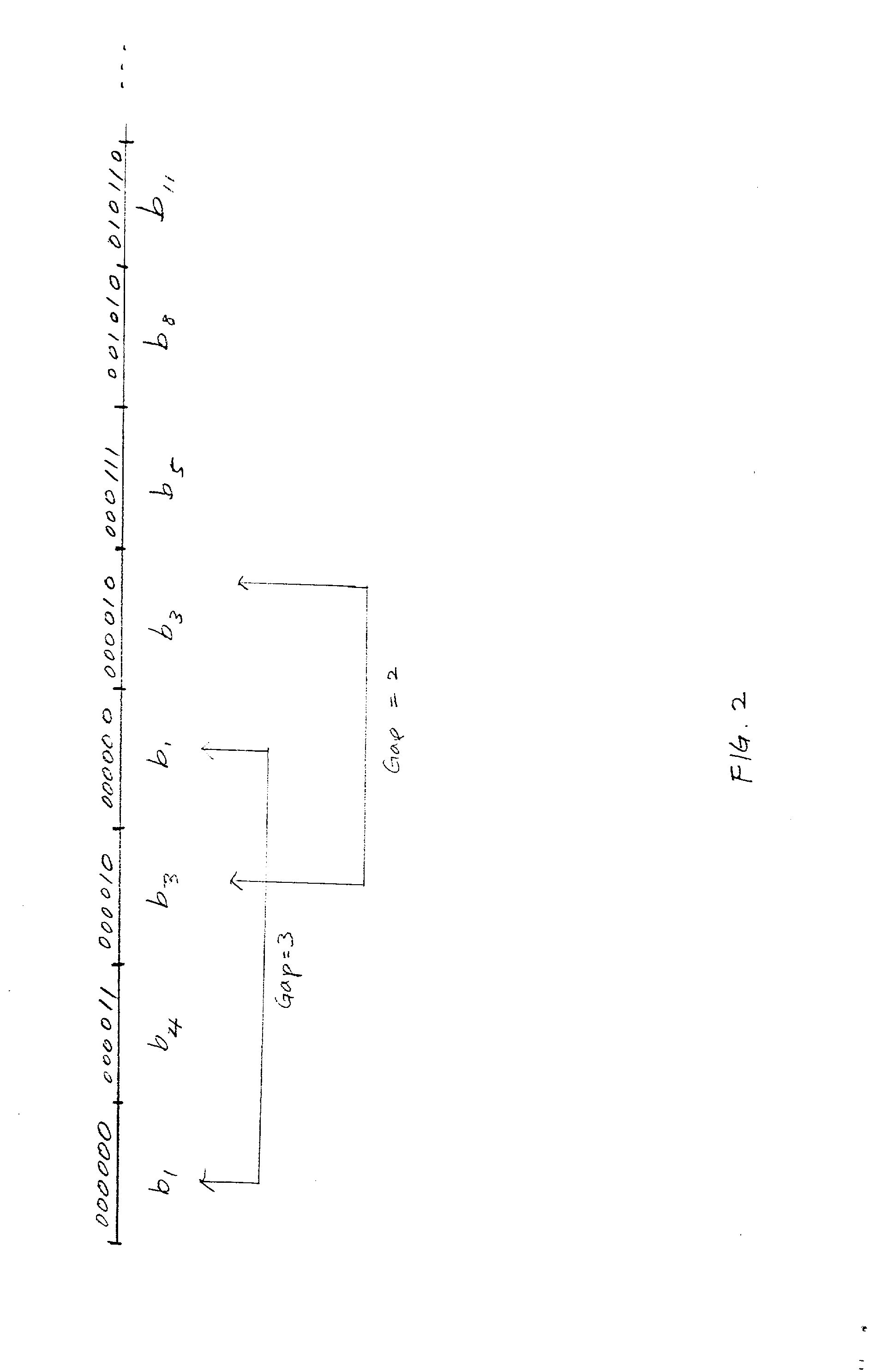
The present invention is a method and apparatus for testing the random numbers generated by a random-number generator in real time. A stream of random bits is generated using a random-number generator, then the generated random bits undergo a functional-exponential-average gap length calculation in which distances between occurrences of a plurality of sub-sequences having identical bit patterns are identified and applied to functional weighting and exponential averaging to obtain an average gap length. The average gap length is compared to a predetermined acceptance range, such that if the average gap length repeatedly falls outside the predetermined acceptance range more than a predetermined number of times, it is determined that the generated random bits are insufficiently random.
Need to check novelty before this filing date? Find Prior Art

Description

[0001] 1. Field of the Invention

[0002] The present invention pertains to the field of random-number generators and, in particular, to a digital-data-processing apparatus and method for generating true binary random sequences.

[0003] 2. Description of the Related Art

[0004] Many electronic devices are equipped with random-number generators for various random applications. Especially, random-number generators are fundamentally important in this computer age where randomness is critically important to ensure security. However, a truly random sequence is difficult to generate in real application. For example, heat is typically generated in the hardware component of the random-number generator when it generates a series of 1's and 0's over a time period. Generating a 1 bit could consume more power than a 0 bit. As such, if a long sequence of 1 bits is generated, the electrical circuit becomes hot causing the circuit to "latch up", thereby generating mostly 1 bits but rarely a 0 bit. A diff...

Examples

Embodiment Construction

[0016] In the following description, for purposes of explanation rather than limitation, specific details are set forth such as the particular architecture, interfaces, techniques, etc., in order to provide a thorough understanding of the present invention. However, it will be apparent to those skilled in the art that the present invention may be practiced in other embodiments, which depart from these specific details. For purposes of simplicity and clarity, detailed descriptions of well-known devices, circuits, and methods are omitted so as not to obscure the description of the present invention with unnecessary detail.

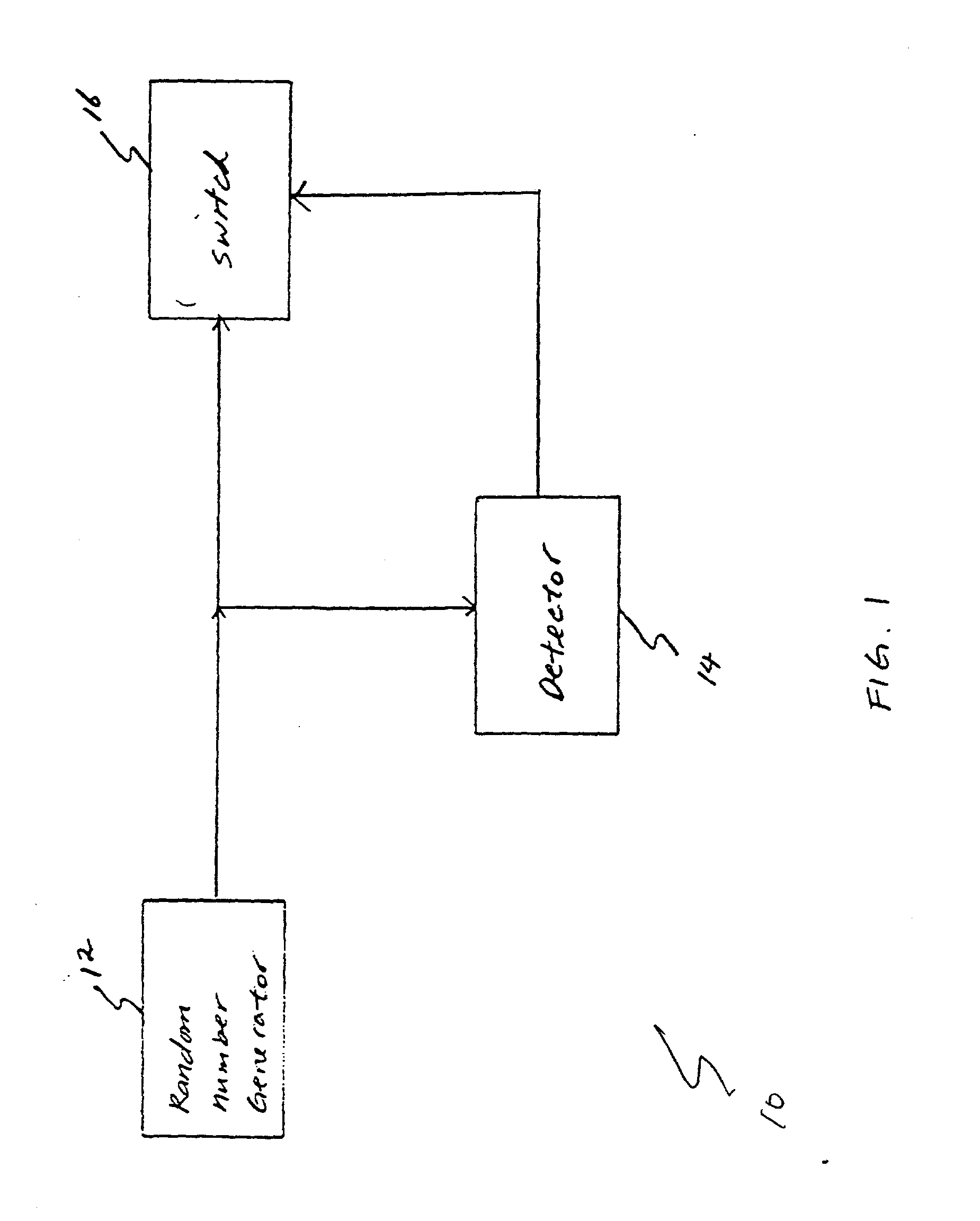
[0017] FIG. 1 illustrates a simplified block diagram of a random-number-generating system 10 according to an exemplary embodiment of the present invention. The system 10 includes a random-number generator (RG) 12 for generating a series of random numbers, a detector 14, and a switch 16. Note that the system 10 can be implemented by a variety of means in both hardware...