

Wireless access point (WAP)
a wireless access point and access point technology, applied in the field of wireless access points (wap), can solve the problems of limiting their placement relative to furniture and other obstructions, suffering from several limitations, and creating an unappealing estheti
- Summary
- Abstract
- Description
- Claims
- Application Information
AI Technical Summary
Problems solved by technology
Method used
Image

Examples
Embodiment Construction
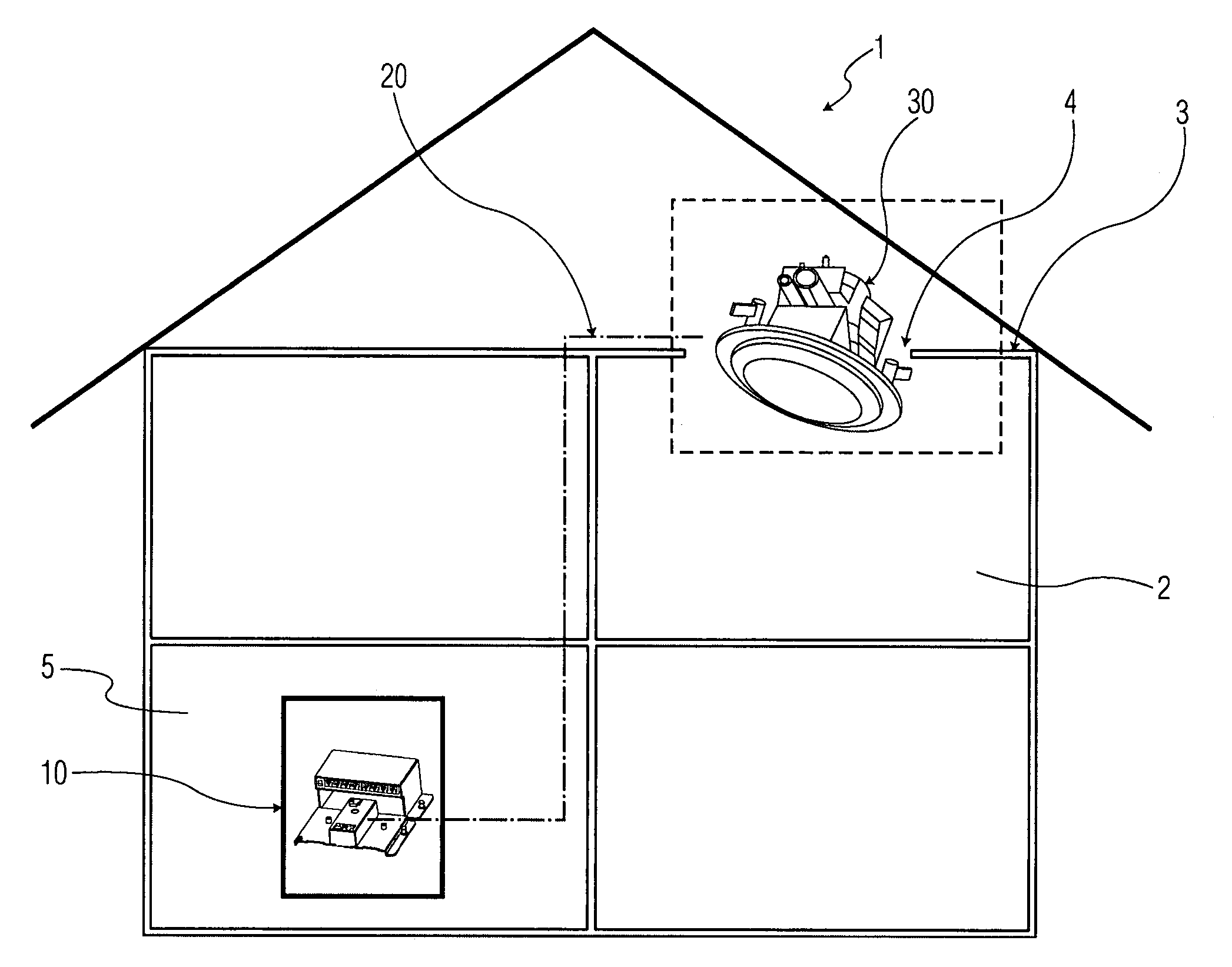
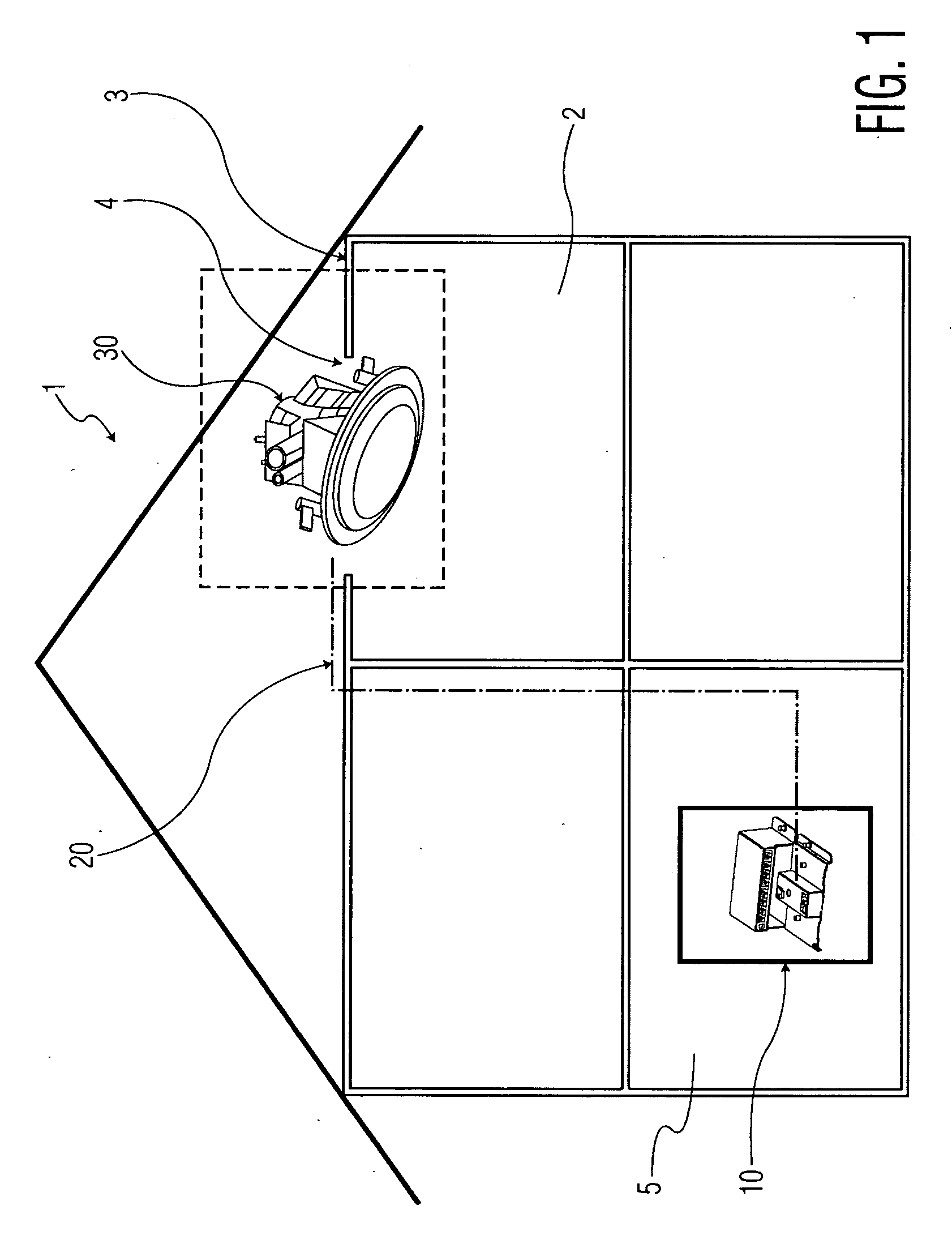
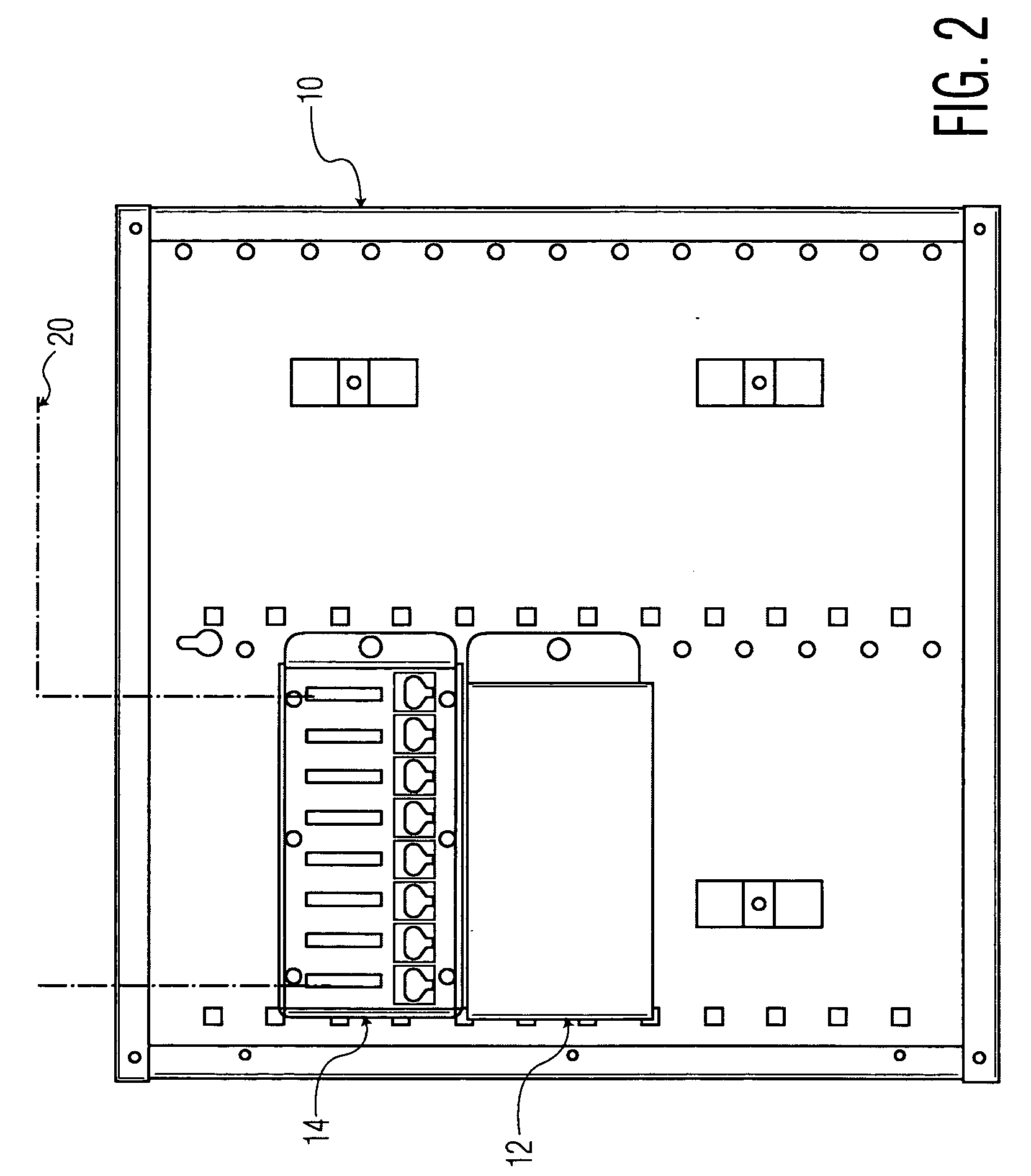
[0012] The invention provides a wireless access point assembly, a modular wireless access point system, and a wireless networking system to form a wireless zone as part of a home communication network. As shown in FIG. 1, a home 1 is provided with a communication network, which includes a service center 10, and at least one cable run 20, extending from the service center 10 to a location remote from the service center 10. According to an exemplary embodiment of the invention, a wireless access point (WAP) assembly 30 is connected to the cable run 20 to form a wireless zone 2. The WAP assembly 30 is mounted in an opening 4 in a ceiling 3 of the home 1, essentially centrally located in the wireless zone 2. By locating the WAP 30 in the ceiling 3, it can be essentially transparent to the homeowner, allowing a more esthetically pleasing room layout than if an existing WAP were simple placed on a table.
[0013] The communications network, may be, for example, an OnQ Home Network System, a...
PUM
 Login to View More
 Abstract
Description
Claims
Application Information
 Login to View More