
Electric mixer
- Summary
- Abstract
- Description
- Claims
- Application Information
AI Technical Summary
Benefits of technology
Problems solved by technology
Method used
Image

Examples
Embodiment Construction
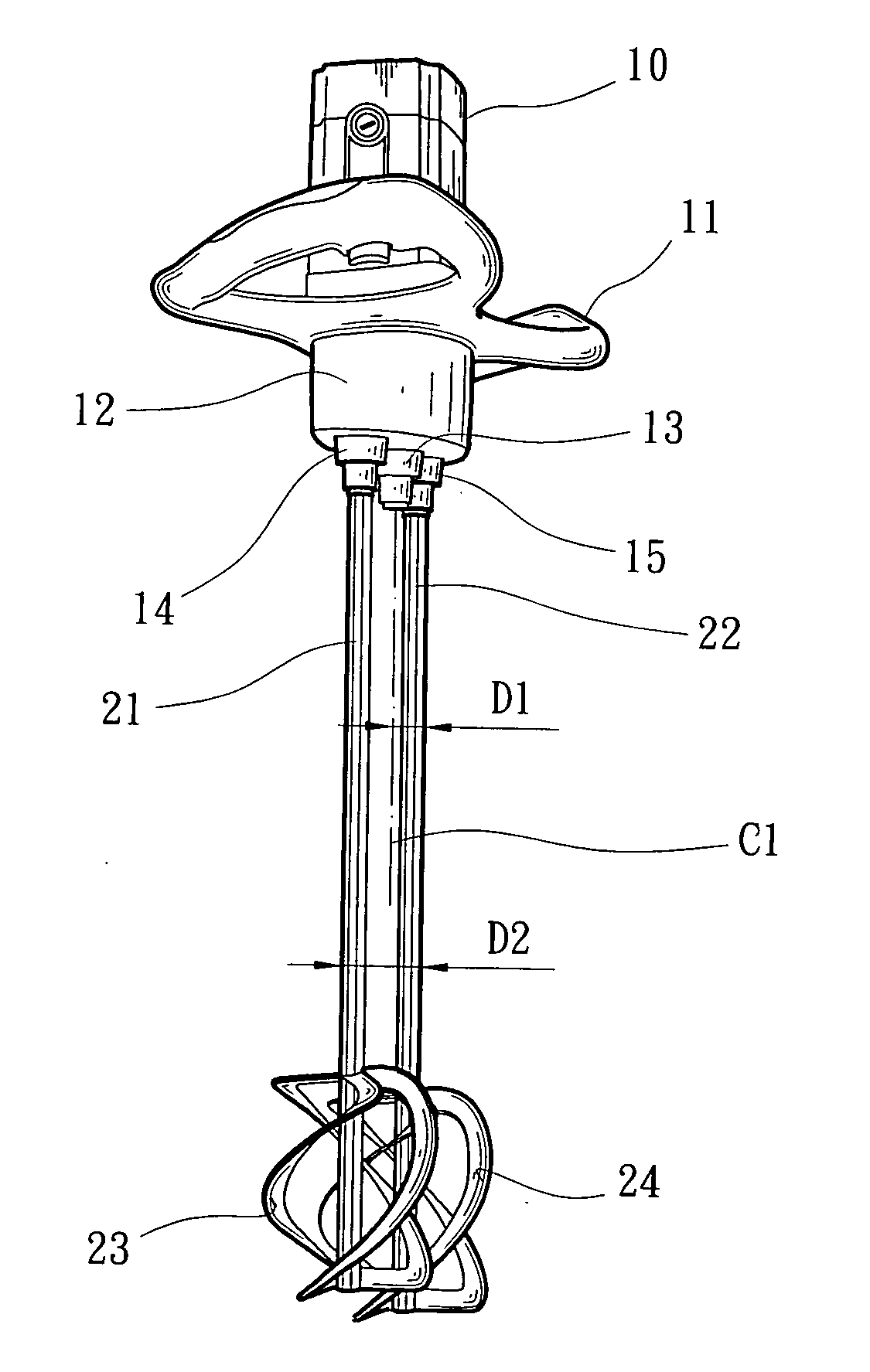
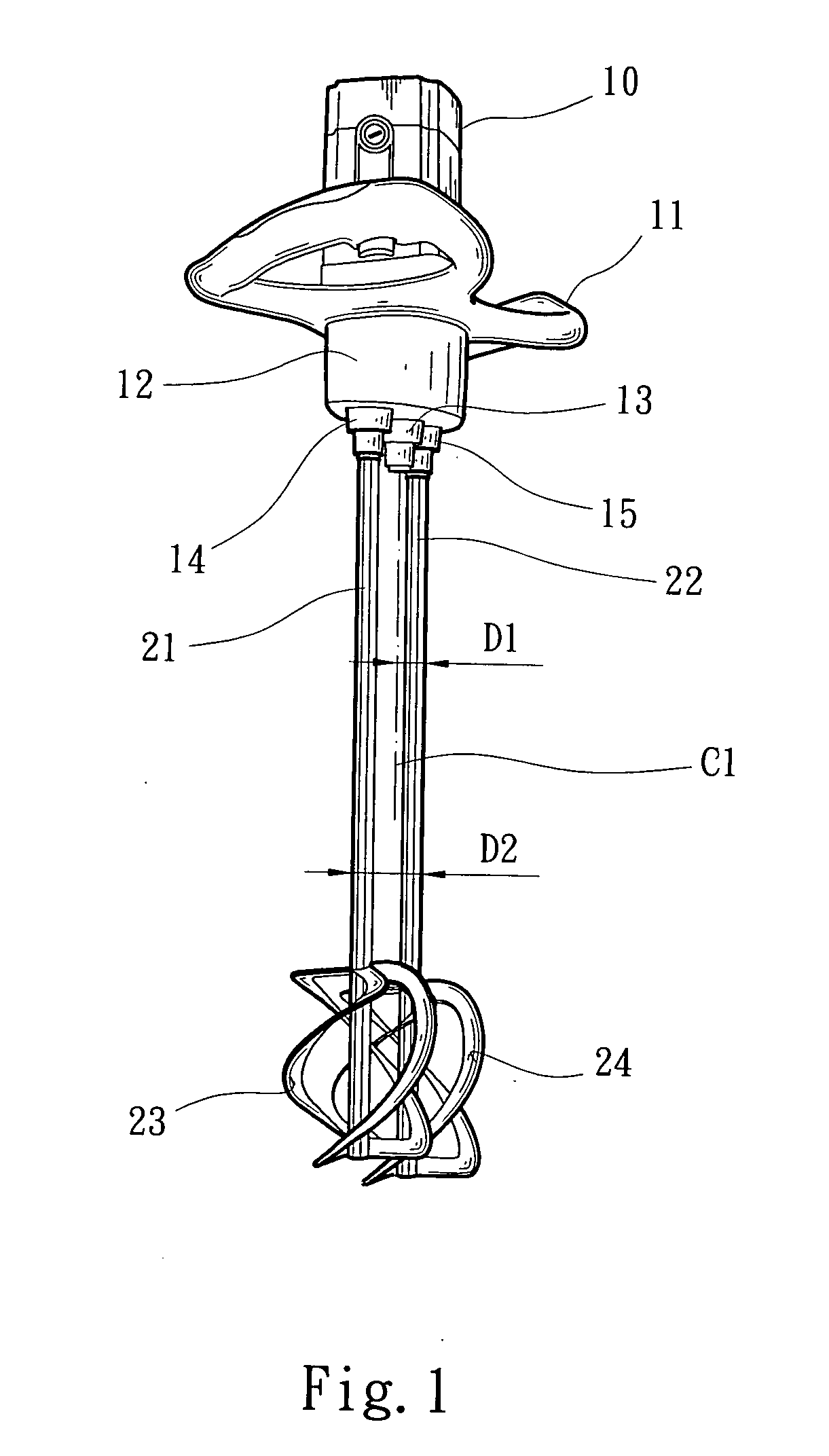
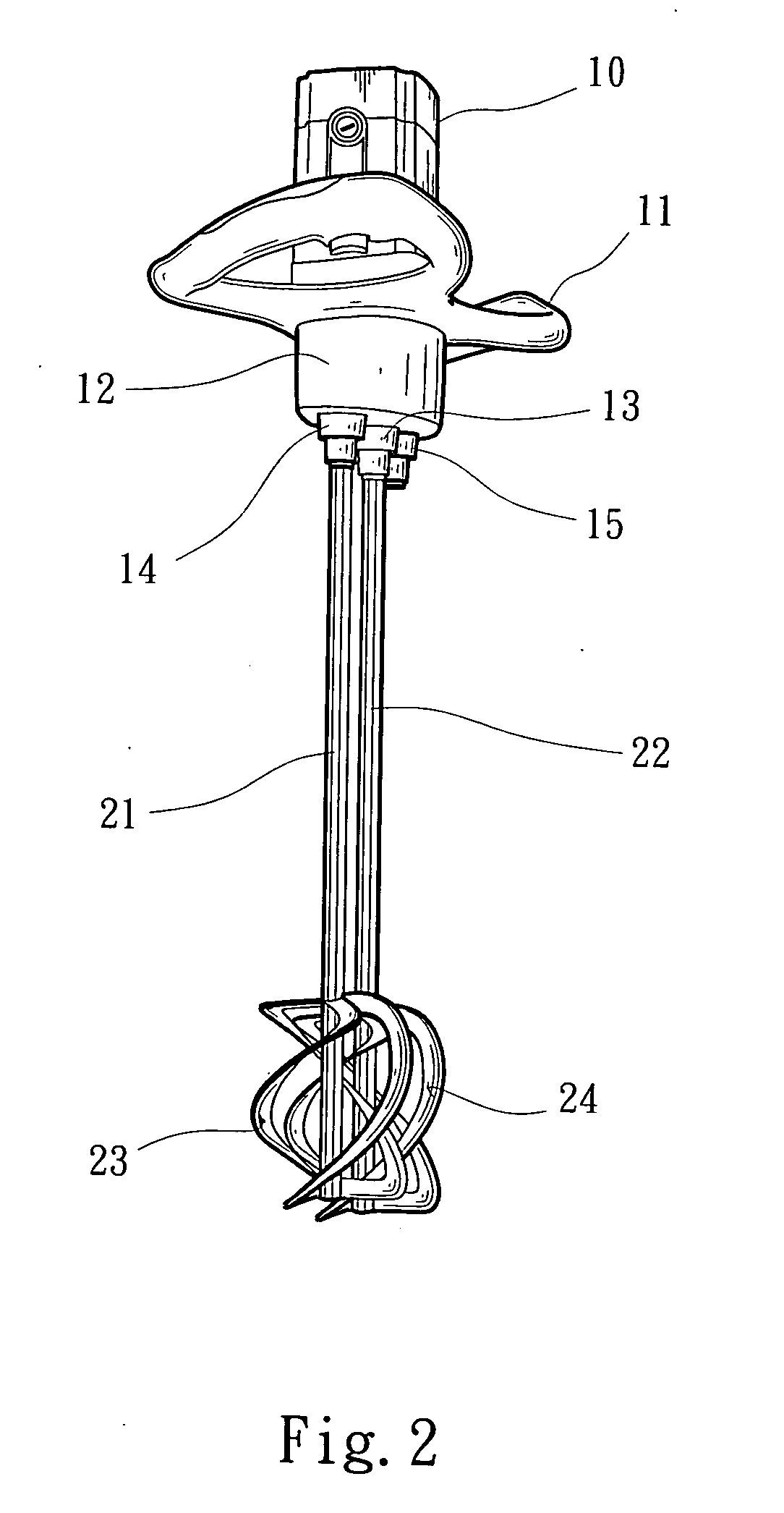
[0014] Please refer to FIG. 1. The electric mixer of the present invention includes a driving mechanism 10 and relevant units (such as locating board 11) disposed at top end of the mixer. The electric mixer further includes a transmission mechanism 12 positioned under the driving mechanism 10 for outputting the power of the driving mechanism 10 and controlling the rotational direction of the mixing rods and paddles disposed at the ends of the mixing rods. The mixing rods and paddles are mounted under the transmission mechanism 12. With a twin-paddle electric mixer exemplified, one paddle is controlled to forward rotate, while another paddle is controlled to backward rotate.
[0015] A first connecting tube 13, a second connecting tube 14 and a third connecting tube 15 are parallelly arranged under bottom face of the transmission mechanism 12 at intervals. The first connecting tube 13 is positioned in the middle, while the second and third connecting tubes 14, 15 are respectively dispo...
PUM
 Login to View More
 Abstract
Description
Claims
Application Information
 Login to View More