

Methods and molds for producing customized hot pour products
a technology of hot pouring and molds, applied in the direction of foundry molds, packaged goods types, foundry patterns, etc., can solve the problems of inconvenient customization of such materials or products, difficulty in achieving custom designs on the viewing surface of materials, and inability to meet the needs of customers, etc., to achieve convenient customization and less cost.
- Summary
- Abstract
- Description
- Claims
- Application Information
AI Technical Summary
Benefits of technology
Problems solved by technology
Method used
Image

Examples
Embodiment Construction
[0035] Although making and using various embodiments of the present invention are discussed in detail below, it should be appreciated that the present invention provides many inventive concepts that may be embodied in a wide variety of contexts. The specific aspects and embodiments discussed herein are merely illustrative of ways to make and use the invention, and do not limit the scope of the invention.
[0036] In the description which follows like parts are marked throughout the specification and drawing with the same reference numerals, respectively. The drawing figures are not necessarily to scale and certain features may be shown exaggerated in scale or in a somewhat generalized or schematic form in the interest of clarity and conciseness.
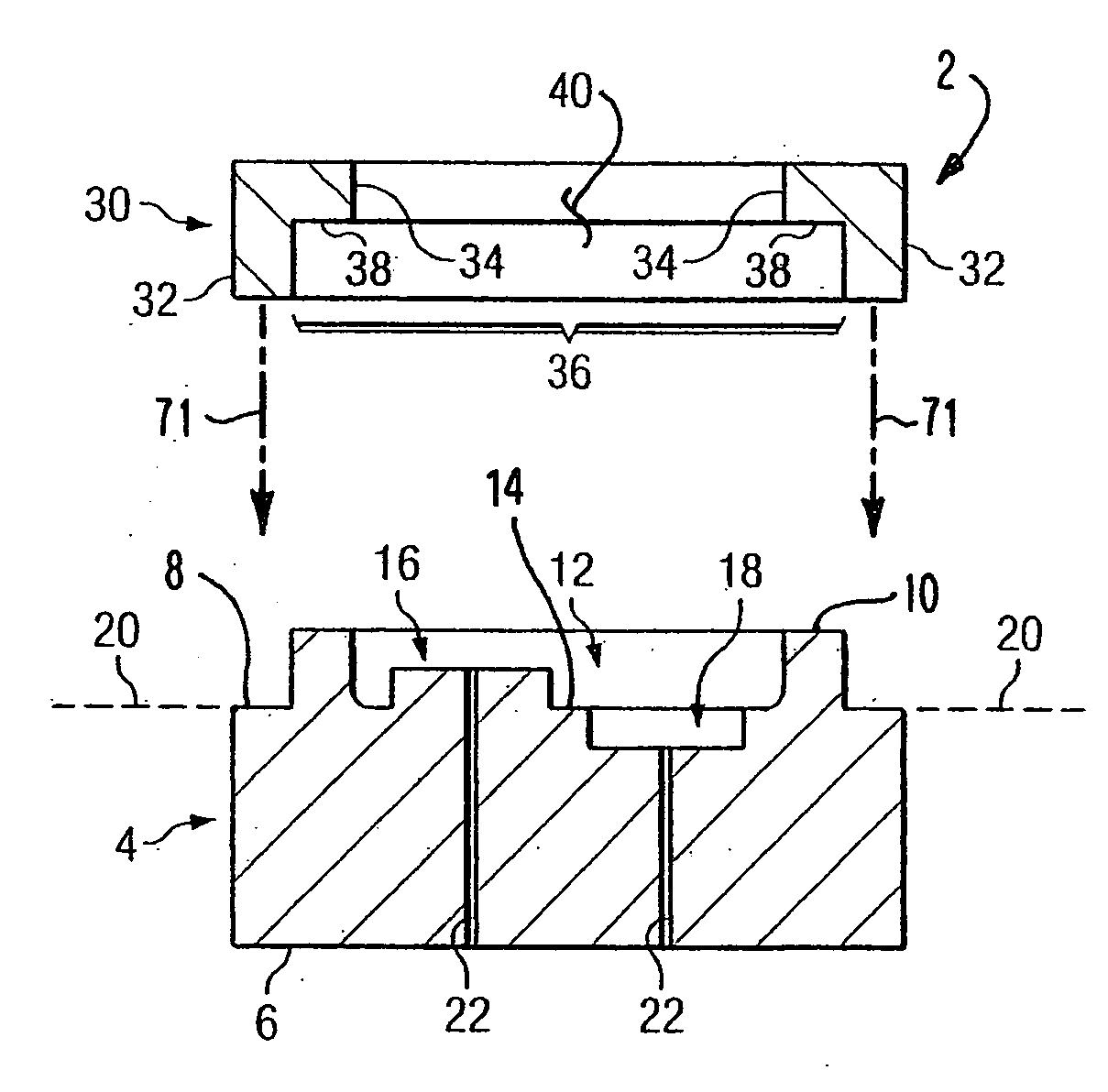
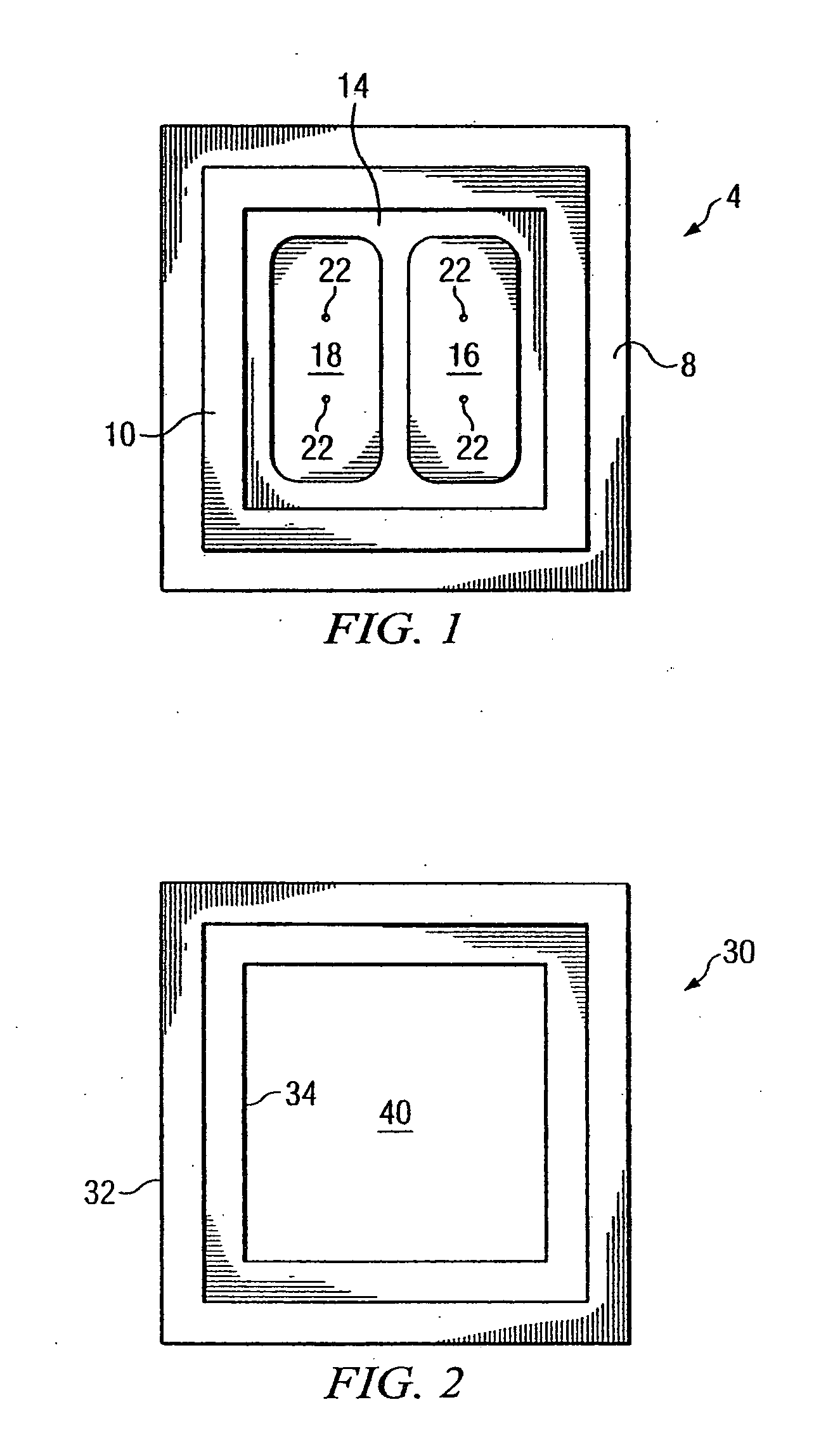
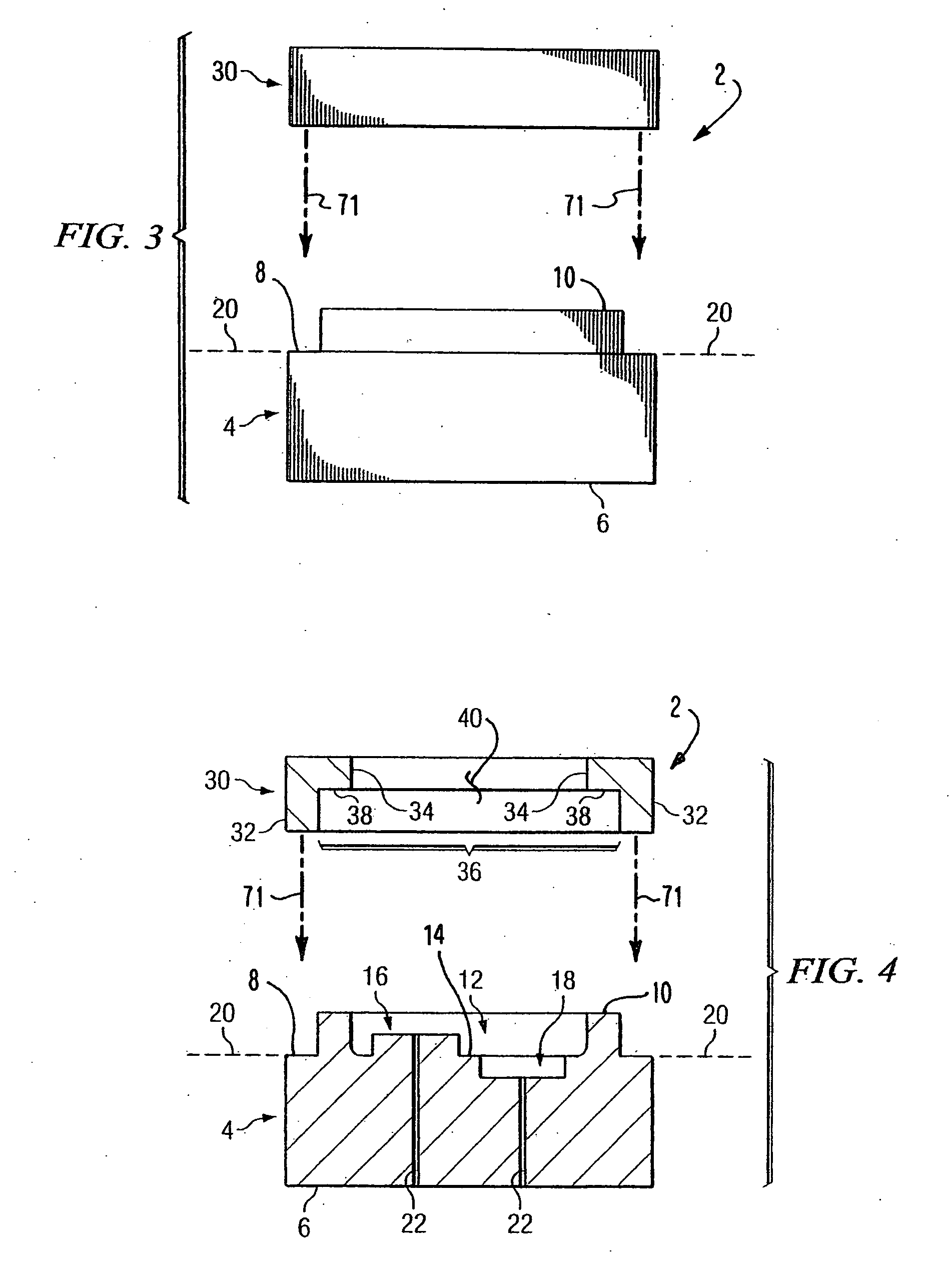
[0037] Now referring to FIGS. 1 and 4, an example of a mold 2, FIG. 1, in accordance with the invention is illustrated with respect to a base part 4. Generally, the exemplary base part 4 is a shaped block having a bottom wall 6, an upward faci...
PUM
| Property | Measurement | Unit |
|---|---|---|
| surface elevations | aaaaa | aaaaa |
| pressure | aaaaa | aaaaa |
| gravity | aaaaa | aaaaa |
Abstract
Description
Claims
Application Information
 Login to View More