
Methods and systems for communicating data through a pipe
- Summary
- Abstract
- Description
- Claims
- Application Information
AI Technical Summary
Benefits of technology
Problems solved by technology
Method used
Image

Examples
Embodiment Construction
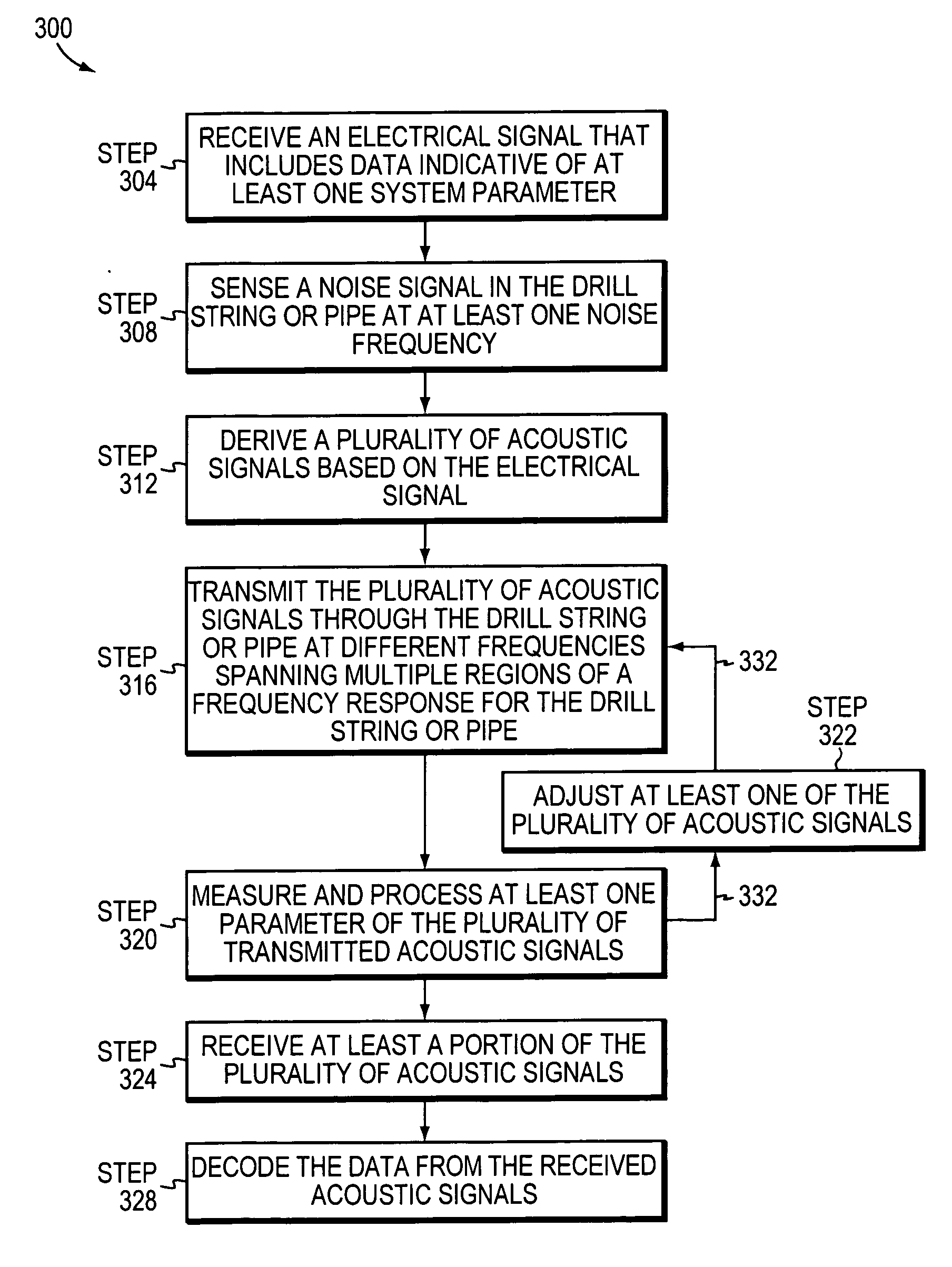
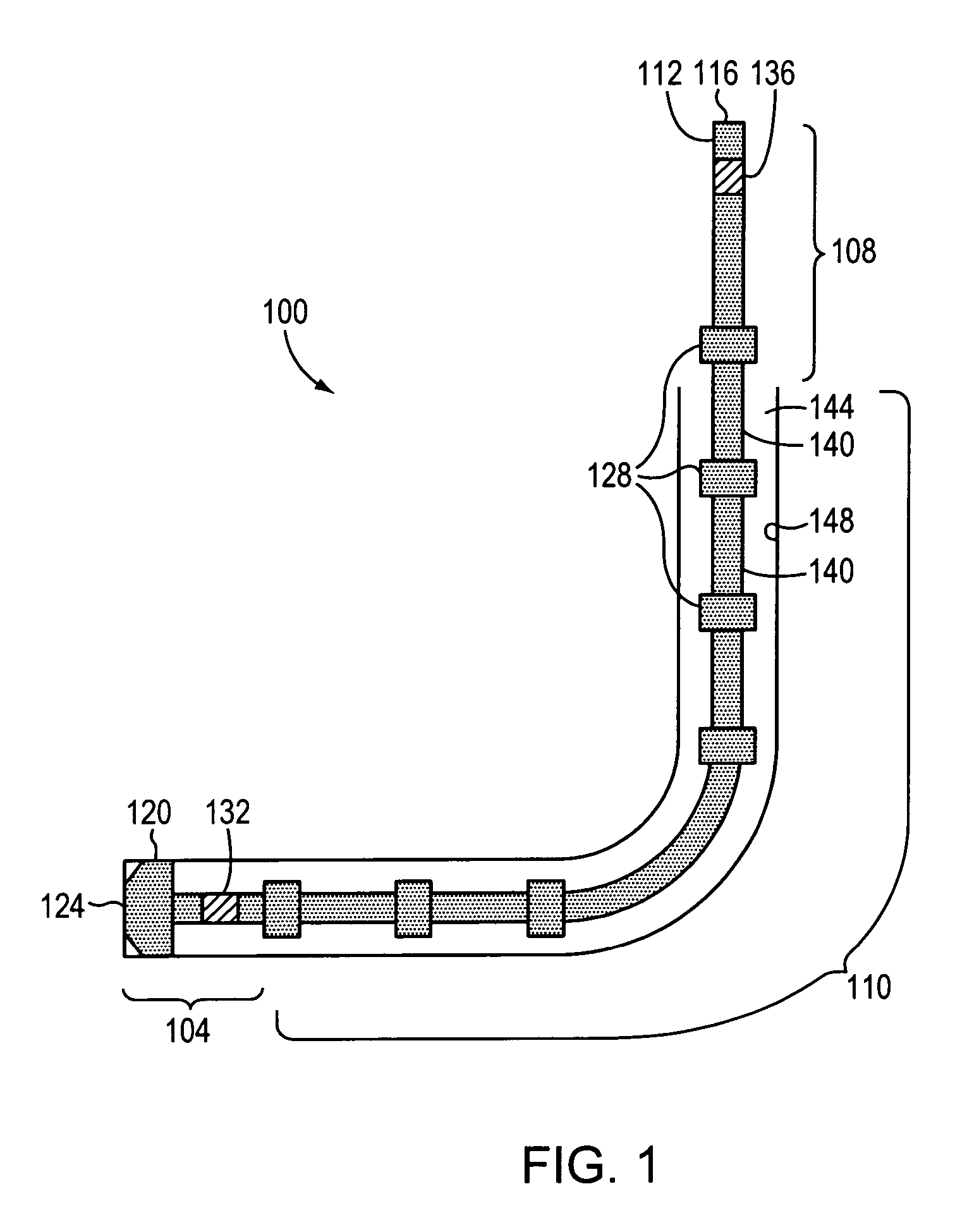
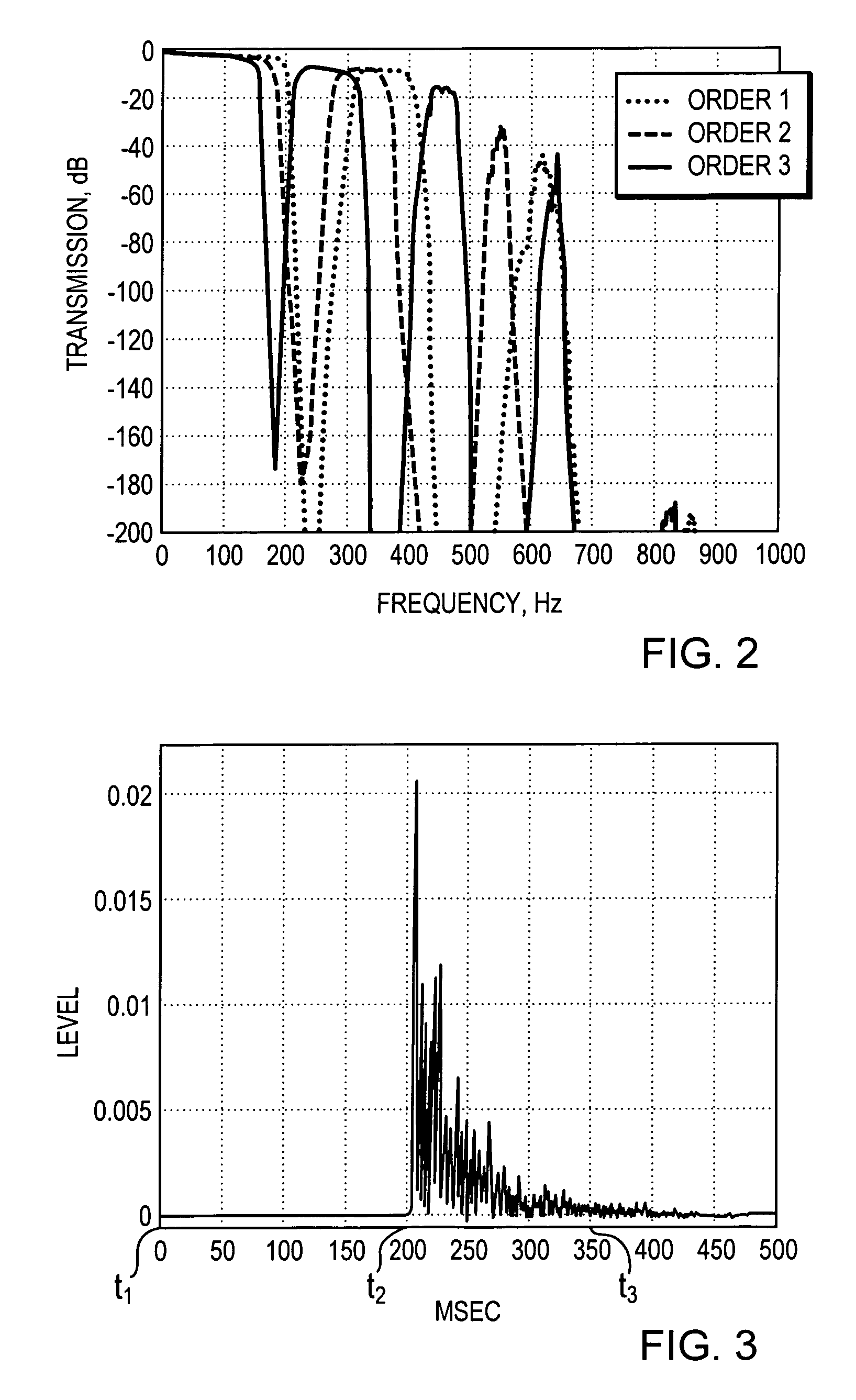
[0035] In broad overview, the present invention counteracts the effects of time-spreading and reduces the likelihood that data is lost or corrupted because an acoustic signal is transmitted through a drill string at a frequency corresponding to a null in the frequency domain. For example, in various embodiments, the present invention employs broadband, as opposed to narrowband, communication techniques, desirably with redundancy, to acoustically transmit data through a drill string or pipe. More specifically, in some embodiments of the invention, a plurality of acoustic signals, some of which contain the same (i.e., redundant) information, or portions of information, as other acoustic signals, are transmitted through the drill string or pipe substantially simultaneously at different frequencies spanning multiple regions of a frequency response for the drill string or pipe. In such a fashion, the likelihood of receiving complete, and correct, data at the opposite end of the drill str...
PUM
 Login to View More
 Abstract
Description
Claims
Application Information
 Login to View More