
Walking cane assembly
a cane and cane body technology, applied in the field of collapsible walking cane assembly, can solve the problems of reducing his/her stability, and achieve the effect of quick and easy adjustment and readily adaptability
- Summary
- Abstract
- Description
- Claims
- Application Information
AI Technical Summary
Benefits of technology
Problems solved by technology
Method used
Image

Examples
Embodiment Construction
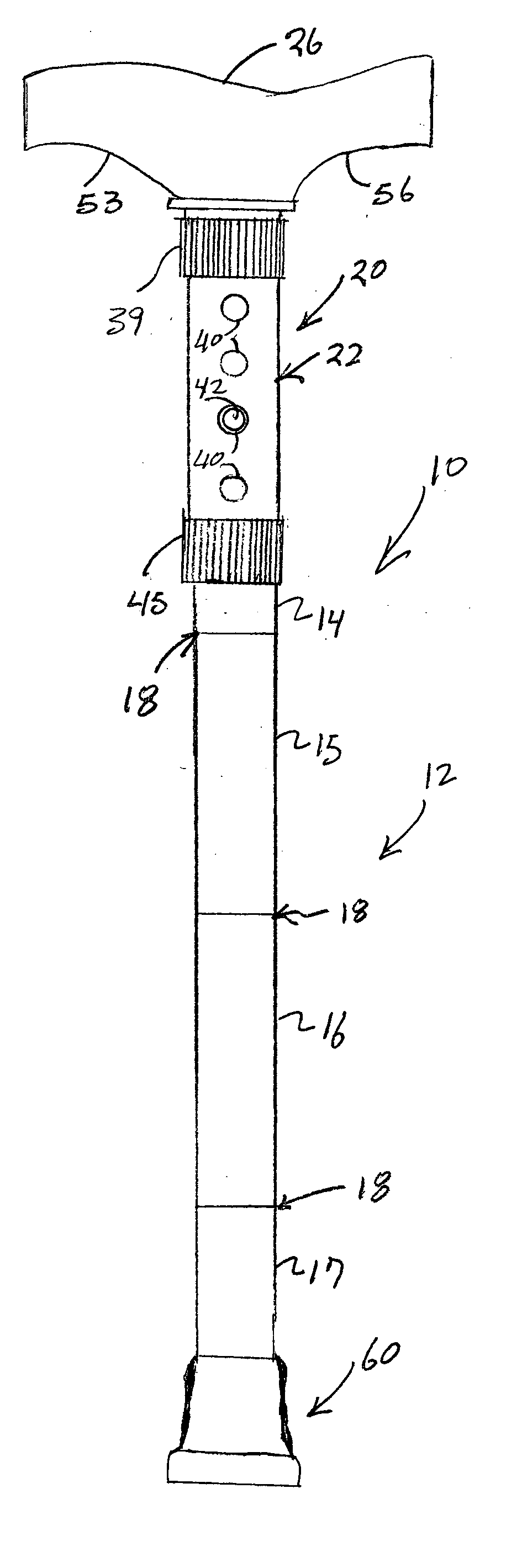
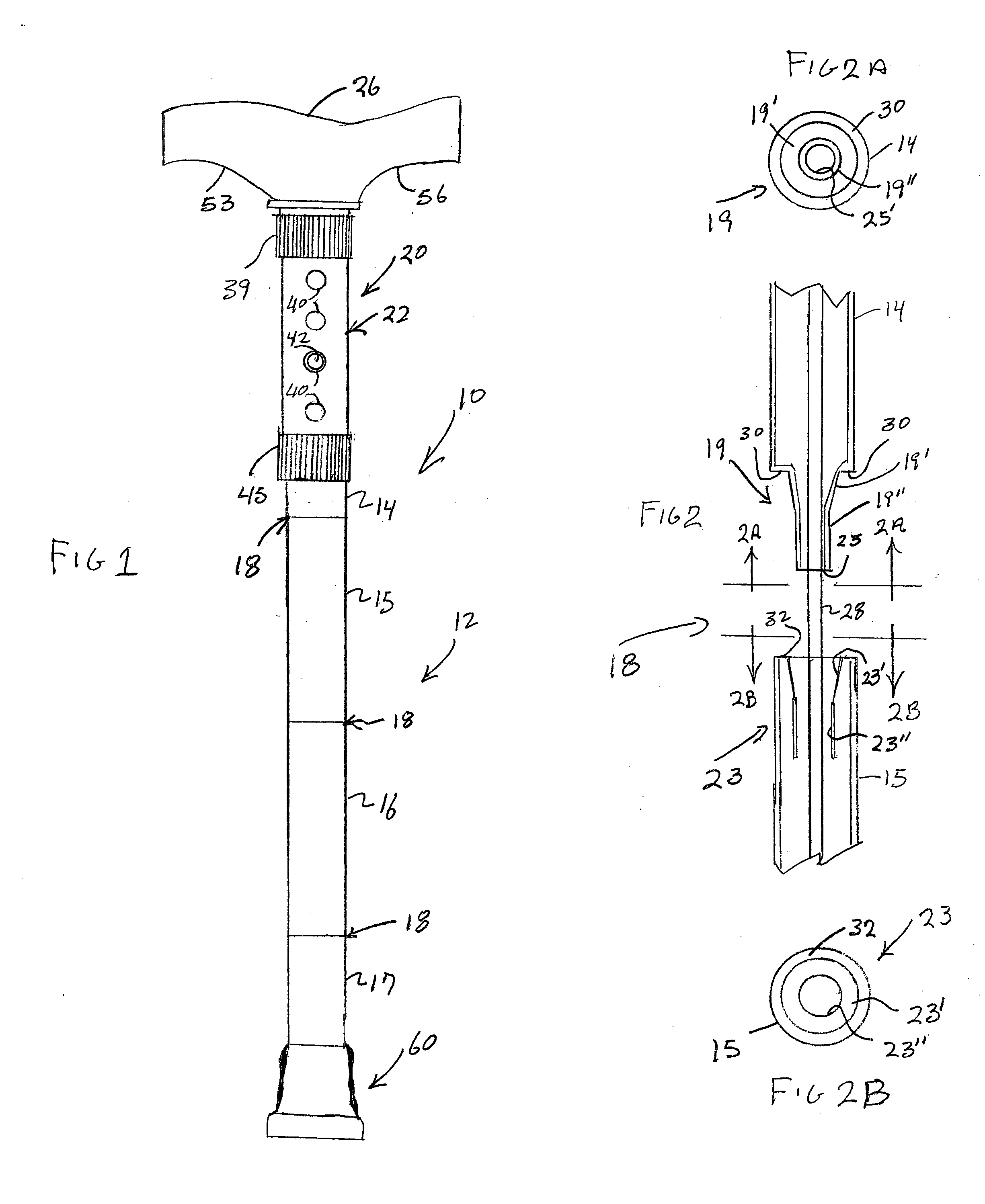
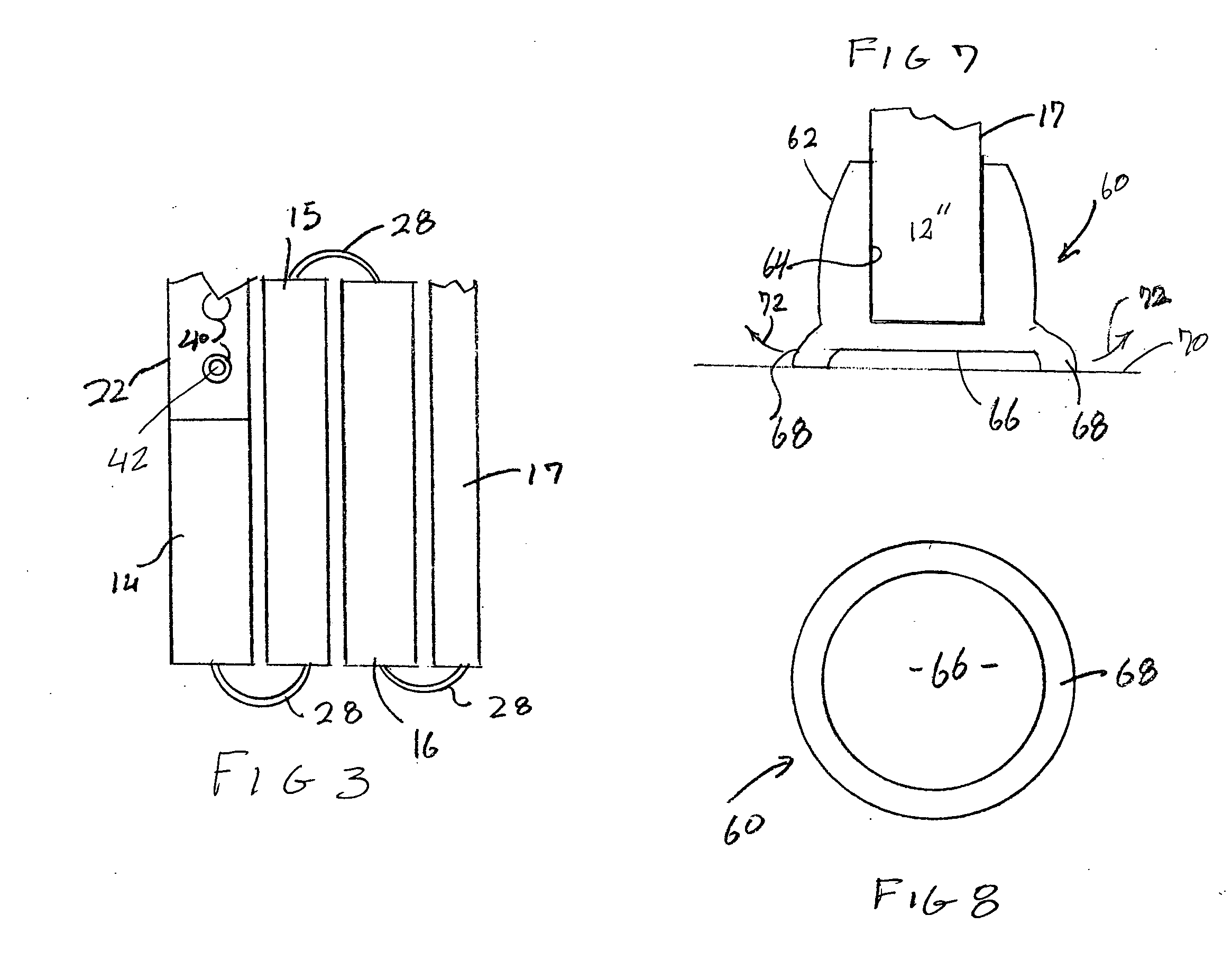
[0033] As shown in the accompany drawings, the present invention is directed to a walking cane assembly generally indicated as 10 and comprising a shaft generally indicated as 12 which is represented in FIG. 1 in its operative position. When so positioned, the shaft 12, comprises a plurality of elongated sections 14, 15, 16, 17, etc. disposed into a coaxial orientation. The specific number of the elongated sections 14 through 17 may vary. However, there should be at least two of such sections to facilitate disposition of the cane assembly 10 in the collapsed position of FIG. 3. By way of example only the preferred embodiment of FIG. 1, comprises four elongated sections. As described in greater detail hereinafter, the primary reference to FIGS. 2, 2a and 2b, adjacent ones of the plurality of elongated sections 14 through 17 are interconnected by a joint assembly 18 which facilitates the selective disposition of the sections 14 through 17 in either the operative position of FIG. 1 or ...
PUM
 Login to View More
 Abstract
Description
Claims
Application Information
 Login to View More