
Matching digital information flow to a human perception system
a technology of human perception and digital information, applied in the field of human perception systems, can solve the problems of not matching the way information is streamed from computer screens today, not matching to the human perception system, and neglecting important and fundamental facts
- Summary
- Abstract
- Description
- Claims
- Application Information
AI Technical Summary
Benefits of technology
Problems solved by technology
Method used
Image

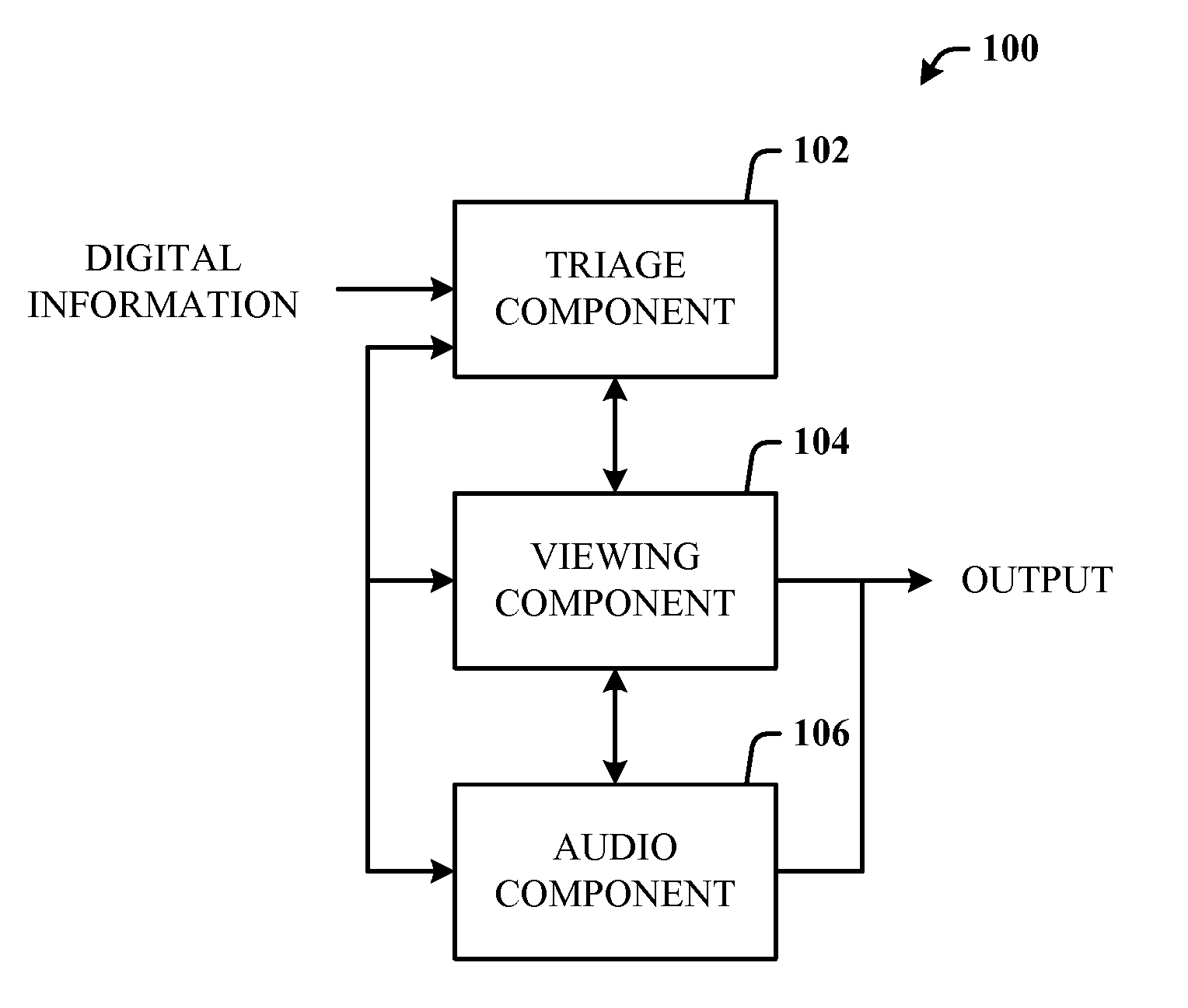
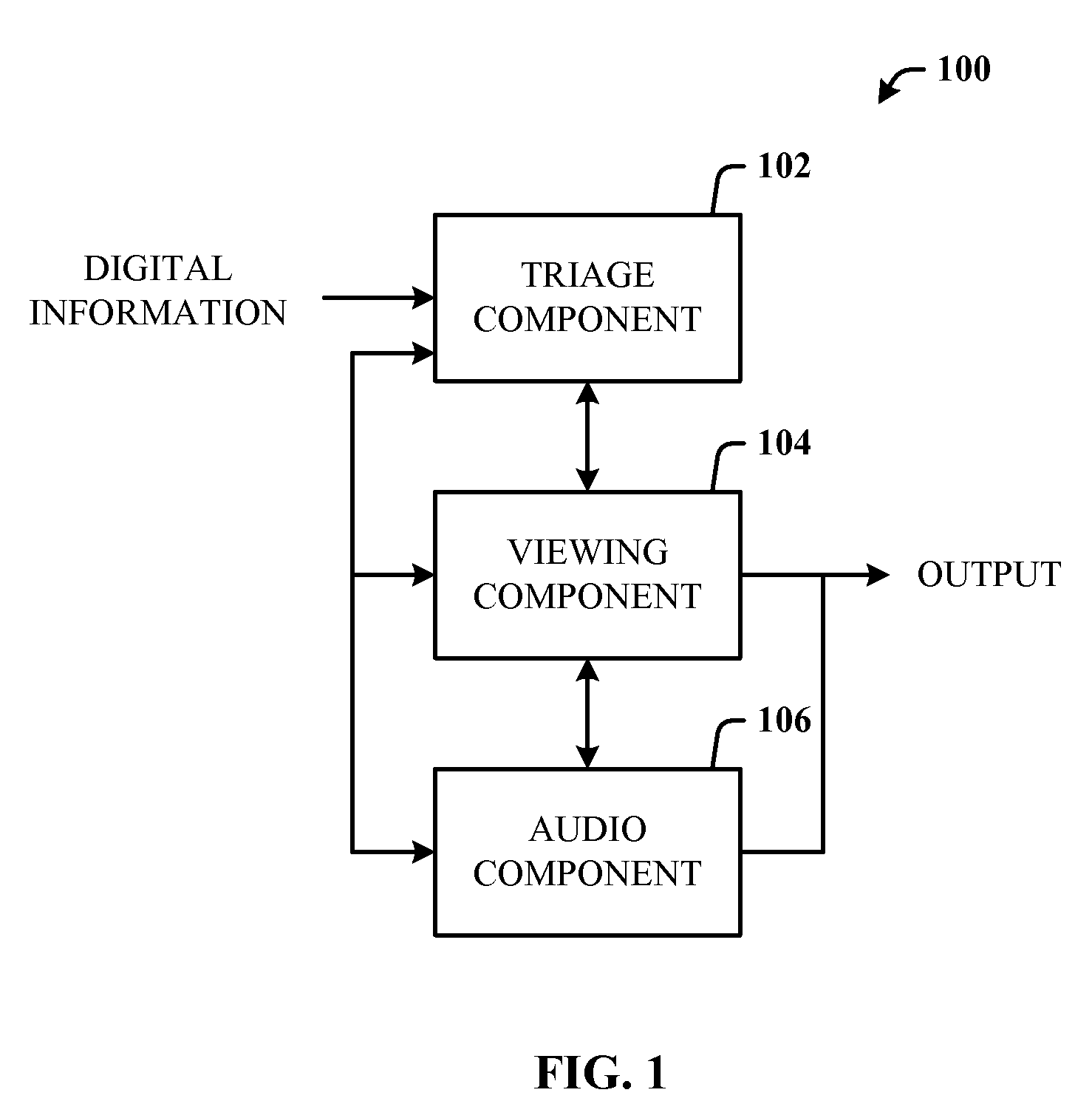
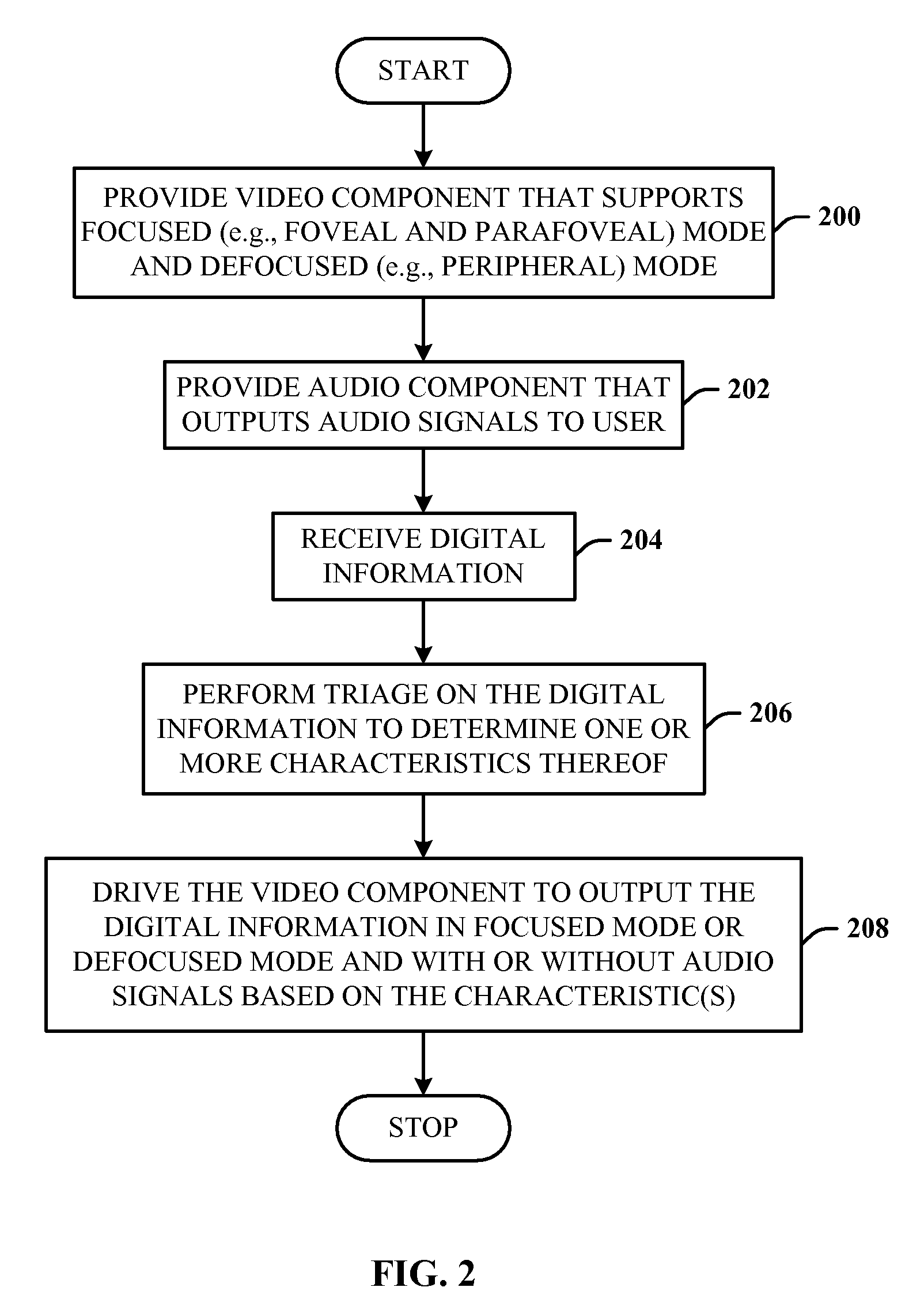
Examples
second embodiment
[0060] the system 500 utilizes the same projector system 506 that is driven by an Inspiron 8500 laptop by Dell Corporation. The laptop includes a 2.4 GHz Pentium 4 processor, 1 Gb of RAM, and a built-in nVidia GeForce 4 graphics card by NVIDIA Corporation with 64 Mb of video RAM. The graphics card is sufficiently powerful to support full multimon in the operating system to get both the built-in 147 ppi (1920×1200) laptop screen and the 1024×768 projector output from the XGA socket.
third embodiment
[0061] A third embodiment utilizes uses a tablet PC 512 by Acer Corporation, and drives the projector system 506 from its standard graphics output port (e.g., XGA).
[0062] The display switch box 514 allows all three systems to run simultaneously, switching the output of each to the projector 506 as desired.
[0063] The system 500 also includes an audio system 516 that provides surround sound in accordance with many conventional surround sound systems, and in support of matching data flows to the human perception system requirements.
[0064] Referring now to FIG. 6, there is illustrated an office layout 600 of a system for matching digital information flow with the human perception system using multiple office walls in accordance with the present invention. In this implementation, multiple graphic adapters can be employed to drive the projector system 506 to present peripheral planes on multiple walls. For example, the front wall can have a first (or principal) defocused plane 602, on a...
PUM
 Login to View More
 Abstract
Description
Claims
Application Information
 Login to View More