
Method for monitoring and monetizing an investment security
a technology for investment security and monitoring, applied in the field of monitoring and monetizing an investment security in a business, can solve the problems of more difficult to commit fraud against investors, and achieve the effects of improving the efficiency of operations, improving the cost structure of the business, and facilitating monitoring and verification
- Summary
- Abstract
- Description
- Claims
- Application Information
AI Technical Summary
Benefits of technology
Problems solved by technology
Method used
Image

Examples
Embodiment Construction
[0025] Reference will now be made in detail to the present exemplary embodiments of the invention, examples of which are illustrated in the accompanying drawings.
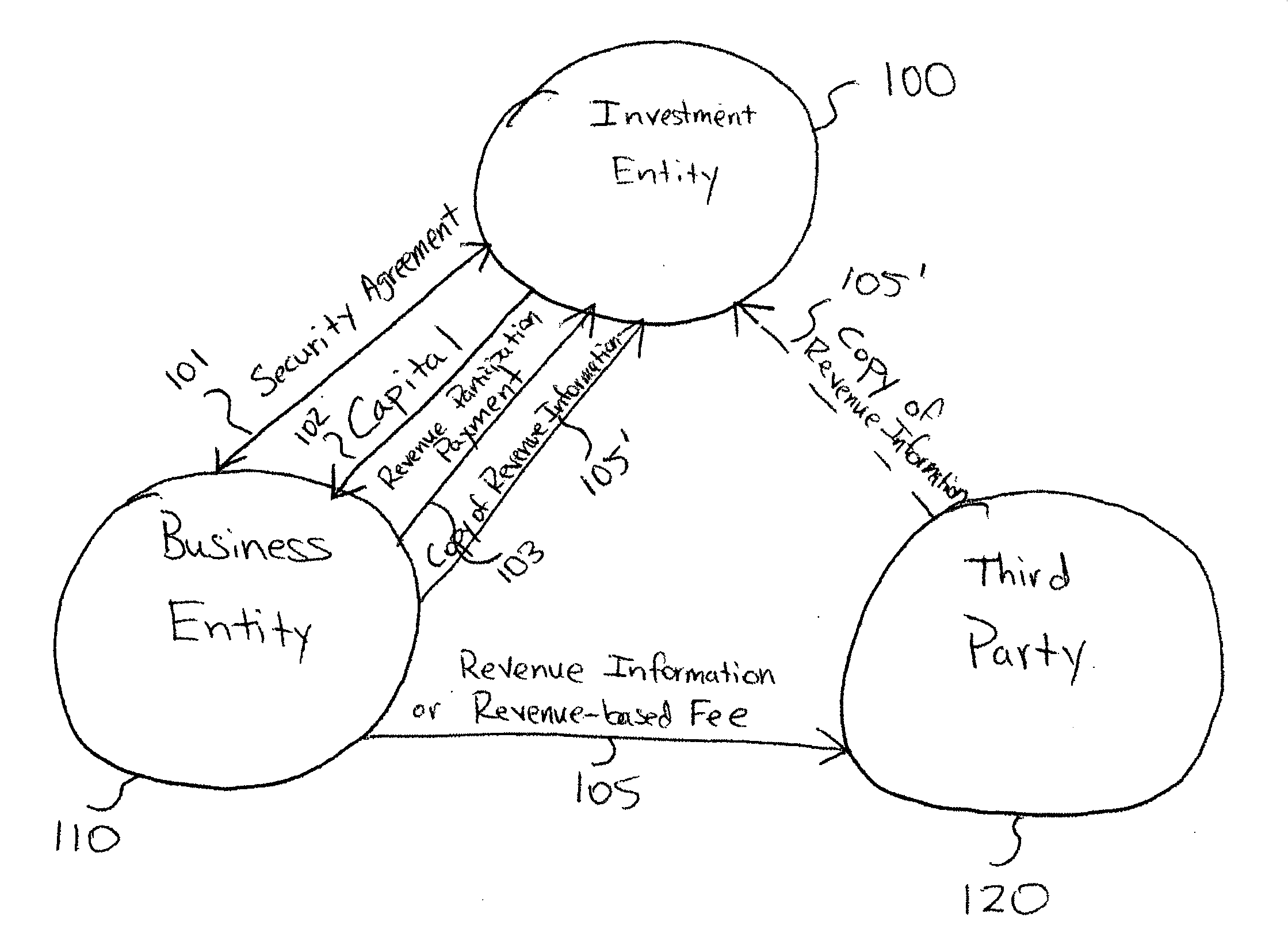
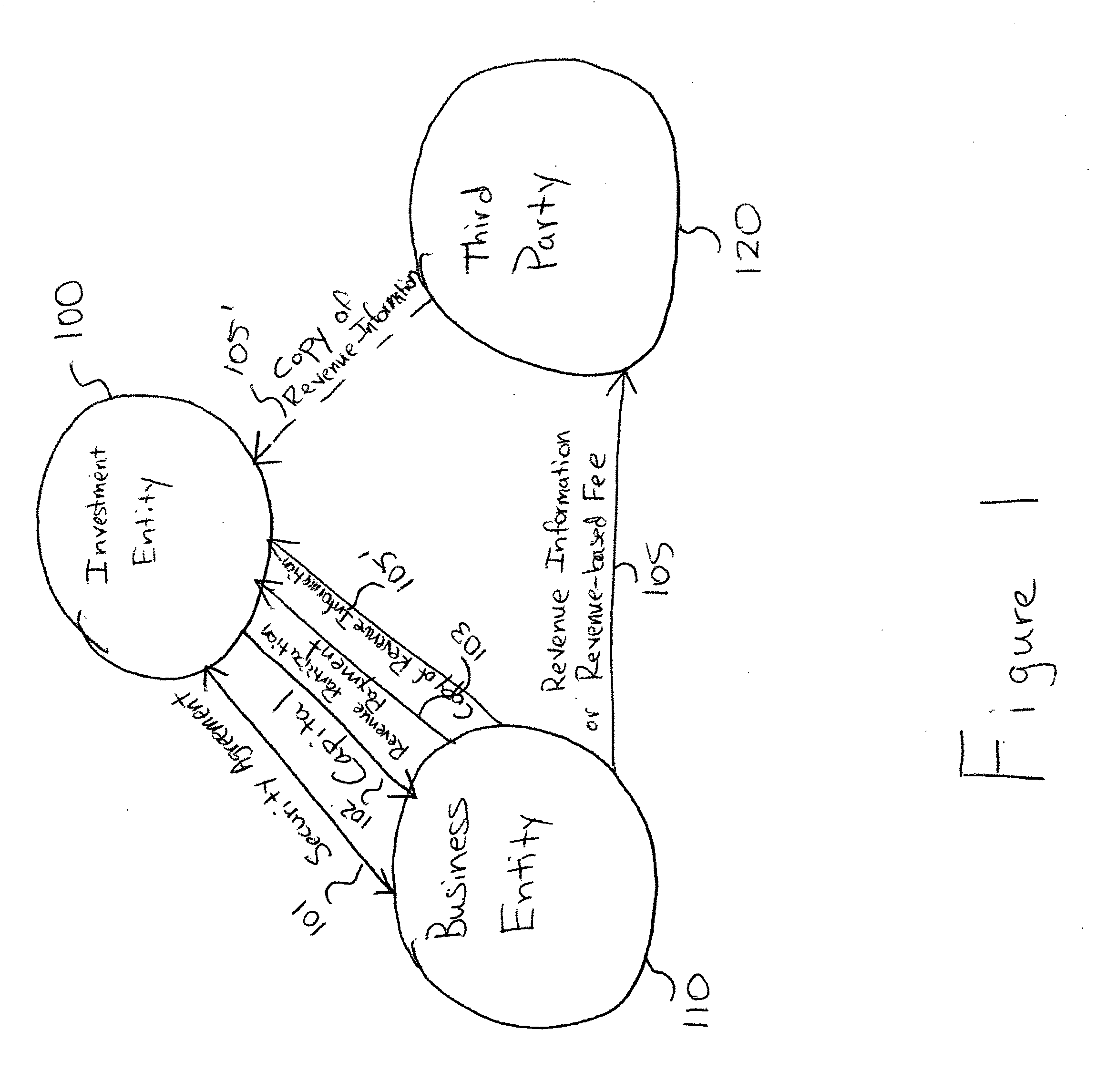
[0026] The invention provides a method for monitoring and monetizing an investment security in a business. FIG. 1 depicts the flow of information, agreements, and payments according to one embodiment of the invention. In general, an investment entity 100 enters into a security agreement 101 with a business entity 110. The investment entity 100 provides capital 102 to the business entity 110 in return for an equity interest in the business and a share of the business entity's revenue. This share of revenue is paid to the investment entity 100 in revenue participation payments 103.
[0027] Preferably, the business entity 110 is a potential or current licensee or franchisee of a licensed or franchised business that would be under the obligation to pay a third party 120 (e.g., a licensor or franchisor) a fee or provide informat...
PUM
 Login to View More
 Abstract
Description
Claims
Application Information
 Login to View More