
Use of selected CGRP-antagonists in combination with other antimigraine drugs for the treatment of migraine
a technology of antimigraine drug and migraine, which is applied in the field of migraine treatment with selected cgrpantagonists in combination with other antimigraine drugs, can solve the problem that the pathophysiology of migraine is far from understood
- Summary
- Abstract
- Description
- Claims
- Application Information
AI Technical Summary
Benefits of technology
Problems solved by technology
Method used
Image

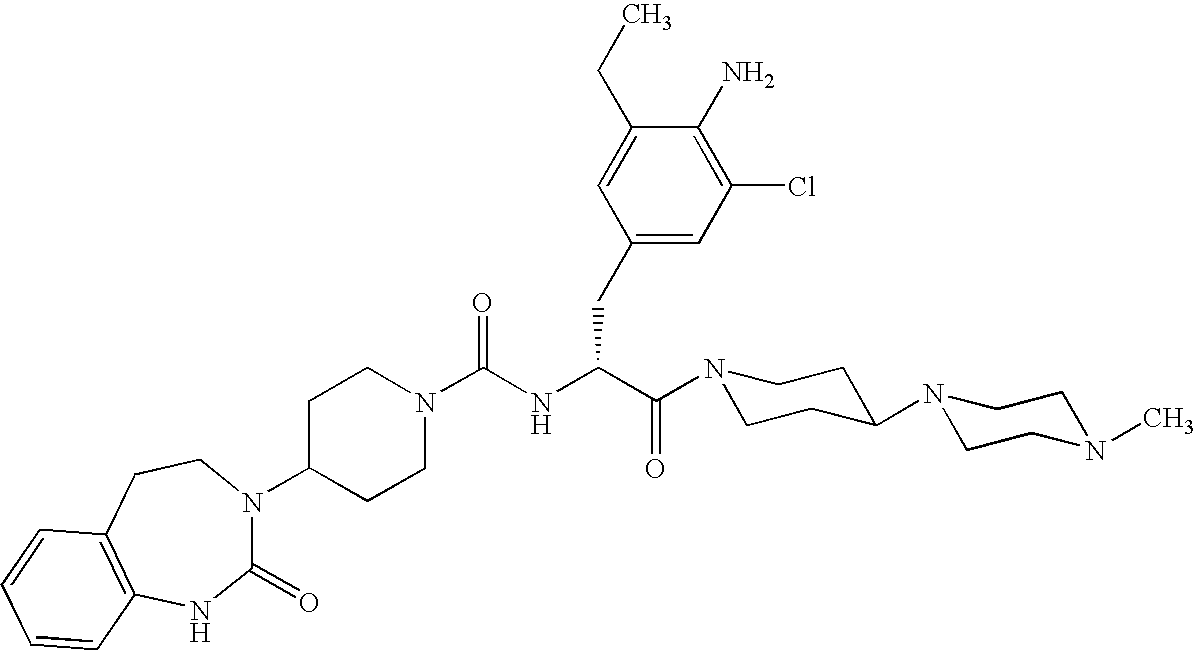
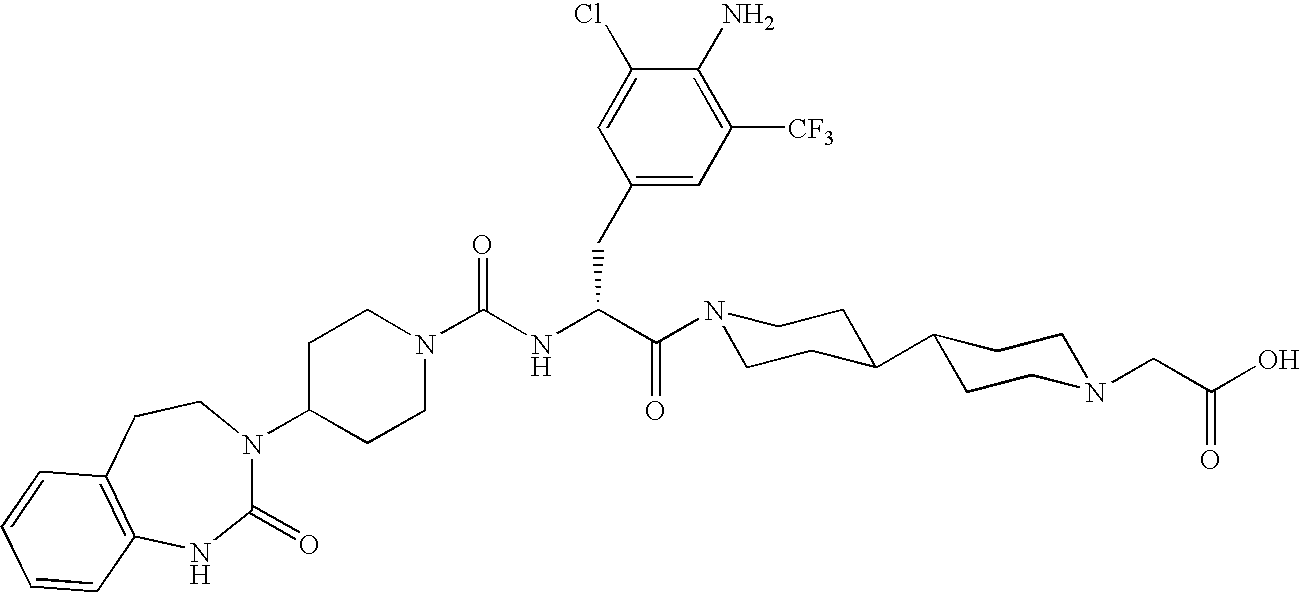
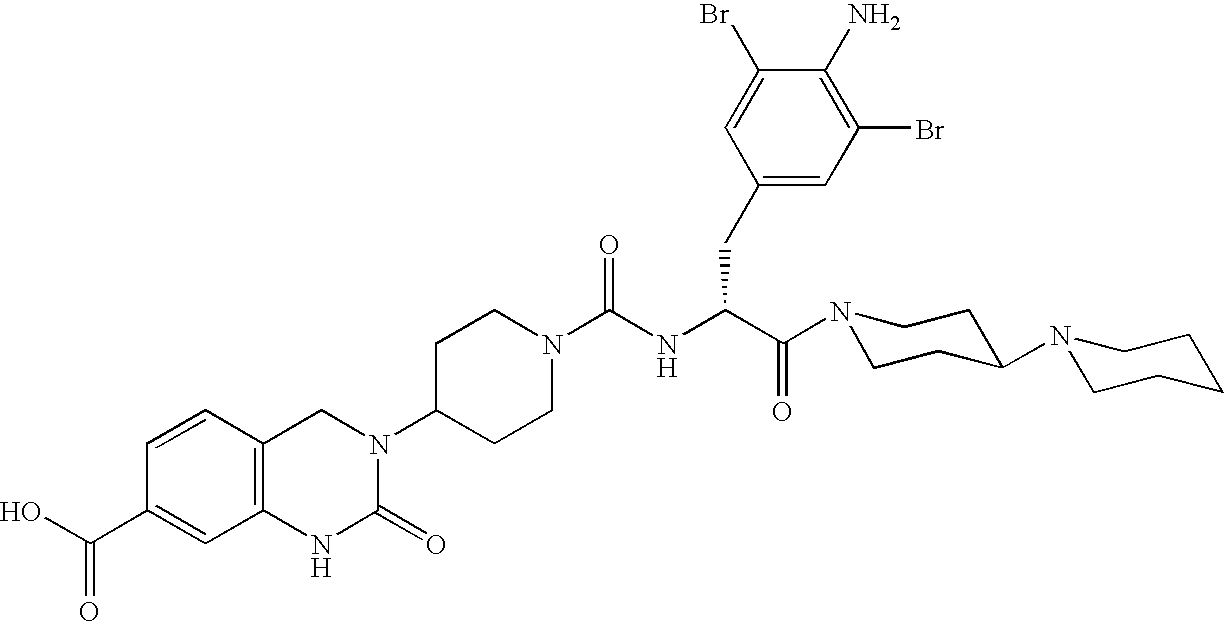
Examples
example 1a
Tablets Containing 100 mg CGRP Antagonist and 50 mg Sumatriptan
[0052]
Composition / tablet:CGRP antagonist100mgsumatriptan hydrogen70mg (corresponds to 50 mg sumatriptan)succinatelactose375mgmagnesium stearate3.0mgpovidone8.5mgcrospovidone14.4mg
volatile constituent: water
Preparation:
[0053] CGRP antagonist, sumatriptan hydrogen succinate and lactose (fine) are homogeneously mixed in a suitable mixer (e.g. Diosna P2); then the mixture is granulated with an aqueous povidone solution. The granulated material is screened through a 1.6 mm Kressner screen and dried for 2 hours at 40° C. Then the granules are screened in a suitable mill, e.g. a Comill, at 3000 rpm with a mesh size of 1.1 mm. The granules are then mixed with crospovidone for 5 minutes and then with magnesium stearate for 1 minute. The mixture thus obtained is compressed in a tablet press to produce tablets of suitable diameter.
example 1b
Tablets containing 10 mg CGRP Antagonist and 50 mg Sumatriptan
[0054]
Composition / tablet:CGRP antagonist10mgsumatriptan hydrogen70mg (corresponds to 50 mg sumatriptan)succinatelactose475mgmagnesium stearate3.0mgpovidone8.5mgcrospovidone14.4mg
volatile constituent: water
Preparation:
[0055] CGRP antagonist, sumatriptan hydrogen succinate and lactose (fine) are homogeneously mixed in a suitable mixer (e.g. Diosna P2); then the mixture is granulated with an aqueous povidone solution. The granulated material is screened through a 1.6 mm Kressner screen and dried for 2 hours at 40° C. Then the granules are screened in a suitable mill, e.g. a Comill, at 3000 rpm with a mesh size of 1.1 mm. The granules are then mixed with crospovidone for 5 minutes and then with magnesium stearate for 1 minute. The mixture thus obtained is compressed in a tablet press to produce tablets of suitable diameter.
example 1c
Tablets Containing 600 mg CGRP Antagonist and 50 mg Sumatriptan
[0056]
Composition / tablet:CGRP antagonist600mgsumatriptan hydrogen70mg (corresponds to 50 mg sumatriptan)succinatelactose75mgmagnesium stearate6mgpovidone17mgcrospovidone28.8mg
volatile constituent: water
Preparation:
[0057] CGRP antagonist, sumatriptan hydrogen succinate and lactose (fine) are homogeneously mixed in a suitable mixer (e.g. Diosna P2); then the mixture is granulated with an aqueous povidone solution. The granulated material is screened through a 1.6 mm Kressner screen and dried for 2 hours at 40° C. Then the granules are screened in a suitable mill, e.g. a Comill, with a mesh size of 1.1 mm at 3000 rpm. The granules are then mixed with crospovidone for 5 minutes and then with magnesium stearate for 1 minute. The mixture thus obtained is compressed in a tablet press to produce tablets of suitable diameter.
[0058] The weight of the tablet is 911 mg.
PUM
| Property | Measurement | Unit |
|---|---|---|
| body weight | aaaaa | aaaaa |
| weight | aaaaa | aaaaa |
Abstract
Description
Claims
Application Information
 Login to View More