Implantable prosthetic valve with non-laminar flow

a prosthetic valve and non-laminar flow technology, applied in the field of implantable prosthetic valves, can solve the problems of retrograde flow characteristics of valves mounted in cylindrical stents, affecting etc., and achieve the effect of reducing the wear resistance of pliant materials

US20080275549A1Active Publication Date: 2008-11-06EDWARDS LIFESCIENCES CORP
102 Cites 157 Cited by

Patent Information

Authority / Receiving Office
US · United States
Patent Type
Applications(United States)
Current Assignee / Owner
Publication Date
2008-11-06

Smart Images

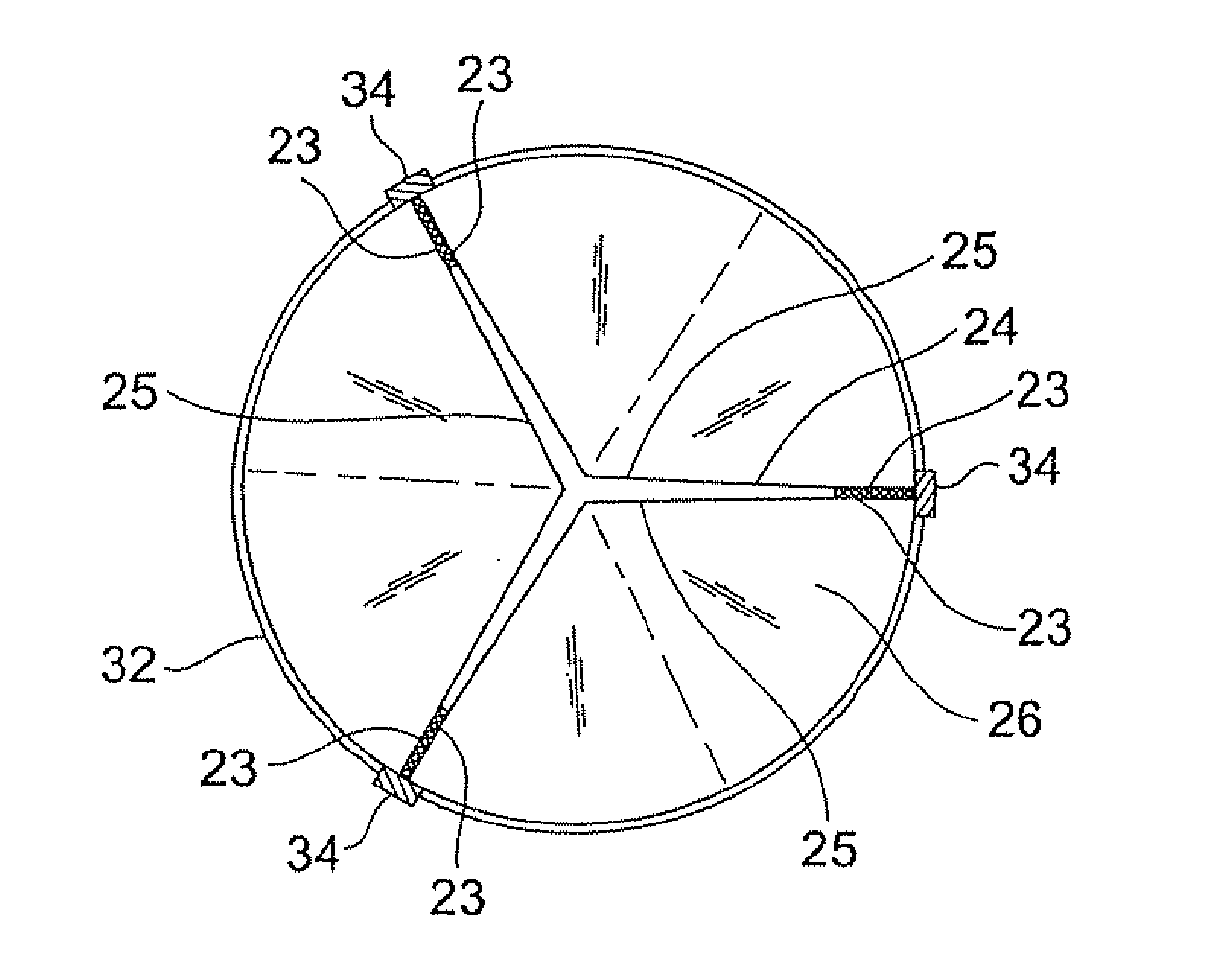
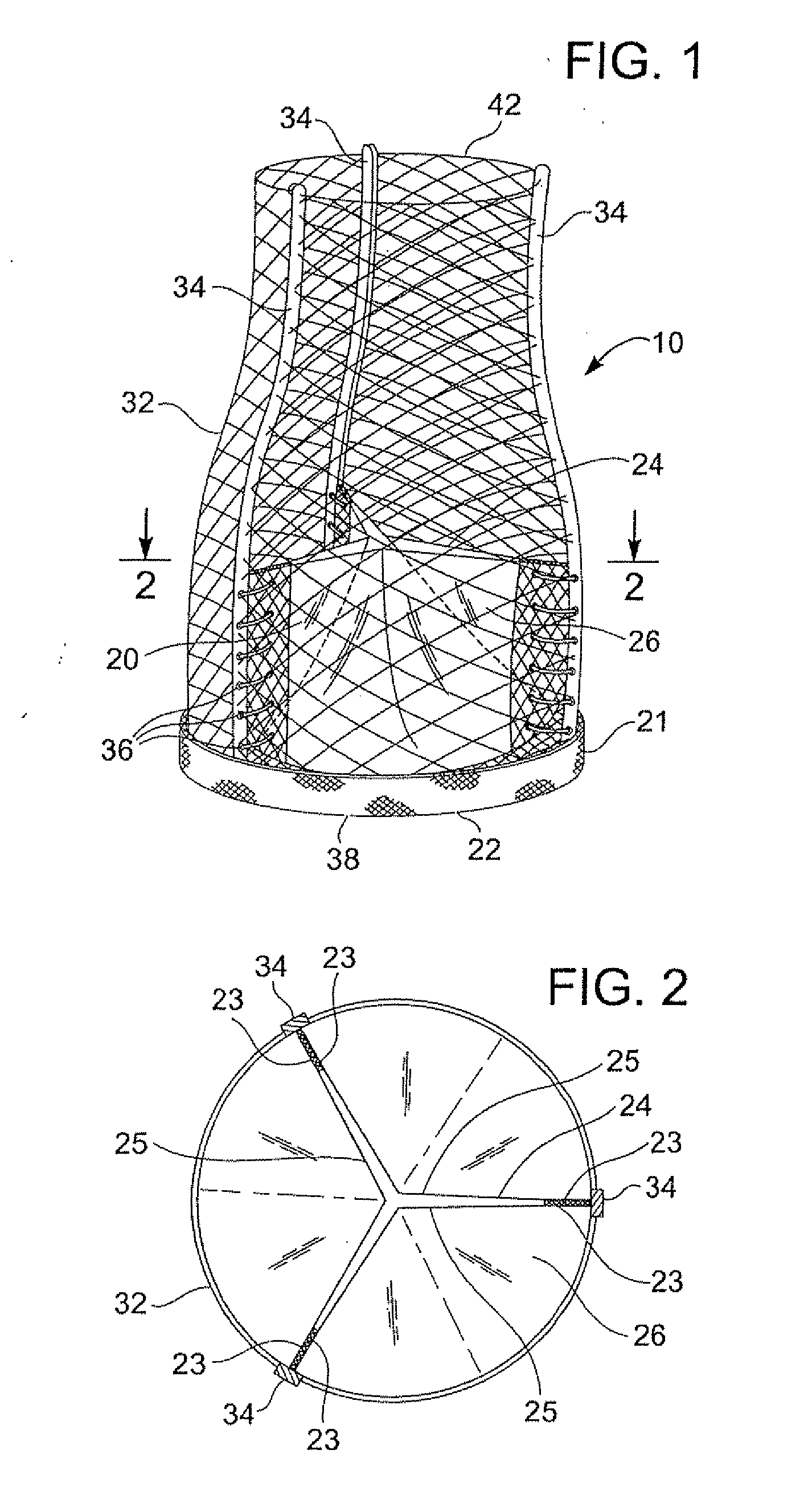
  • Figure 1
    Figure 1
  • Figure 2
    Figure 2
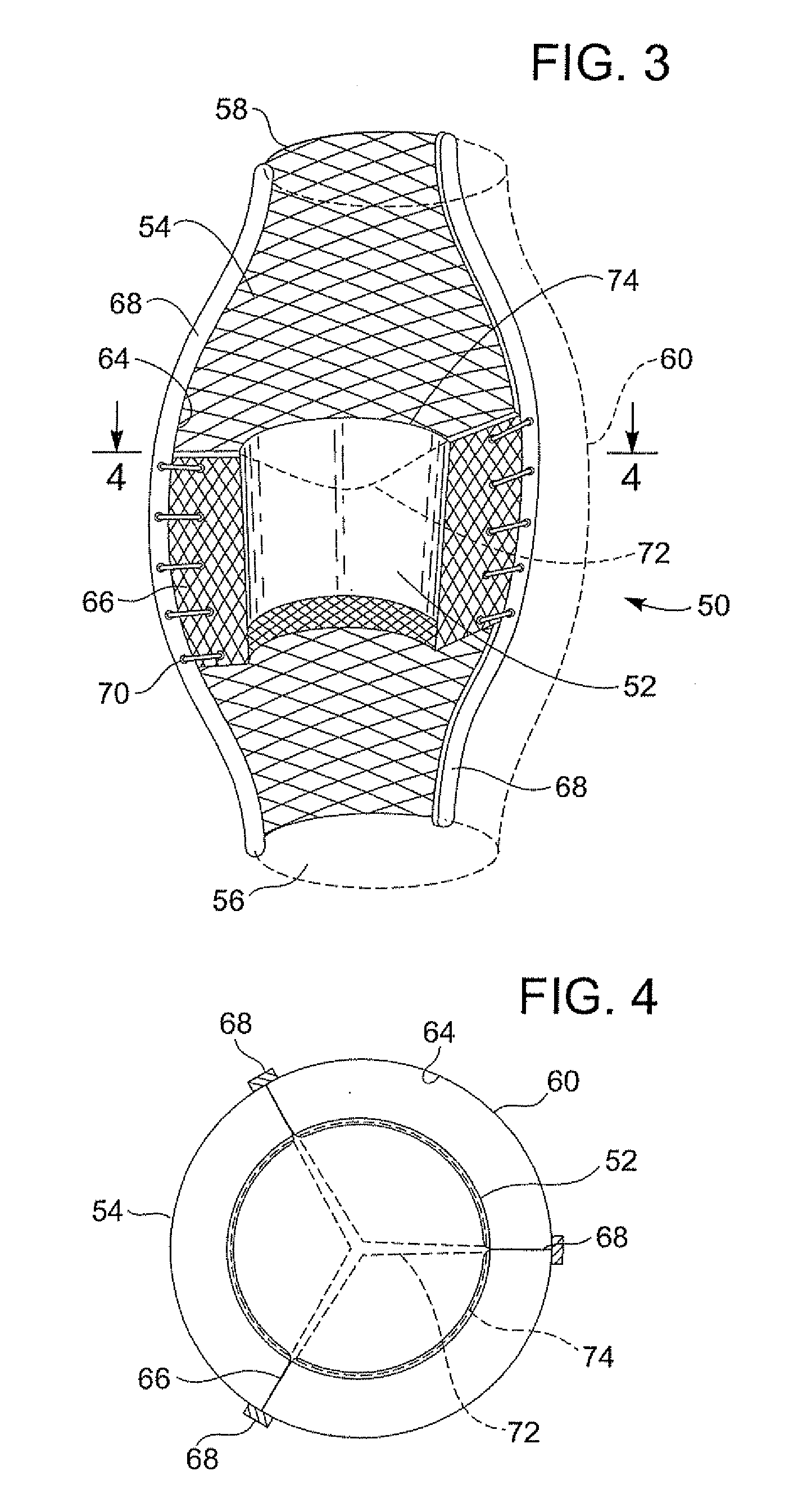
  • Figure 3
    Figure 3
Patent Text Reader

Abstract

A valve prosthesis device is disclosed suitable for implantation in body ducts. The device comprises a support stent comprised of a deployable construction adapted to be initially crimped in a narrow configuration suitable for catheterization through the body duct to a target location and adapted to be deployed by exerting substantially radial forces from within by means of a deployment device to a deployed state in the target location, and a valve assembly comprising a flexible conduit having an inlet end and an outlet, made of pliant material attached to the support beams providing collapsible slack portions of the conduit at the outlet. The support stent is provided with a plurality of longitudinally rigid support beams of fixed length. When flow is allowed to pass through the valve prosthesis device from the inlet to the outlet the valve assembly is kept in an open position, whereas a reverse flow is prevented as the collapsible slack portions of the valve assembly collapse inwardly providing blockage to the reverse flow. The device is configured so that retrograde flow will be altered from laminar flow and directed towards the leaflets to effect closing. The device can be deployed in a native heart valve position using a deployment catheter advanced through a body lumen such as a blood vessel, including an aorta.
Need to check novelty before this filing date? Find Prior Art

Description

RELATED APPLICATIONS

[0001] This application is a continuation of application Ser. No. 10 / 677,947, filed on Oct. 2, 2003 and entitled “Implantable Prosthetic Valve With Non-Laminar Flow,” the entire contents of which are hereby incorporated herein by reference.FIELD OF THE INVENTION

[0002] The present invention relates to implantable prosthetic valves. More particularly, the invention relates to a valve prosthesis for cardiac implantation or for implantation in other body ducts where the prosthesis has improved flow characteristics,BACKGROUND OF THE INVENTION

[0003] Several prosthetic valves are known. See, for example, U.S. Pat. No. 5,411,552 (Andersen et al.), entitled VALVE PROSTHESIS FOR IMPLANTATION IN THE BODY AND CATHETER FOR IMPLANTING SUCH VALVE PROSTHESIS, which discloses a valve prosthesis comprising a stent made from an expandable cylinder-shaped thread structure comprising several spaced apices. See, also, U.S. Pat. No. 6,168,614 (Andersen et al.), entitled VALVE PROSTHESIS F...

Examples

Embodiment Construction

[0105]A main aspect of the present invention is the introduction of several novel designs for an implantable prosthetic valve. Another aspect of the present invention is the disclosure of several manufacturing methods for implantable prosthetic valves in accordance with the present invention. A further aspect of the present invention is the provision of novel deployment and positioning techniques suitable for the valve of the present invention.

[0106]Basically the implantable prosthetic valve of the present invention comprises a leaflet-valve assembly, preferably tricuspid but not limited to tricuspid valves only, consisting of a conduit having an inlet end and an outlet, made of pliant material arranged so as to present collapsible walls at the outlet. The valve assembly is mounted on a support structure or frame such as a stent adapted to be positioned at a target location within the body duct and deploy the valve assembly by the use of deploying means, such as a balloon catheter o...