

Method for fitting a bone anchored hearing aid to a user and bone anchored bone conduction hearing aid system
a hearing aid and user technology, applied in the field of user-friendly bone anchored hearing aids and user-friendly bone anchored hearing aid systems, can solve the problems of uncomfortable user level and influence on the usefulness of obtained hearing aids, and achieve the effect of simple feedback and simple and straight forward
- Summary
- Abstract
- Description
- Claims
- Application Information
AI Technical Summary
Benefits of technology
Problems solved by technology
Method used
Image

Examples
Embodiment Construction
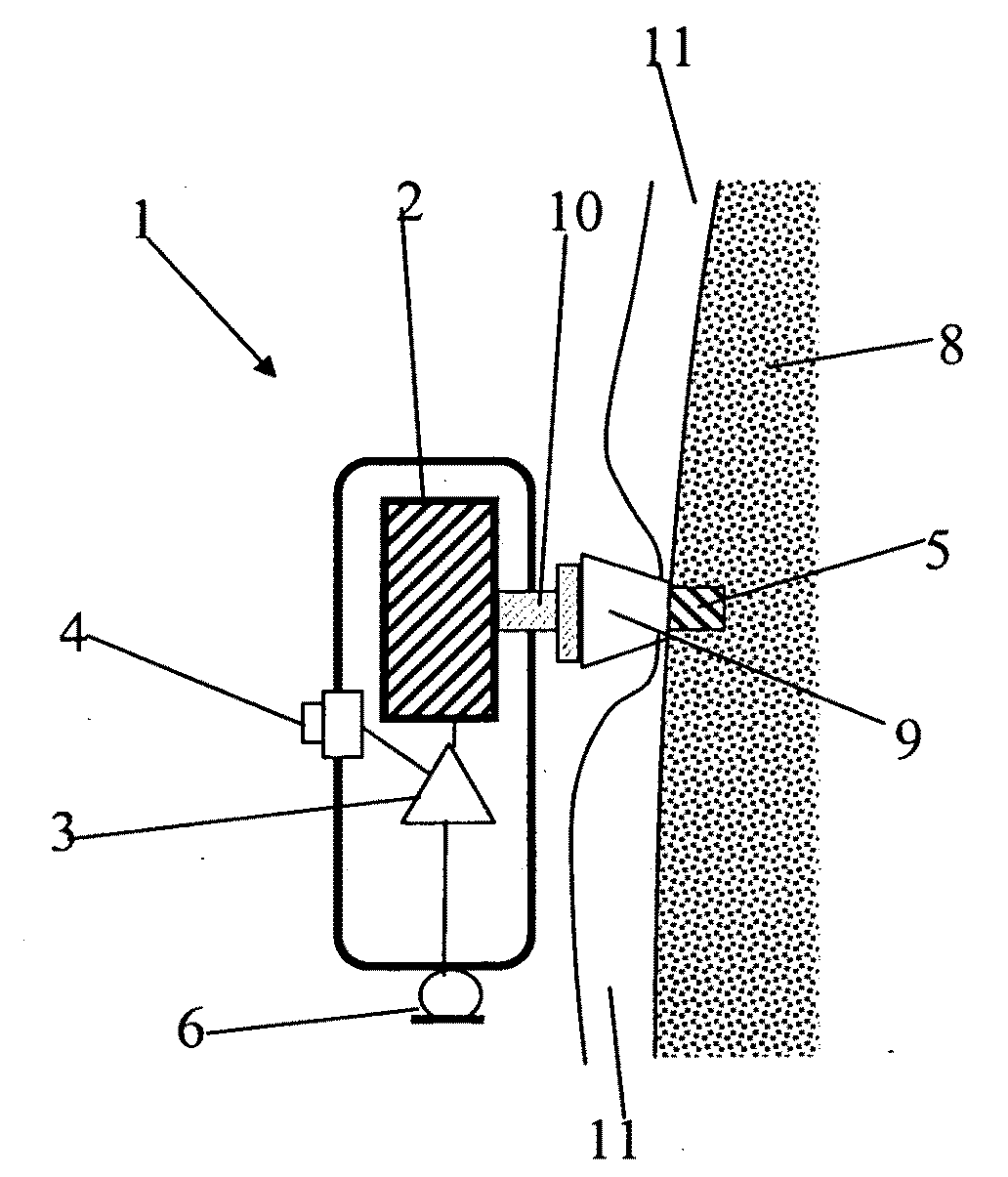
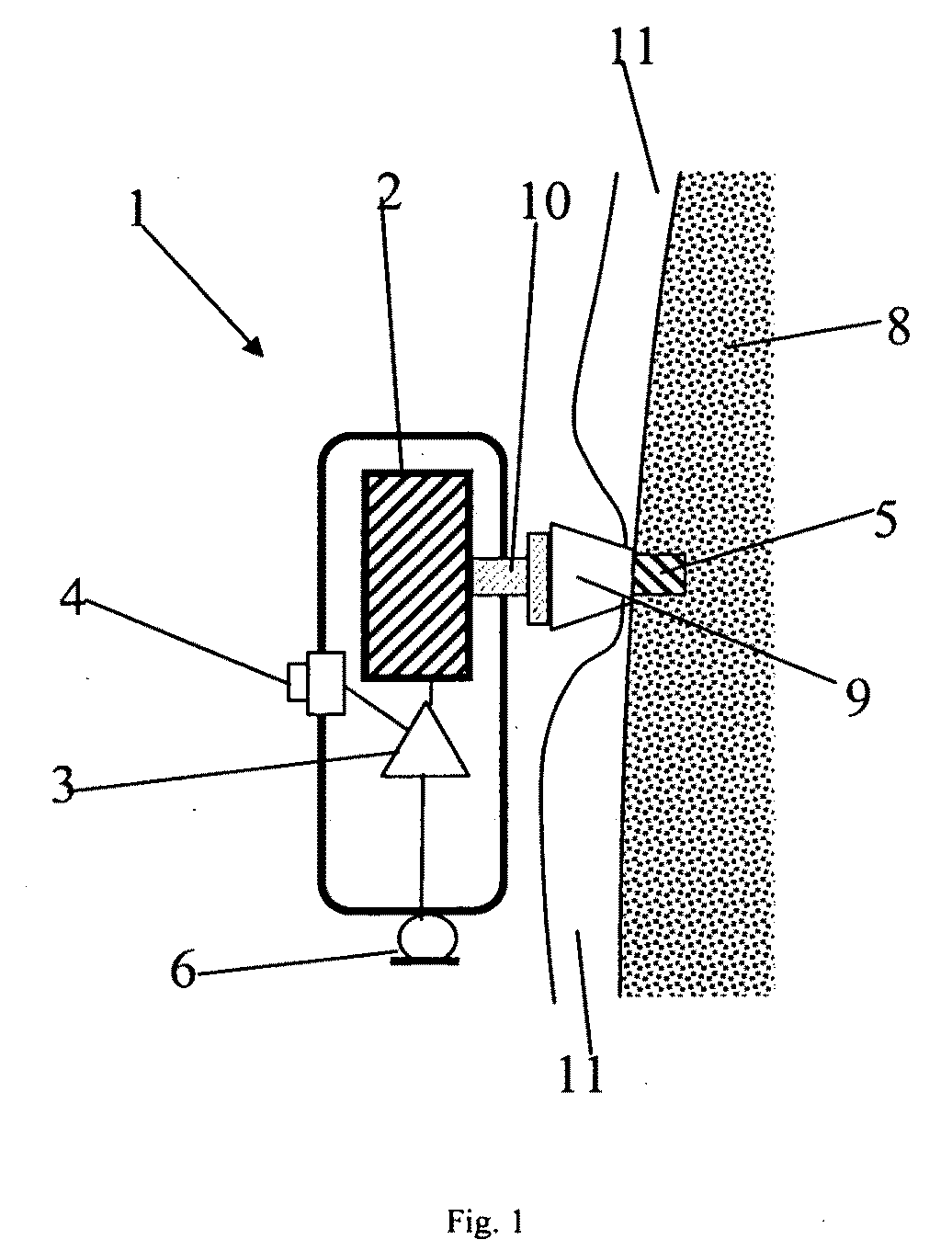
[0038]A hearing aid 1 which may be used according to the method of the invention is shown in FIG. 1. The hearing aid 1 comprises a vibrator 2, a signal processor and amplifier 3 and a microphone 6. As indicated in the figure, the signal from the microphone 6 is routed to the signal processor and amplifier 3 and a processed and amplified signal is served at the vibrator 2. The vibrator 2 is firmly attached to a screw 5 which is integrated into the skull bone 8 at the head of the user. Between the vibrator 2 and the screw 5, an abutment 9 is provided as well as a rod 10. The abutment 9 penetrates the skin 11 of the user and is firmly attached to the screw 5. The rod 10 is the output element from the vibrator 2 and is caused to vibrate according to the signal from the processor 3 and the vibrations are transmitted through the abutment 9 and screw 5 and into the skull bone 8 and from here into the inner ear (not shown) of the user where the vibrations are perceived as sound. In the inne...
PUM
 Login to View More
 Abstract
Description
Claims
Application Information
 Login to View More