
Sheet feeding apparatus with mechanism for detecting sheet feeding state and sheet feeding method
- Summary
- Abstract
- Description
- Claims
- Application Information
AI Technical Summary
Benefits of technology
Problems solved by technology
Method used
Image

Examples
Embodiment Construction
[0052]In the following description and in the appended drawings, corresponding components are denoted by the same reference characters. Their names and functions are also the same.
[0053]
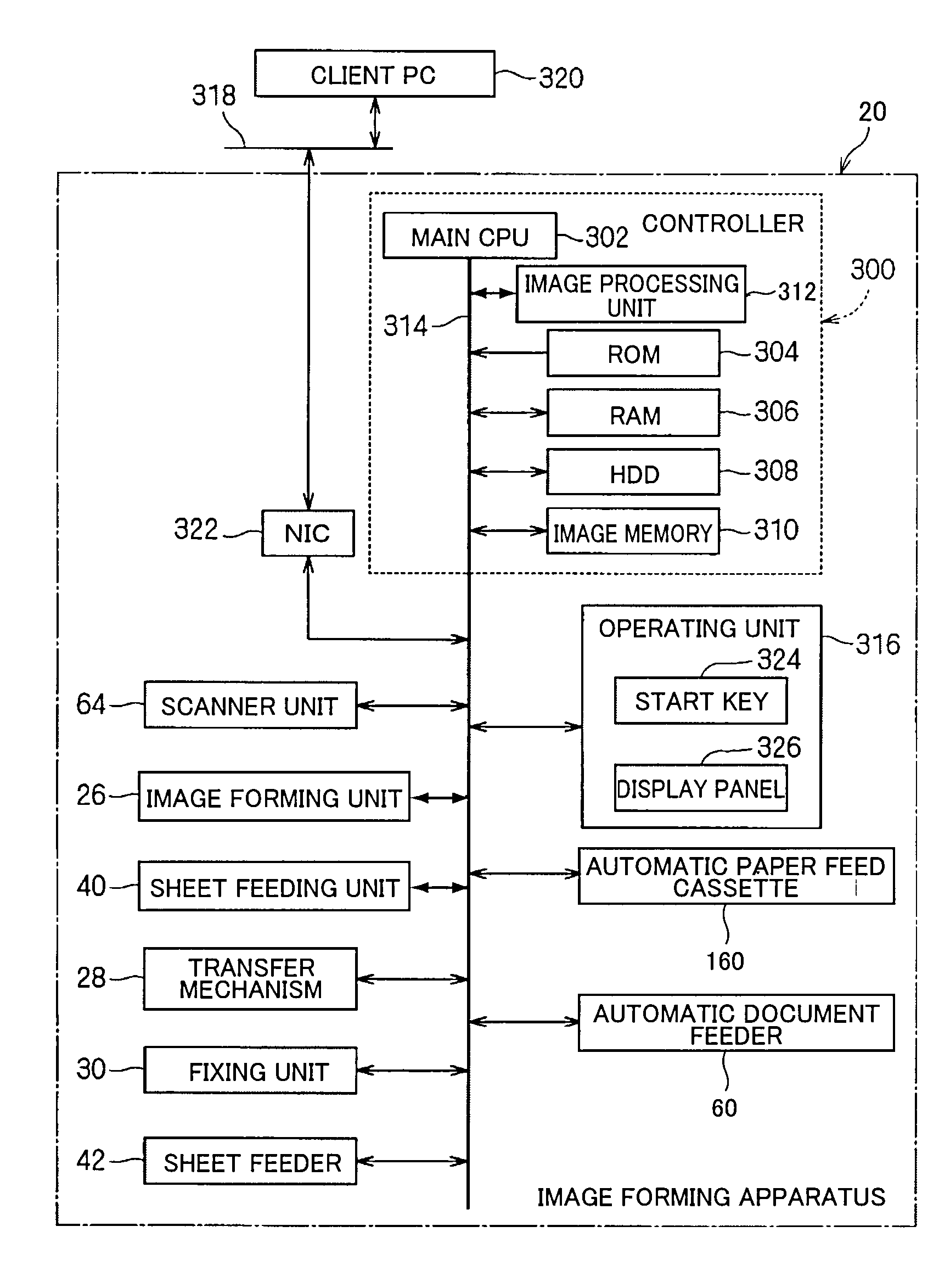
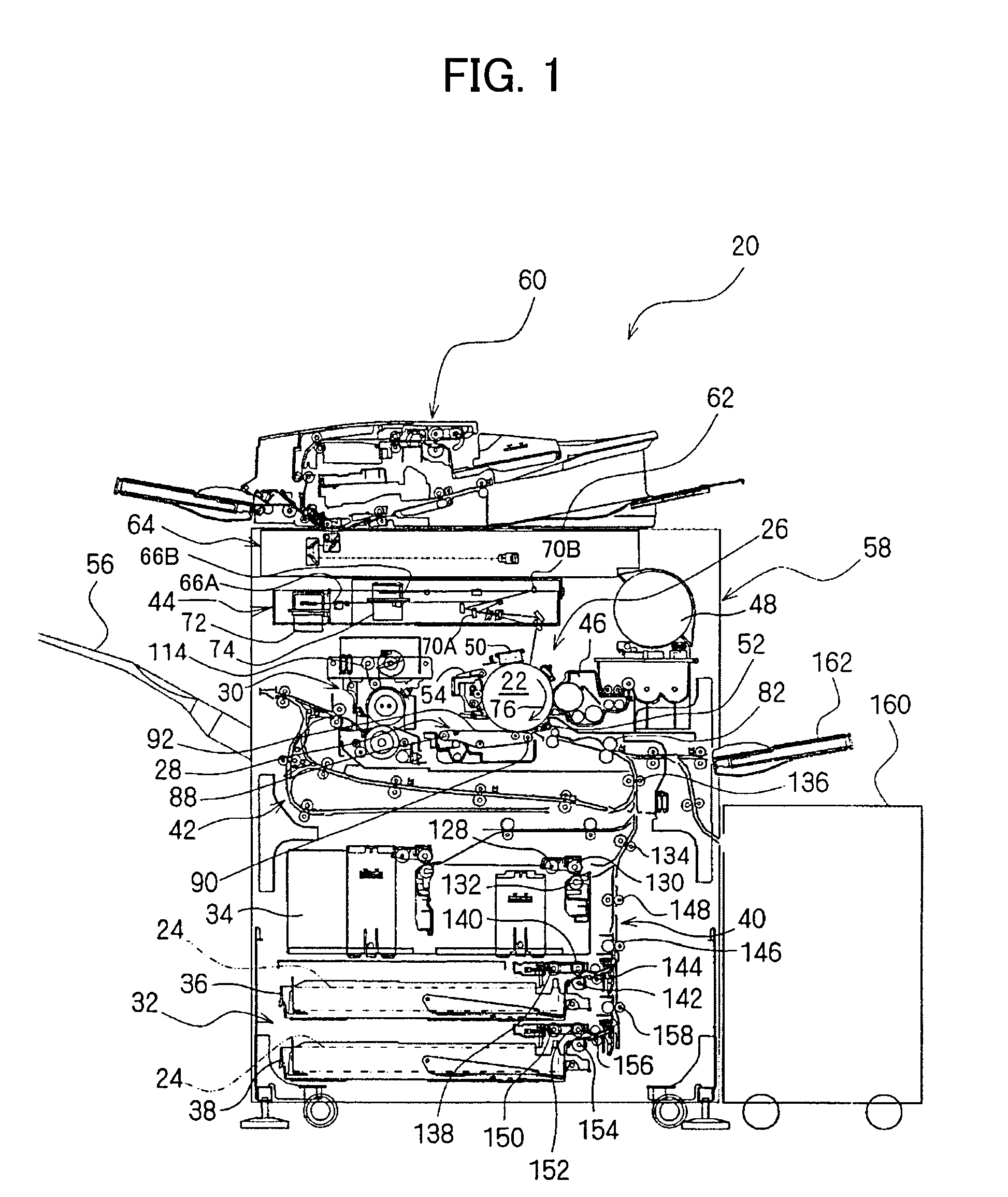
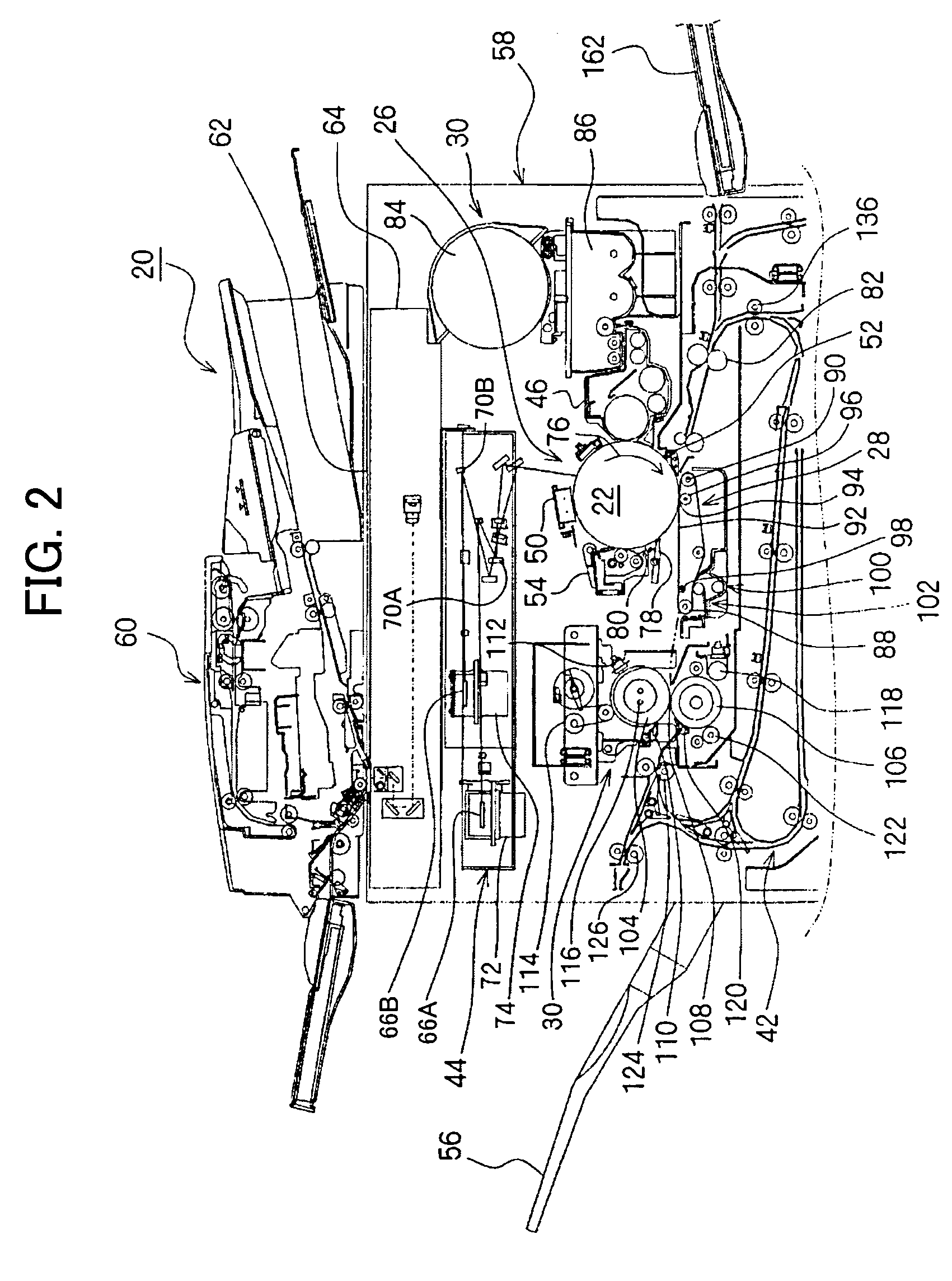
[0054]Referring to FIGS. 1 and 2, the image forming apparatus 20 in accordance with the present embodiment is, by way of example, a multifunctional apparatus including copy, printer and facsimile functions, and it outputs image data read by a scanner or the like or image data transmitted from an external device such as a client personal computer (hereinafter referred to as a “client PC”) 320 shown in FIG. 4 or the like, by electrophotographic technique. Specifically, an electrostatic latent image is formed on a surface of a photoreceptor drum 22, which is driven to rotate, the formed electrostatic latent image is visualized as a toner image by a two-component developer charged by mixing electric toner with magnetic carrier, and the image is transferred onto a sheet of paper 24 and fixed as a monochro...
PUM
| Property | Measurement | Unit |
|---|---|---|
| Time | aaaaa | aaaaa |
Abstract
Description
Claims
Application Information
 Login to View More