
Charging apparatus, portable electronic device using the apparatus, and charging method thereof
a charging device and portable electronic device technology, applied in the direction of battery overcharge protection, safety/protection circuit, transportation and packaging, etc., can solve the problems of battery power loss, inability to recharge batteries at all times, and inability to charge batteries at the right tim
- Summary
- Abstract
- Description
- Claims
- Application Information
AI Technical Summary
Benefits of technology
Problems solved by technology
Method used
Image

Examples
Embodiment Construction
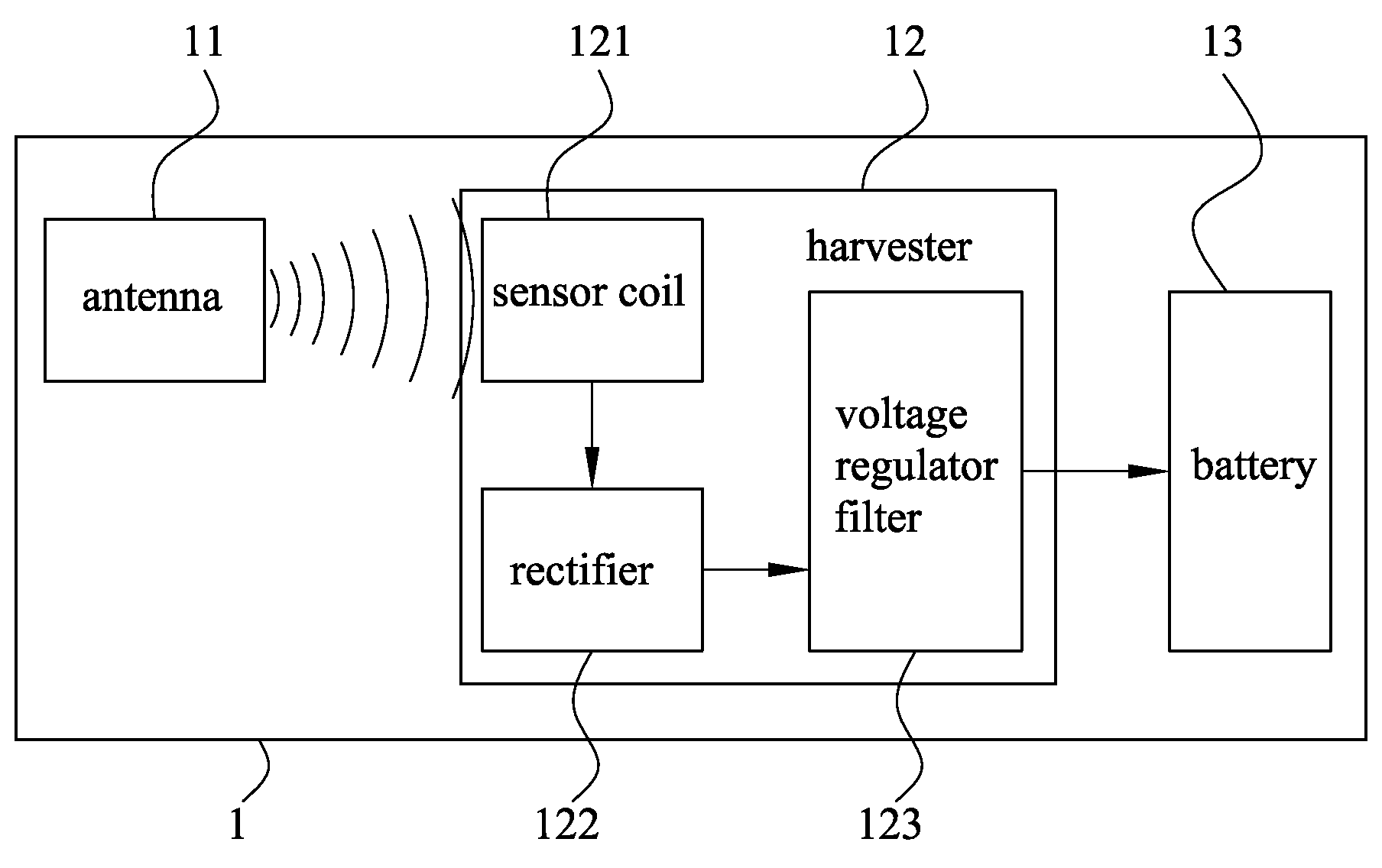
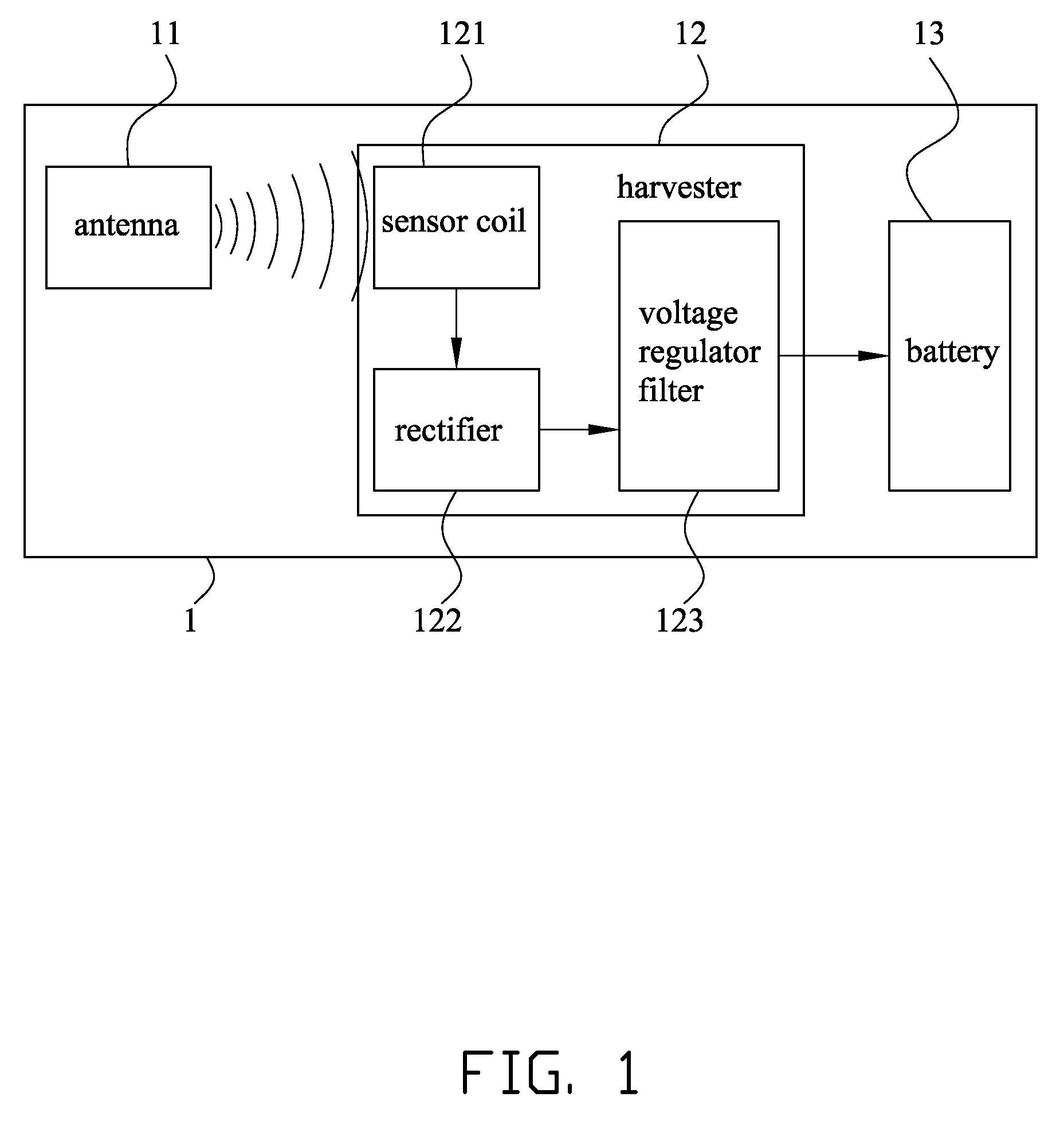
[0013]Referring to FIG. 1, a charging apparatus 1 includes an antenna 11, a harvester 12, and a battery 13 connected to the harvester 12. The harvester 12 receives wireless energy from the antenna 11 and converts the wireless energy into current for charging battery 13.
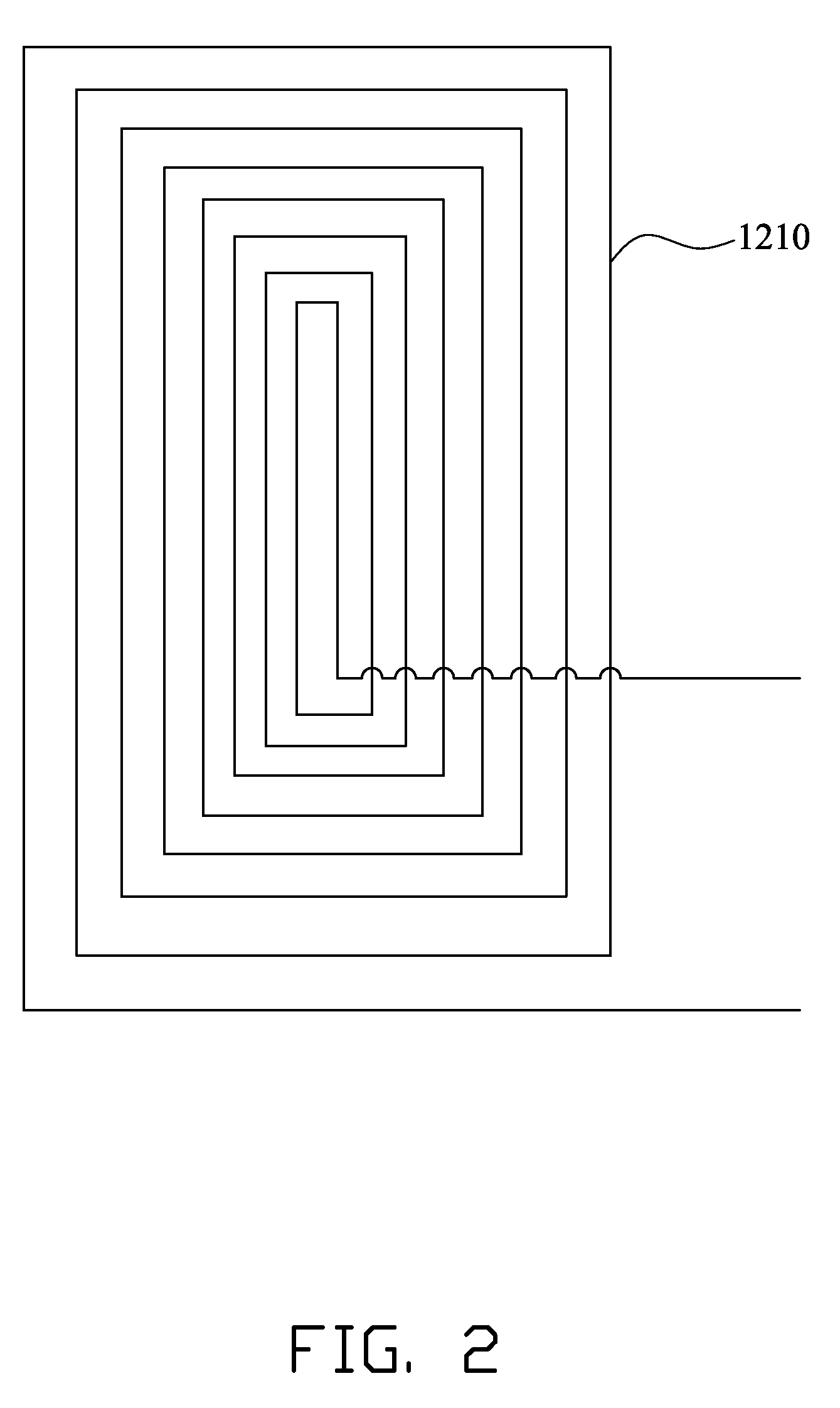
[0014]The harvester 12 includes a sensor coil 121, a rectifier 122 electrically connected to the sensor coil 121, and a voltage regulating filter 123 electrically connected to the rectifier 122. The sensor coil 121 receives wireless energy from the antenna 11 by electromagnetic induction and transforms the wireless energy to alternating current (AC). The rectifier transforms the AC signal into direct current (DC). The voltage regulating filter 123 regulates the voltage of the DC signal and then outputs the DC signal to the battery. The battery is charged by the received DC signal. The voltage regulating filter 123 composed of a plurality of capacitors (not shown) can modify the voltage waveform of the DC signal and ge...
PUM
 Login to View More
 Abstract
Description
Claims
Application Information
 Login to View More