

Adjustable dental device for treatment of sleep apnea and snoring
a dental device and sleep apnea technology, applied in the field of adjustable dental devices for sleep apnea and snoring treatment, can solve the problems of inability to adjust and comfort the patient interface to the cpap system, the prior art interface is in general limited in adjustability or bulky and complicated, and the need for head straps is reduced. , the effect of improving the comfort and ease of us
- Summary
- Abstract
- Description
- Claims
- Application Information
AI Technical Summary
Benefits of technology
Problems solved by technology
Method used
Image

Examples
Embodiment Construction
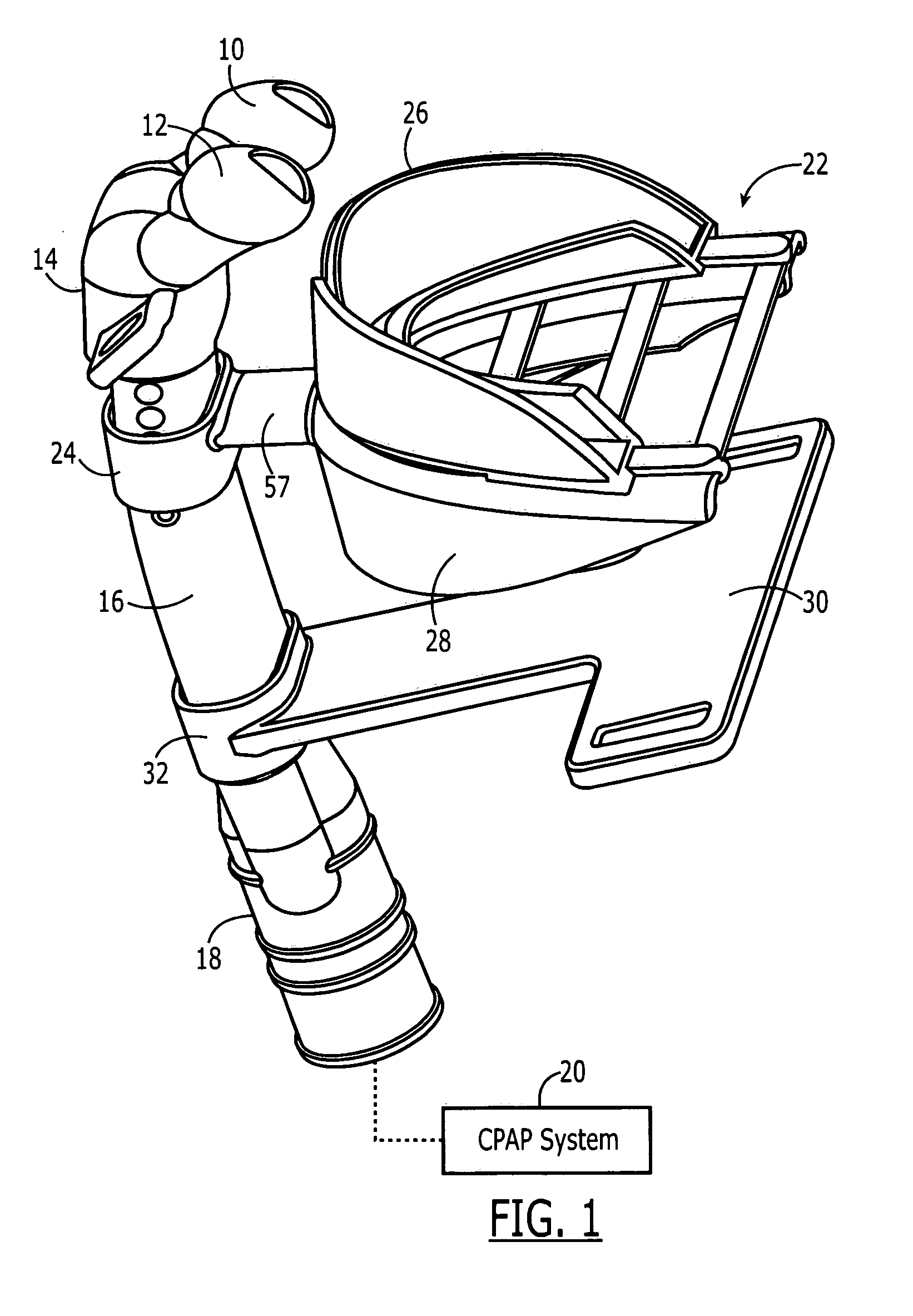
[0024]FIG. 1 illustrates one embodiment of an adjustable dental device for treatment of sleep apnea and snoring according to the teachings of the present invention. As shown in FIG. 1, nasal inserts 10, 12 are provided for fitting in a patient's nostrils. Such nasal inserts 10, 12 are also referred to as nasal pillows or nasal buds. The particular nasal inserts 10, 12 shown in FIG. 1 are illustrative only, and any other nasal inserts, nasal buds, nasal pillows, or nasal masks may be used without departing from the intended scope of the present invention.
[0025]In this embodiment, nasal inserts 10, 12 are coupled through interaction assembly 14, upper air tube 16, and lower air tube 18 to CPAP system 20. CPAP system 20, illustrated here as a block symbol to represent its functionality as opposed to physical appearance, provides constant positive air pressure to the patient through nasal inserts 10, 12. The pressure of the air delivered by CPAP system 20 depends upon the severity of th...
PUM
 Login to View More
 Abstract
Description
Claims
Application Information
 Login to View More