Method and apparatus for efficient transfer of data over a network

a network and data technology, applied in the field of network and data efficient transfer through the network, can solve the problems of synchronization adding cost to developing and deploying the network, affecting the efficiency of data transmission, so as to improve the efficiency of the network, efficiently transfer data through the network, and improve the effect of network efficiency

US20110058494A1Active Publication Date: 2011-03-10TRILLIANT NETWORKS
8 Cites 1 Cited by

Patent Information

Authority / Receiving Office
US · United States
Patent Type
Applications(United States)
Current Assignee / Owner
Publication Date
2011-03-10

Smart Images

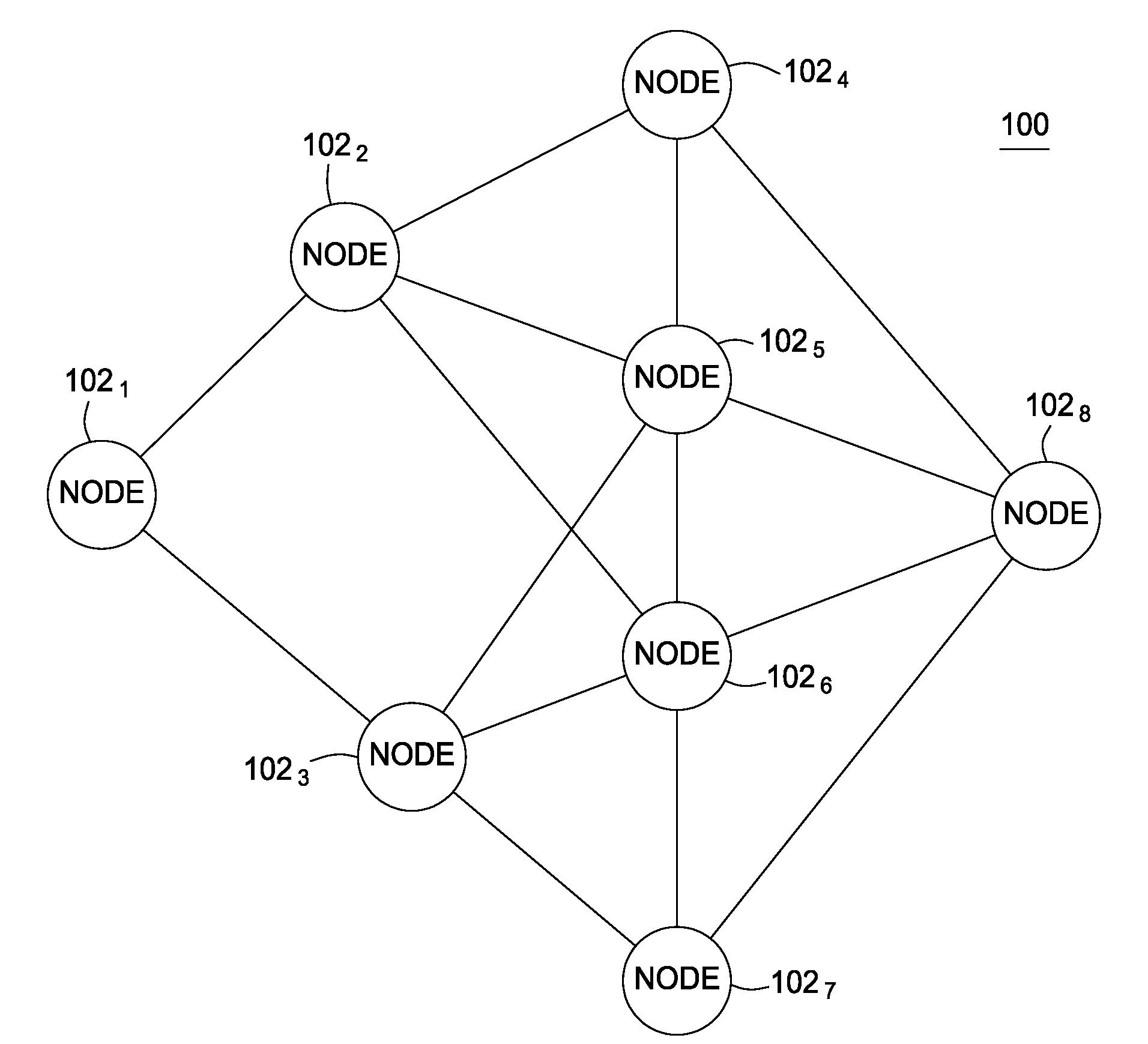
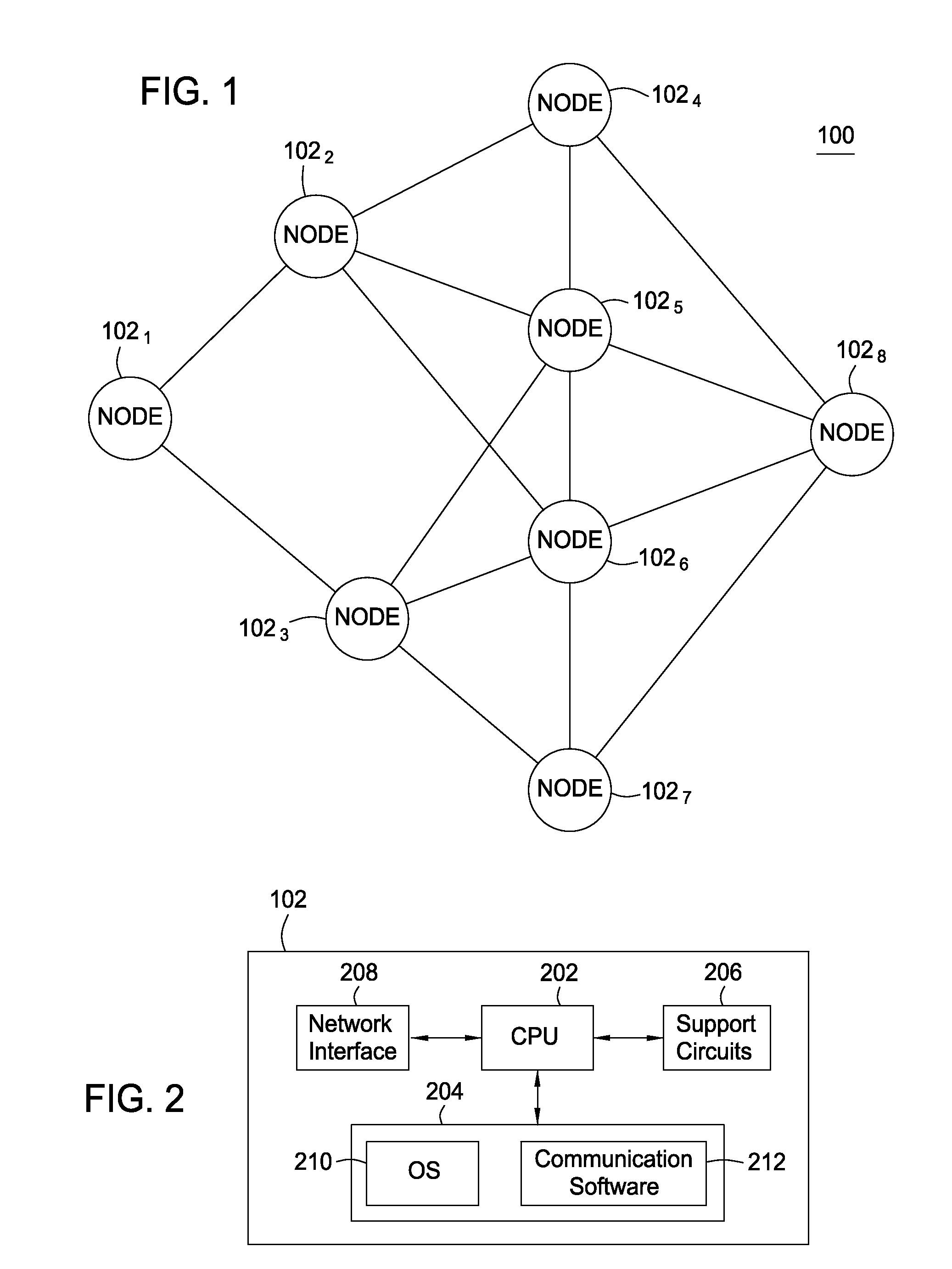
  • Figure 1
    Figure 1
  • Figure 2
    Figure 2
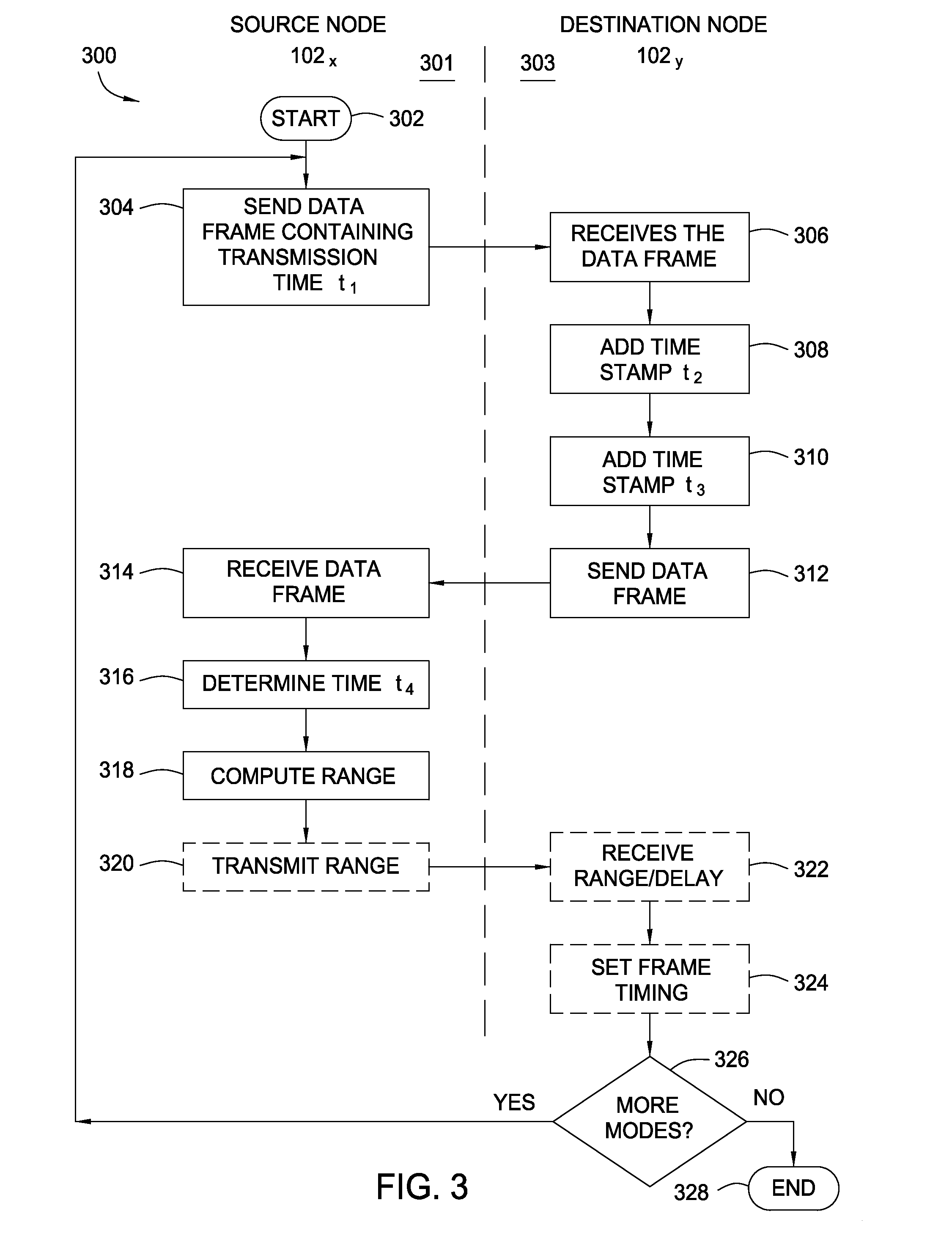
  • Figure 3
    Figure 3
Patent Text Reader

Abstract

A method and apparatus for improving the efficiency of a network. A source node determines the propagation delay for data to reach a destination node. This enables the source node to transmit data more efficiently by ensuring a greater portion of a specific time slot is used for receiving data by the destination node. The destination node then determines if it is connected to any other nodes, and determines the propagation delay between the other connected nodes. The process continues until a node detects it is not connected to any other nodes for which a propagation delay has not been computed. Thus, each node on the network knows the propagation delay between each node, and the nodes utilize this information to more efficiently transfer data through the network.
Need to check novelty before this filing date? Find Prior Art

Description

BACKGROUND OF THE INVENTION1. Field of the InventionThis application is a continuation of U.S. patent application entitled “METHOD AND APPARATUS FOR EFFICIENT TRANSFER OF DATA OVER A NETWORK”, having Ser. No. 11 / 311,452, and filed Dec. 19, 2005, which is incorporated by reference herein.Embodiments of the present invention generally relate to a network and, more specifically, to the efficient transfer of data through a network, as well as techniques for monitoring and management of a network.2. Description of the Related ArtA conventional network is comprised of nodes and a router, typically arranged in a hub and spoke formation. A node communicates to another node by transmitting data to the router, and the router then couples the data to the destination node. The nodes are unaware of the presence of all the other nodes present on the network, but the router is aware of the presence of all the nodes on the network. The router stores the physical address of all the nodes on the netw...

Examples

Embodiment Construction

FIG. 1 is a graphical depiction of one embodiment of a network 100 comprising connected nodes 102. The nodes 102 are interconnected to each other such that multiple paths (represented by lines between nodes) exist between each node 102. An exemplary network that may utilize and benefit from the present invention is a mesh network disclosed in commonly assigned U.S. patent application Ser. No. 10 / 122,883, filed Apr. 15, 2002 and commonly assigned U.S. patent application Ser. No. 10 / 122,886, filed Apr. 15, 2002, both of which are incorporated herein by reference. Those skilled in the art will realize from the following disclosure that other network topologies, both wired and wireless, may find benefit by using the present invention.

The present invention is a method and apparatus for improving the efficiency of a network 100. In one embodiment of the invention, a source node 102x (where x is an integer), for example, node 1021 determines the propagation delay for data to reach a destin...