
Transportation method for wind energy converters at sea
a technology transport methods, which is applied in the direction of underwater structures, floating buildings, artificial islands, etc., can solve the problems of large special ships and expensive cranes that have to carry the entire weight of wind energy converters
- Summary
- Abstract
- Description
- Claims
- Application Information
AI Technical Summary
Benefits of technology
Problems solved by technology
Method used
Image

Examples
Embodiment Construction
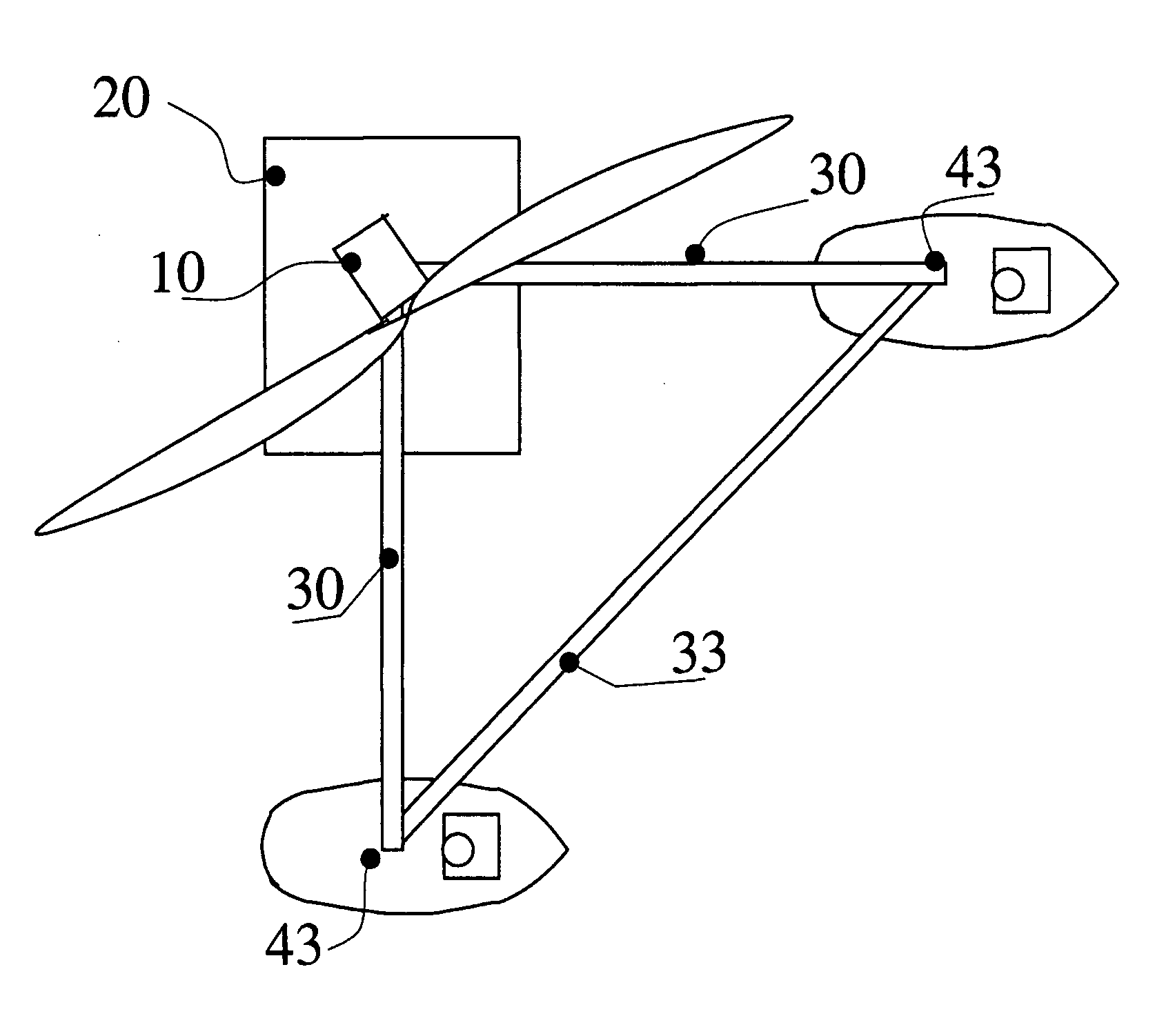
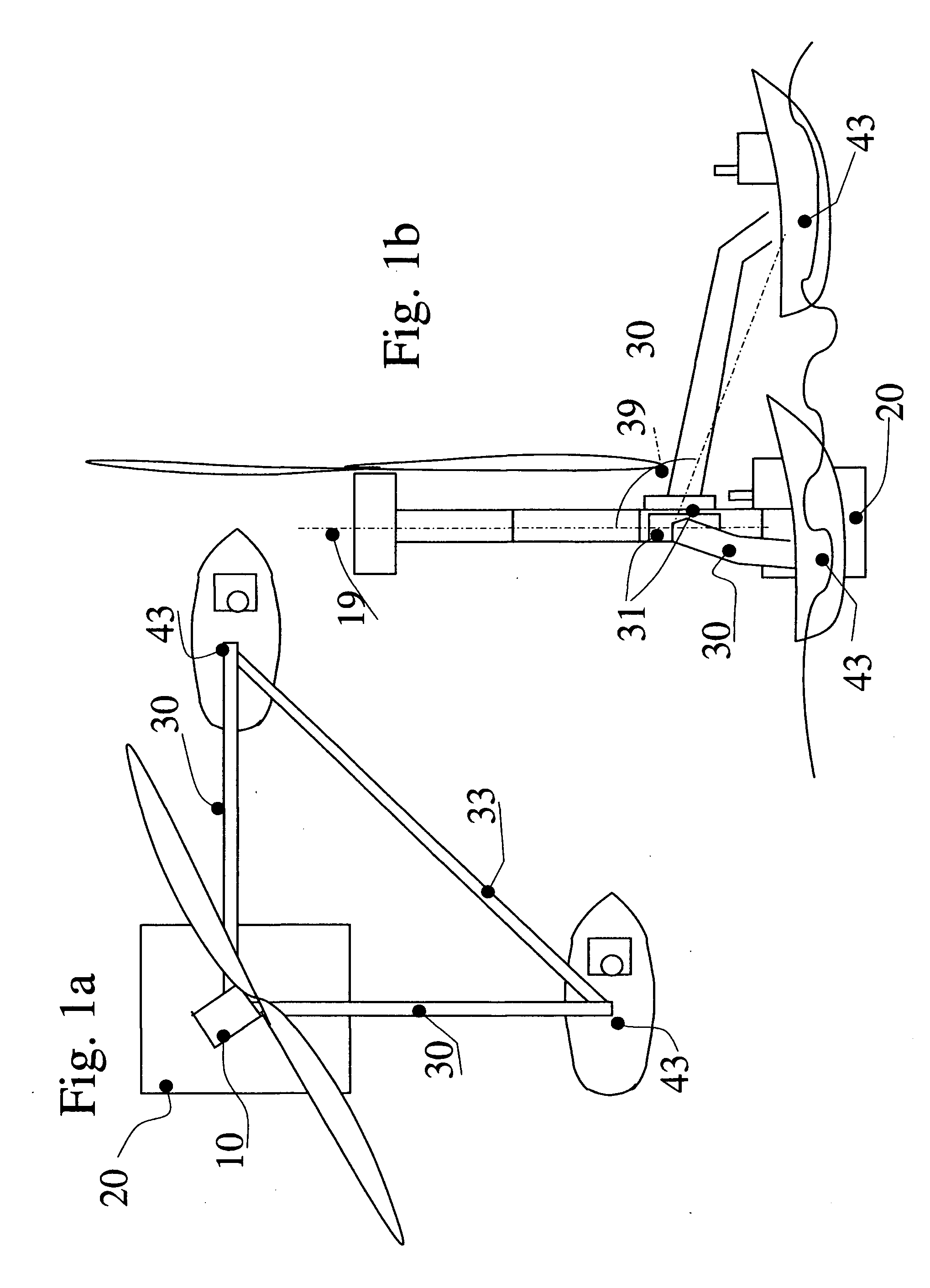
[0034]FIG. 1: The wind energy converter (10) is situated on the buoyant body (20), shown schematically, that is carrying at least partially the load of the buoyant body. The device is supported via the outriggers (30) on the assisting ships (40). The mounting element (31), that is used to mount the outrigger to the offshore construction can be moved in a controlled way, so that the angel between the vertical axes (11) can be adjusted in a controlled way.
[0035]On the assisting ships (40) the outriggers are attached vial pivot joints (43), that allow the outriggers to be pivoted into all directions. Fertile this pivot joint (43) is mounted close to the design location of the center of mass of the ship, because this way the response of the ship to the motion of the sea does hardly change. By it own drive an the rudder the direction of the ship can be controlled. By the ships acting together the device can be moved into every direction, and it also can be turned around its vertical axes...
PUM
 Login to View More
 Abstract
Description
Claims
Application Information
 Login to View More