
At least first and second order temperature-compensated resonator
a technology of temperature compensation and resonator, which is applied in the direction of generator/motor, instrument, horology, etc., can solve the problem that disclosures can require complex corrections
- Summary
- Abstract
- Description
- Claims
- Application Information
AI Technical Summary
Benefits of technology
Problems solved by technology
Method used
Image

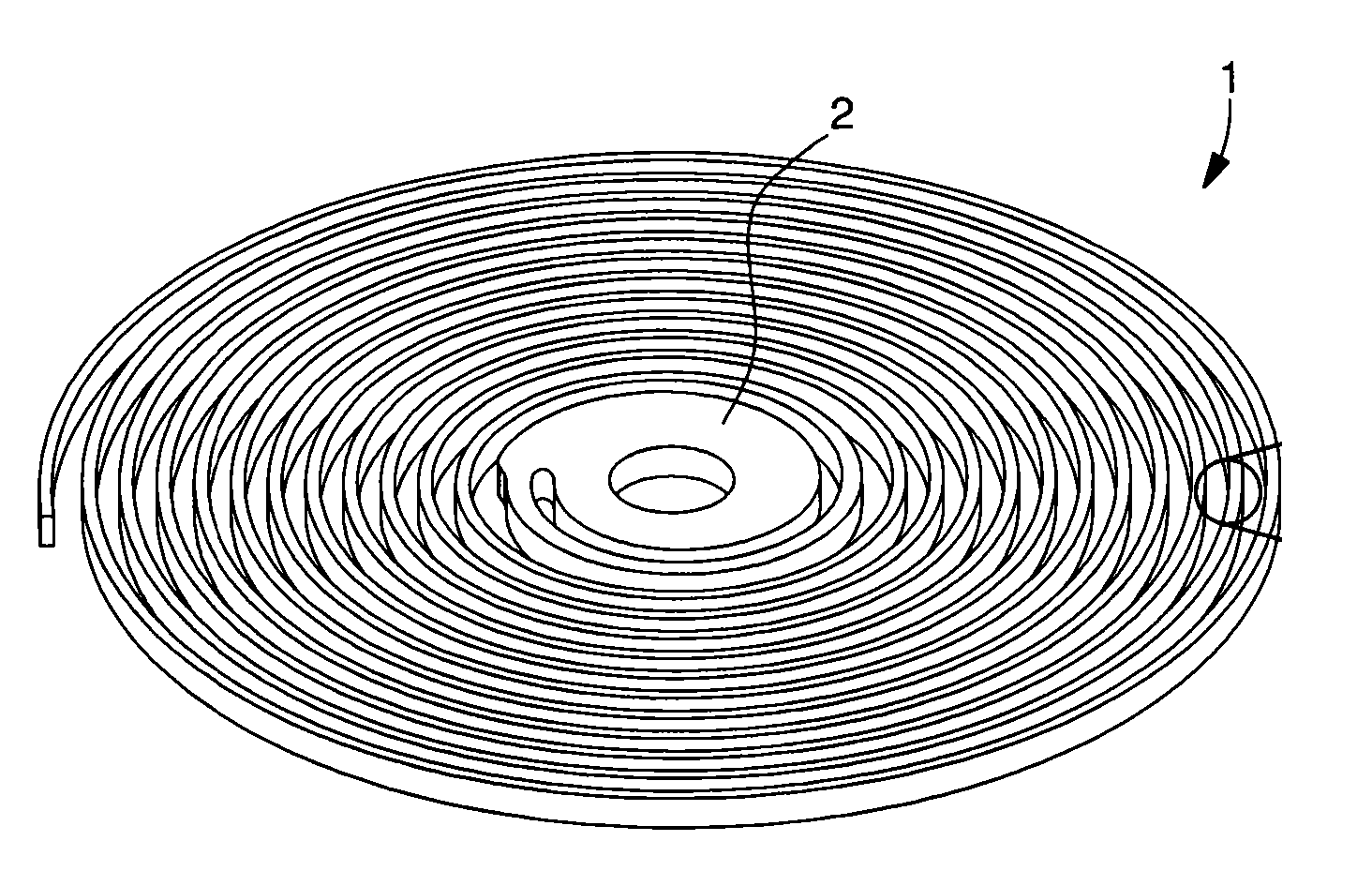
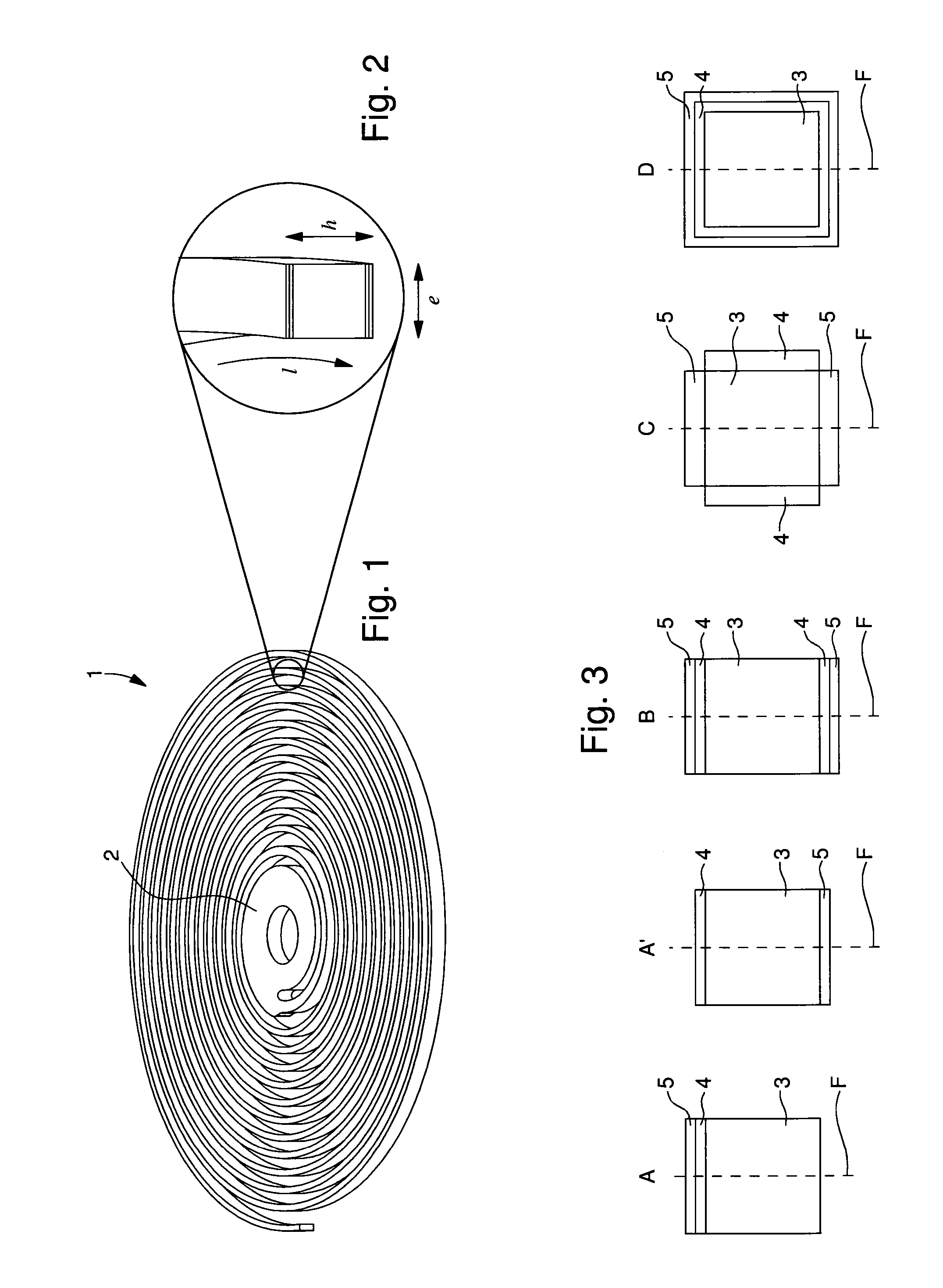
Examples
Embodiment Construction
[0027]As explained above, the invention relates to a resonator which may be a balance spring, tuning fork or more generally a MEMS (“micro electro mechanical system”) resonator. To simplify explanation of the invention, the only application presented below is to a balance spring. However, those skilled in the art could, without any excessive difficulty, accomplish other resonator applications like those above from the teaching provided hereafter.
[0028]Likewise, the explanation refers to a core of the body, in our example a balance spring, formed from single crystal silicon. However, the material of the core is not limited to single crystal silicon but may be extended to different types of materials such as, for example, polysilicon, glass, nitride, diamond, single crystal quartz or metal.
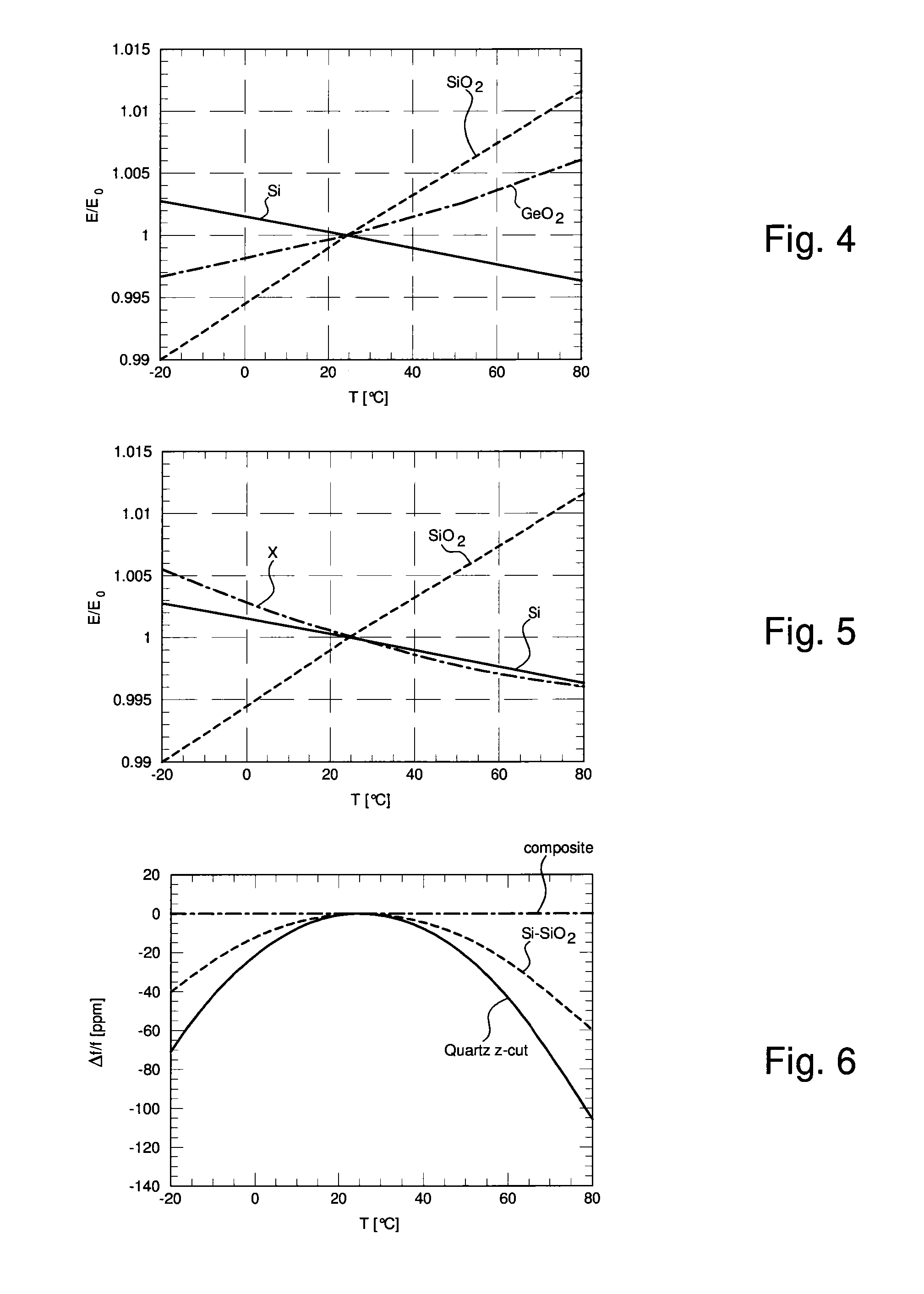
[0029]The graph of FIG. 6 shows the frequency drift characterisation for current resonators as a function of temperature. A first full line curve entitled “Quartz-z-cut” shows the frequency drift of...
PUM
 Login to View More
 Abstract
Description
Claims
Application Information
 Login to View More